
النص المكتوب للشرائحText version of the slides (English and Arabic)
هل يجب أن أتجنب أطعمة معينة؟
إجابات عملية بعيدًا عن الحميات القاسية
- اعرف طعامك
- مفكرة الطعام
- استشر المختص
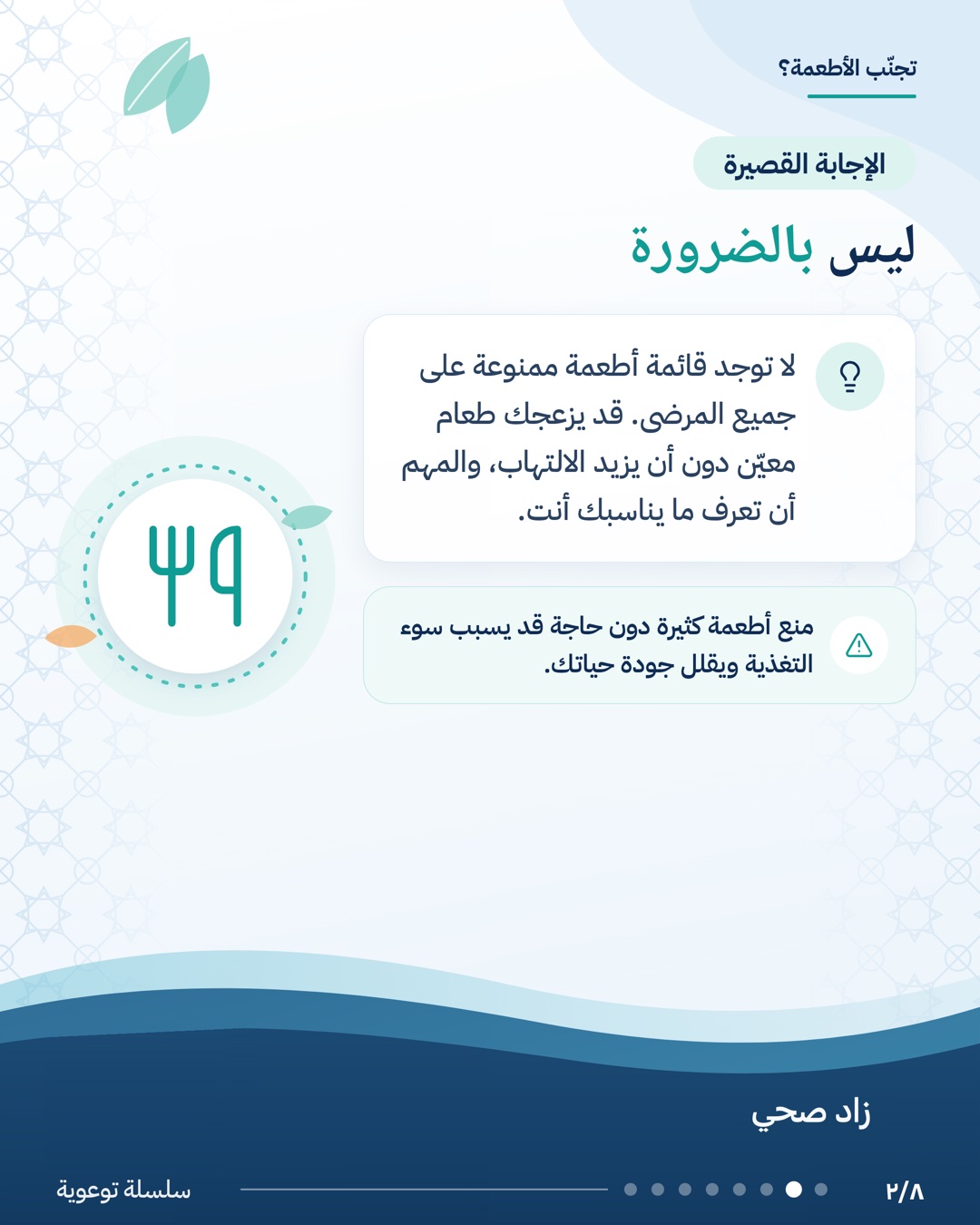
ليس بالضرورة
الإجابة القصيرة
لا توجد قائمة أطعمة ممنوعة على جميع المرضى. قد يزعجك طعام معيّن دون أن يزيد الالتهاب، والمهم أن تعرف ما يناسبك أنت.
منع أطعمة كثيرة دون حاجة قد يسبب سوء التغذية ويقلل جودة حياتك.
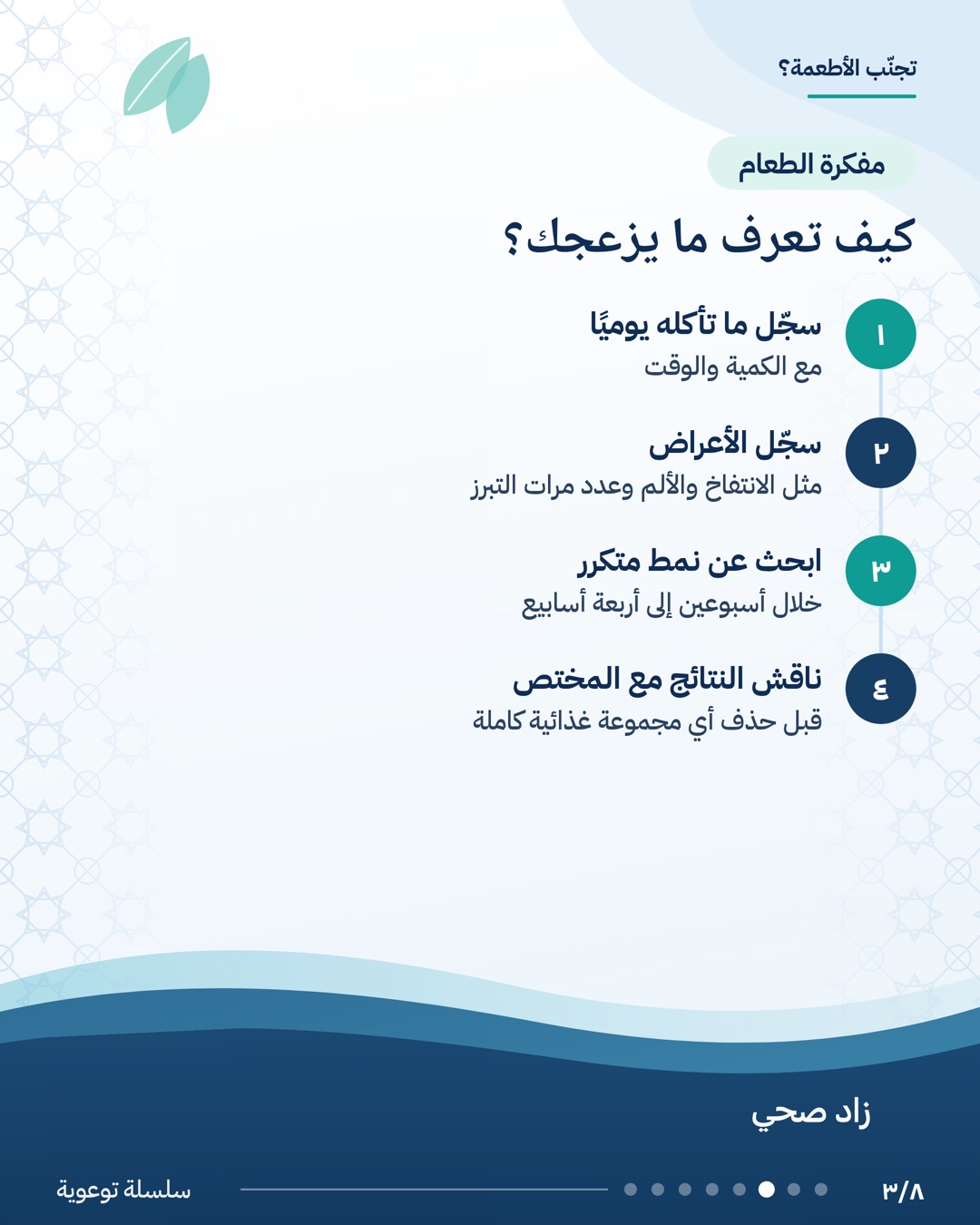
كيف تعرف ما يزعجك؟
مفكرة الطعام
- سجّل ما تأكله يوميًا — مع الكمية والوقت
- سجّل الأعراض — مثل الانتفاخ والألم وعدد مرات التبرز
- ابحث عن نمط متكرر — خلال أسبوعين إلى أربعة أسابيع
- ناقش النتائج مع المختص — قبل حذف أي مجموعة غذائية كاملة
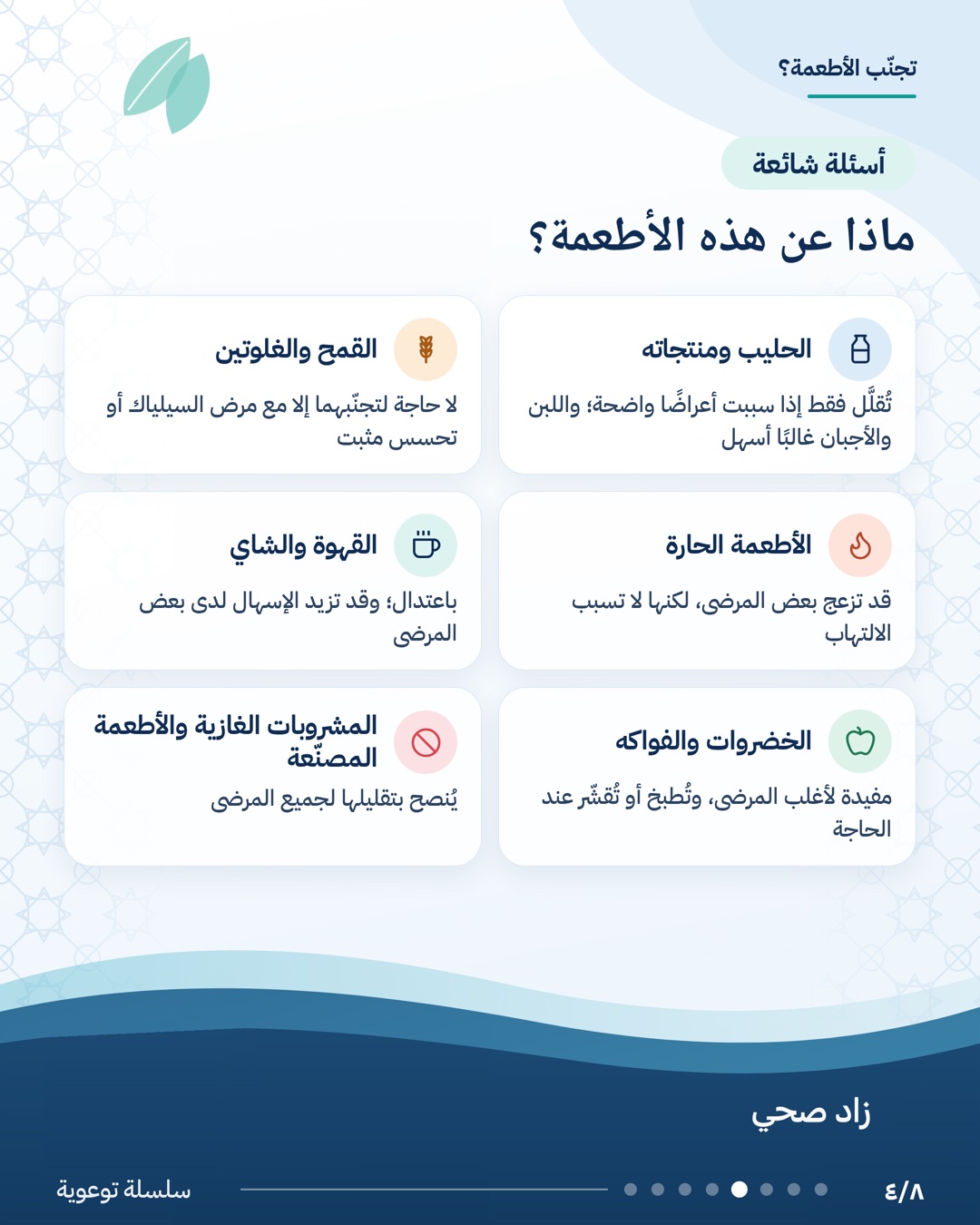
ماذا عن هذه الأطعمة؟
أسئلة شائعة
- الحليب ومنتجاته — تُقلَّل فقط إذا سببت أعراضًا واضحة؛ واللبن والأجبان غالبًا أسهل
- القمح والغلوتين — لا حاجة لتجنّبهما إلا مع مرض السيلياك أو تحسس مثبت
- الأطعمة الحارة — قد تزعج بعض المرضى، لكنها لا تسبب الالتهاب
- القهوة والشاي — باعتدال؛ وقد تزيد الإسهال لدى بعض المرضى
- الخضروات والفواكه — مفيدة لأغلب المرضى، وتُطبخ أو تُقشّر عند الحاجة
- المشروبات الغازية والأطعمة المصنّعة — يُنصح بتقليلها لجميع المرضى
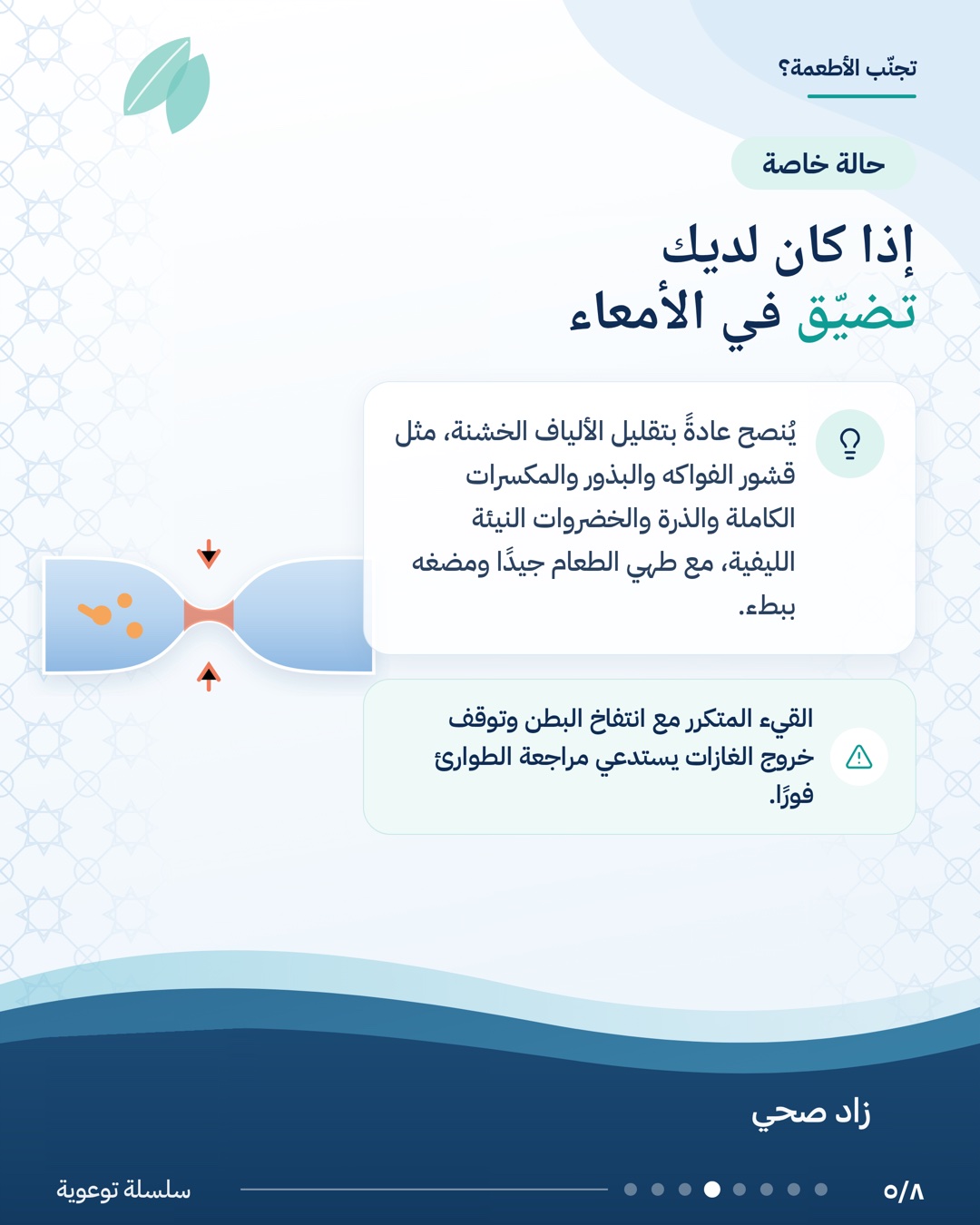
إذا كان لديك تضيّق في الأمعاء
حالة خاصة
يُنصح عادةً بتقليل الألياف الخشنة، مثل قشور الفواكه والبذور والمكسرات الكاملة والذرة والخضروات النيئة الليفية، مع طهي الطعام جيدًا ومضغه ببطء.
القيء المتكرر مع انتفاخ البطن وتوقف خروج الغازات يستدعي مراجعة الطوارئ فورًا.
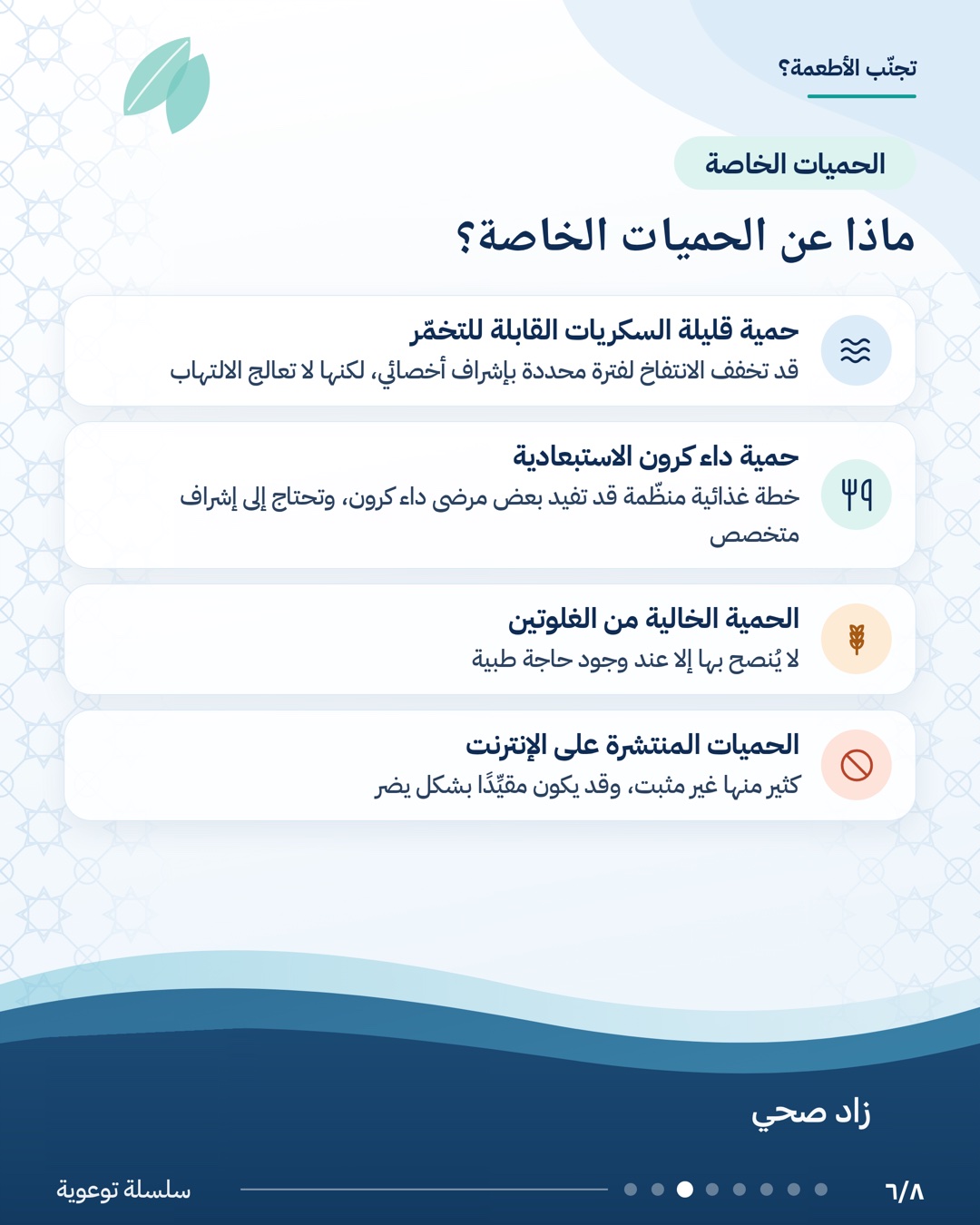
ماذا عن الحميات الخاصة؟
الحميات الخاصة
- حمية قليلة السكريات القابلة للتخمّر — قد تخفف الانتفاخ لفترة محددة بإشراف أخصائي، لكنها لا تعالج الالتهاب
- حمية داء كرون الاستبعادية — خطة غذائية منظّمة قد تفيد بعض مرضى داء كرون، وتحتاج إلى إشراف متخصص
- الحمية الخالية من الغلوتين — لا يُنصح بها إلا عند وجود حاجة طبية
- الحميات المنتشرة على الإنترنت — كثير منها غير مثبت، وقد يكون مقيِّدًا بشكل يضر
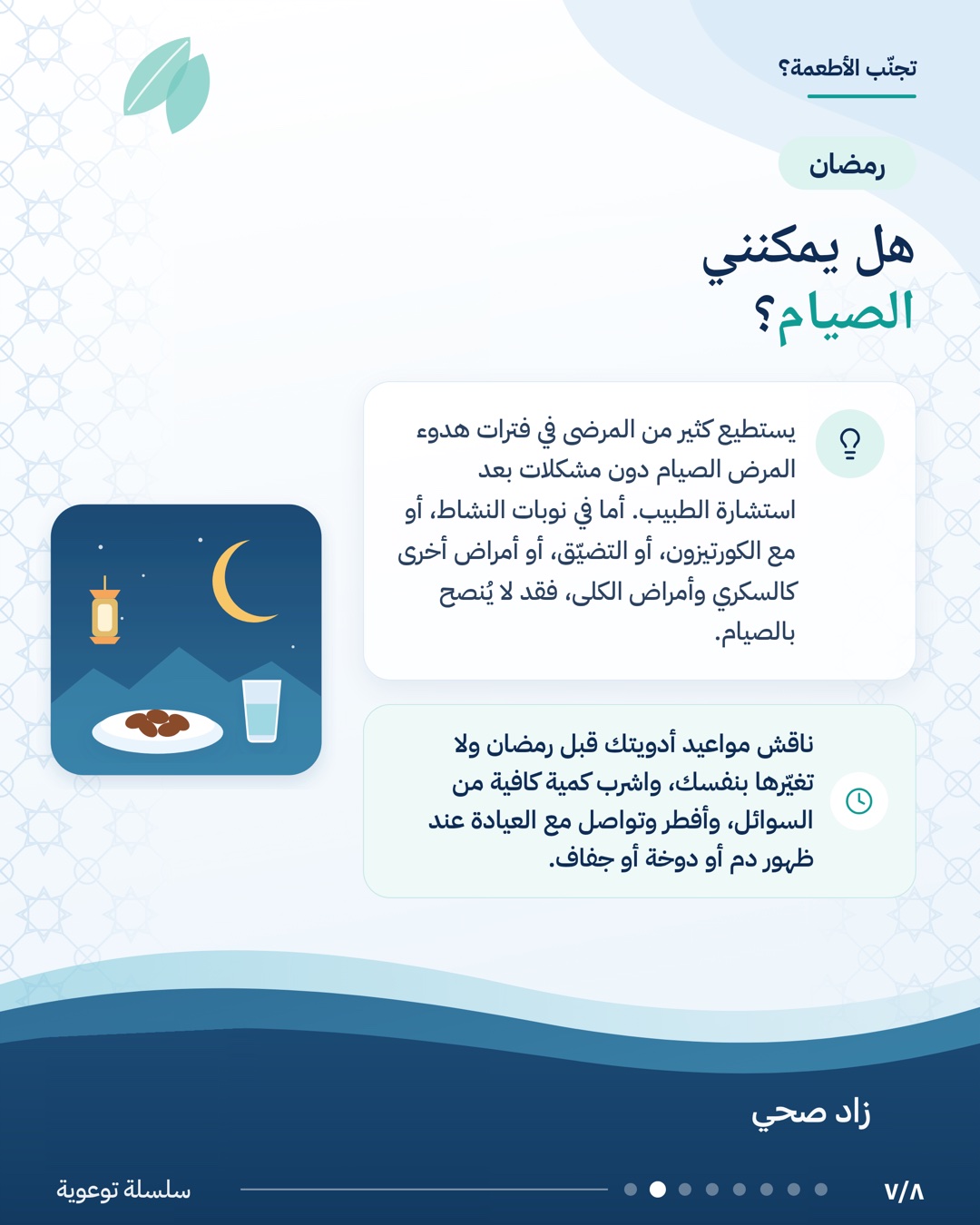
هل يمكنني الصيام؟
رمضان
يستطيع كثير من المرضى في فترات هدوء المرض الصيام دون مشكلات بعد استشارة الطبيب. أما في نوبات النشاط، أو مع الكورتيزون، أو التضيّق، أو أمراض أخرى كالسكري وأمراض الكلى، فقد لا يُنصح بالصيام.
ناقش مواعيد أدويتك قبل رمضان ولا تغيّرها بنفسك، واشرب كمية كافية من السوائل، وأفطر وتواصل مع العيادة عند ظهور دم أو دوخة أو جفاف.
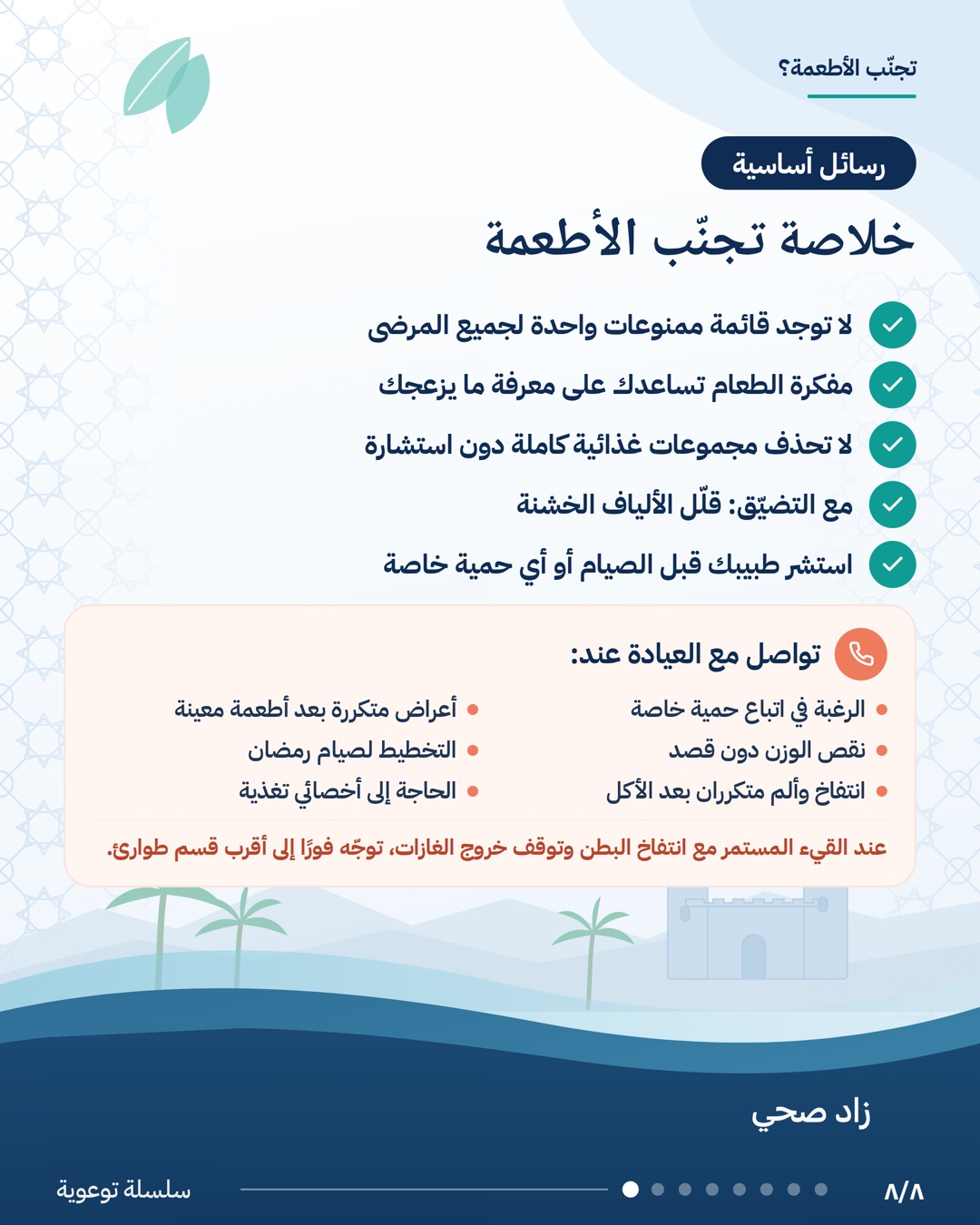
خلاصة تجنّب الأطعمة
رسائل أساسية
- لا توجد قائمة ممنوعات واحدة لجميع المرضى
- مفكرة الطعام تساعدك على معرفة ما يزعجك
- لا تحذف مجموعات غذائية كاملة دون استشارة
- مع التضيّق: قلّل الألياف الخشنة
- استشر طبيبك قبل الصيام أو أي حمية خاصة
تواصل مع العيادة عند:
- الرغبة في اتباع حمية خاصة
- نقص الوزن دون قصد
- انتفاخ وألم متكرران بعد الأكل
- أعراض متكررة بعد أطعمة معينة
- التخطيط لصيام رمضان
- الحاجة إلى أخصائي تغذية
عند القيء المستمر مع انتفاخ البطن وتوقف خروج الغازات، توجّه فورًا إلى أقرب قسم طوارئ.
Should I avoid certain foods?
Practical answers, without strict diets
- Know your food
- Food diary
- Ask a specialist
Not necessarily
The short answer
There is no list of foods banned for all patients. A particular food may bother you without increasing the inflammation; what matters is finding out what suits you.
Cutting out lots of foods unnecessarily can cause malnutrition and lower your quality of life.
How do you find out what bothers you?
Food diary
- Write down what you eat every day — with the amount and the time
- Write down your symptoms — such as bloating, pain and the number of bowel movements
- Look for a repeated pattern — over two to four weeks
- Discuss the results with a specialist — before cutting out any whole food group
What about these foods?
Common questions
- Milk and dairy products — reduce them only if they cause clear symptoms; yoghurt (laban) and cheese are often easier to tolerate
- Wheat and gluten — no need to avoid them unless you have coeliac disease or a proven intolerance
- Spicy foods — may bother some patients, but they do not cause inflammation
- Coffee and tea — in moderation; they may increase diarrhoea in some patients
- Vegetables and fruit — good for most patients; cook or peel them if needed
- Fizzy drinks and processed foods — all patients are advised to cut down on them
If you have a narrowing in the bowel
A special situation
You are usually advised to cut down on coarse (rough) fibre, such as fruit skins, seeds, whole nuts, sweetcorn and stringy raw vegetables, and to cook food well and chew it slowly.
Repeated vomiting with a swollen tummy and not passing wind needs an emergency visit straight away.
What about special diets?
Special diets
- Low FODMAP diet (low in fermentable sugars) — may ease bloating for a limited time under a dietitian's supervision, but it does not treat the inflammation
- Crohn's disease exclusion diet — a structured eating plan that may help some people with Crohn's disease; it needs specialist supervision
- Gluten-free diet — not recommended unless there is a medical need
- Diets spread on the internet — many are unproven and may be harmfully restrictive
Can I fast?
Ramadan
Many patients can fast without problems when their disease is calm, after talking to their doctor. During flare-ups, while on steroids, with a narrowing, or with other conditions such as diabetes or kidney disease, fasting may not be advised.
Discuss your medicine times before Ramadan and do not change them yourself. Drink enough fluids, and break your fast and contact the clinic if you notice blood, dizziness or dehydration.
Avoiding foods: the summary
Key messages
- There is no single list of banned foods for all patients
- A food diary helps you find out what bothers you
- Do not cut out whole food groups without advice
- With a narrowing: cut down on coarse fibre
- Ask your doctor before fasting or any special diet
Contact the clinic if you have:
- A wish to follow a special diet
- Weight loss without trying
- Repeated bloating and pain after eating
- Repeated symptoms after certain foods
- Plans to fast in Ramadan
- A need to see a dietitian
If you have persistent vomiting with a swollen tummy and are not passing wind, go straight to the nearest emergency department.
