PE-PROC-10الإصدار 1.0 · آخر مراجعة أكتوبر 2026 · المراجعة القادمة أكتوبر 2028Version 1.0 · Last reviewed October 2026 · Next review October 2028
هذه النشرة لصاحب الأنبوب ولمن يساعده. احتفظ بها حيث تُحفظ مستلزمات التغذية. أما تركيب الأنبوب نفسه فموصوف في النشرة PE-PROC-09.
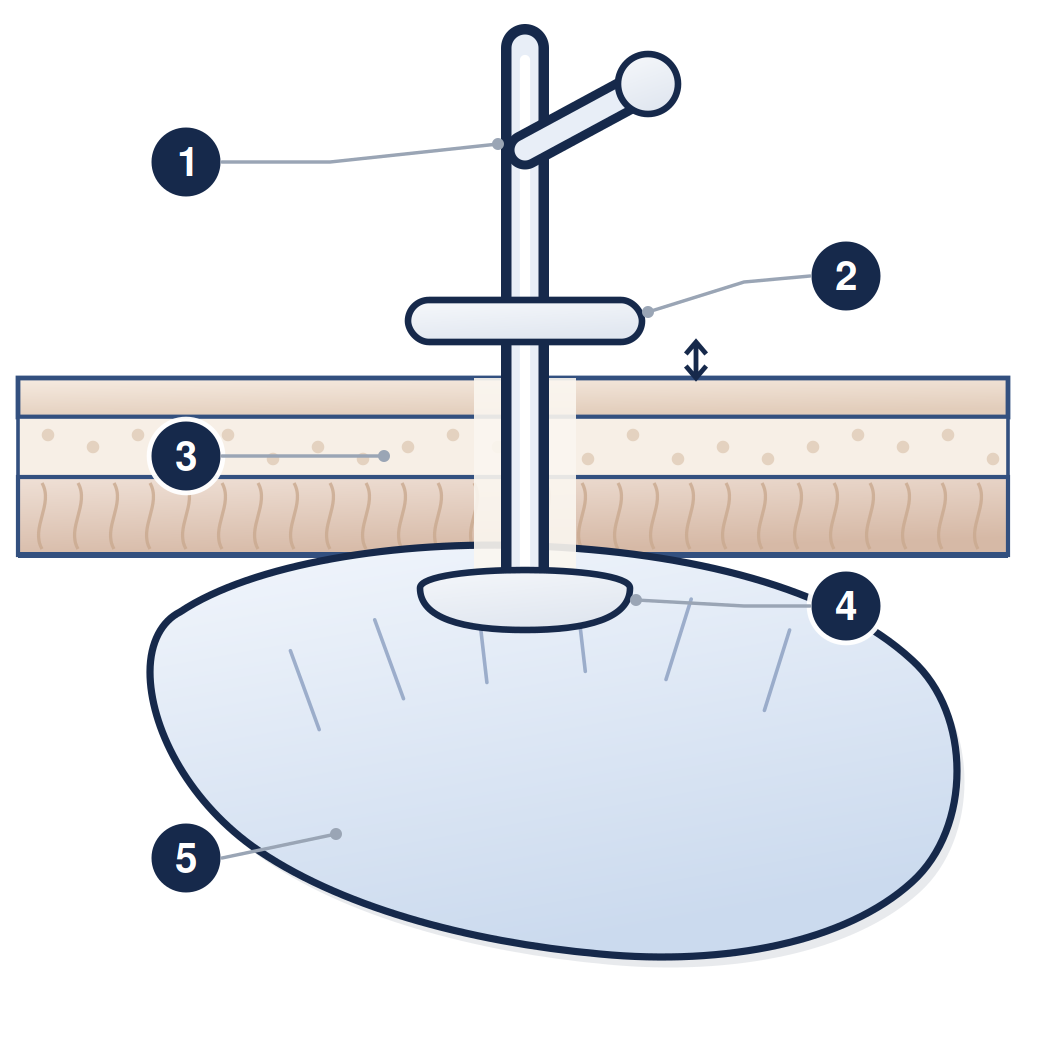
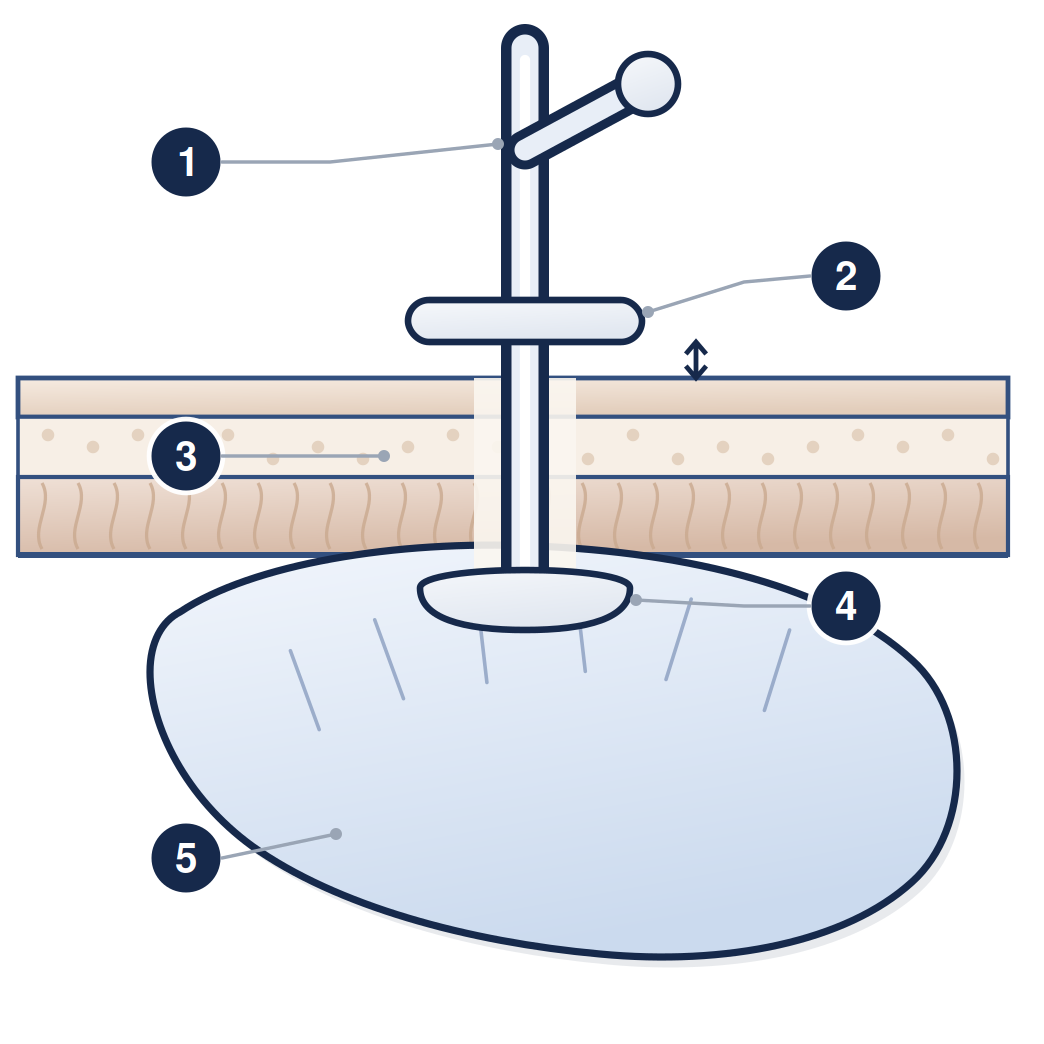
١ أنبوب التغذية ومنفذ الإطعام ٢ الصفيحة الخارجية وتبعد عن الجلد بمقدار عرض طرف الإصبع ٣ طبقات جدار البطن ٤ القرص الداخلي الليّن داخل المعدة ٥ المعدة
كل يوم
اغسل يديك قبل لمس الأنبوب أو الغذاء
نظّف الجلد حول الأنبوب بقطعة قماش نظيفة وماء وصابون، ثم اشطفه وجففه جيداً. ولا تستخدم الكريمات أو البودرة أو المطهرات ما لم تخبرك الممرضة بذلك
في أول 24 ساعة بعد التركيب يُبقى الموضع جافاً وتنظفه الممرضة بمحلول ملحي معقم. وبعدها يمكنك الاستحمام بالدش مع تجفيف الموضع بالتربيت. وتجنب حوض الاستحمام والسباحة أول أسبوعين
اجلس معتدلاً، أو ارفع رأس السرير إلى نحو خمس وأربعين درجة، أثناء كل تغذية ولمدة نصف ساعة إلى ساعة بعدها. وهذا أنفع ما يمكنك فعله لمنع دخول الغذاء إلى الرئتين
افحص الجلد يومياً بحثاً عن احمرار يتسع أو تورم أو سخونة أو صديد أو تسرب للغذاء. أما القليل من السائل الصافي فطبيعي
حافظ على نظافة الفم وتنظيف الأسنان حتى لو لم يدخل شيء عن طريق الفم
تحريك الأنبوب
قد ينغرس القرص الداخلي تدريجياً في جدار المعدة إذا لم يتحرك الأنبوب أبداً. ولمنع ذلك، ابتداءً من سبعة إلى عشرة أيام بعد التركيب، ادفع الأنبوب برفق إلى الداخل مسافة سنتيمترين إلى خمسة ودوّره دورة كاملة كل يوم، ثم اسحبه حتى تشعر بمقاومة خفيفة وأعد ضبط الصفيحة الجلدية. وبعد التئام الموضع ينبغي أن تبعد الصفيحة عن الجلد نحو سنتيمتر واحد، أي عرض طرف الإصبع. ولا تُشدّ أكثر من ذلك إلا في الأيام الأولى فقط، وإبقاؤها مشدودة بعدها هو ما يسبب انغراس القرص في جدار المعدة.
ليست كل الأنابيب قابلة للتدوير، وتدوير النوع الخطأ ضار. فالأنبوب الصائمي والأنبوب ذو الامتداد إلى الأمعاء الدقيقة لا يجوز تدويرهما أبداً. أما المثبّت بغرز فلا يُدوَّر حتى تُزال الغرز، وذلك بعد أسبوعين إلى أربعة عادةً، ثم لا يُدوَّر إلا إذا أخبرتك الممرضة بذلك. اطلب من الممرضة تأكيد نوع أنبوبك وأن تريك ما تفعله قبل مغادرتك، واكتب ذلك هنا: ____________________
أخبر وحدة المناظير إذا لم يعد الأنبوب يندفع إلى الداخل أو يدور، أو إذا واجه الغسل مقاومة مفاجئة، أو إذا صار الموضع مؤلماً أو تسرب منه عند التغذية. فهذه علامات إنذار بأن القرص الداخلي بدأ ينغرس. ولا تستخدم القوة مع الأنبوب، بل اتصل بالوحدة.
الغسل بالماء
اغسل الأنبوب بماء مغلي مبرّد أو ماء شرب قبل كل تغذية وبعدها، وقبل كل دواء وبعده، ومرة يومياً على الأقل إن لم يكن الأنبوب مستخدماً
استخدم نحو 30 إلى 50 مل من الماء في كل مرة بمحقنة سعة 50 مل. ولا تستخدم محقنة صغيرة أبداً، فهي تولّد ضغطاً كافياً لتمزيق الأنبوب. وادفع برفق وثبات ولا تستخدم القوة أبداً
أعطِ الأدوية واحداً تلو الآخر، كل منها مذاب جيداً، مع الغسل بينها. ولا تخلط الأدوية معاً، ولا تُدخل أقراصاً مسحوقة إلا إذا أكد الصيدلي جواز سحق ذلك القرص
لا تُدخل أبداً المشروبات الغازية أو عصير الفواكه أو عصير الأناناس لفتح الأنبوب، فهي تزيد الانسداد سوءاً
نسيج زائد عند الموضع
من الشائع أن ينمو نسيج أحمر ليّن حول الأنبوب. وهو ليس التهاباً، ويظهر عادةً حين يتحرك الأنبوب داخل القناة أكثر من اللازم أو أقل من اللازم. وقد ينزف قليلاً أو يرشح. ولا تعالجه بكريمات من عندك، بل أرِه ممرضة التغذية فبإمكانها معالجته بعلاج بسيط.
إذا انسد الأنبوب
الانسداد يكون في الغالب الأعم من الدواء أو الغذاء المتخثر. ركّب محقنة كبيرة فيها ماء دافئ واستخدم حركة دفع وسحب لطيفة لتفكيكه، ثم اترك الماء داخل الأنبوب نحو عشرين دقيقة وحاول مجدداً. ولا تستخدم قوة مفرطة، ولا تُدخل شيئاً صلباً كالسلك في الأنبوب. وإن بقي مسدوداً فاتصل بممرضة التغذية أو بالوحدة، فالأنبوب يمكن إنقاذه عادةً إن عولج الأمر سريعاً.
إذا خرج الأنبوب — هذا أمر عاجل
غطِّ الفتحة بضمادة نظيفة جافة
توجّه إلى المستشفى فوراً في أي ساعة، فالفتحة تبدأ بالانغلاق خلال ساعات وقد تنغلق تماماً
احضر ومعك الأنبوب الذي خرج
لا تحاول إعادته ولا إدخال أي شيء آخر، ولا تُعطِ أي غذاء أو سائل أو دواء عبر الفتحة
وإذا مضى على التركيب أقل من أربعة أسابيع فتعامل مع الأمر كحالة طارئة، إذ لم تتكوّن القناة بعد، وأي شيء يُدفع قد يدخل إلى تجويف البطن بدل المعدة
اتصل بوحدة المناظير إذا
إذا لاحظت
ما ينبغي عمله
احمرار متسع أو تورم أو سخونة أو صديد في الموضع
اتصل بالوحدة في اليوم نفسه، فقد تكون عدوى
تسرب الغذاء أو محتويات المعدة حول الأنبوب
اتصل بالوحدة، فقد تحتاج الصفيحة إلى ضبط
ألم بطني شديد أو بطن متصلب منتفخ
قسم الطوارئ فوراً
حرارة أو رعشة
اتصل بوحدة المناظير في اليوم نفسه
قيء أو سعال أو ضيق تنفس أثناء التغذية أو بعدها
أوقف التغذية واتصل بوحدة المناظير في اليوم نفسه
انسد الأنبوب ولم ينفتح
اتصل بالوحدة ولا تستخدم القوة
خرج الأنبوب
توجّه إلى المستشفى فوراً
تغيير الأنبوب
الأنبوب المثبّت بقرص داخلي لا يحتاج تغييراً دورياً وكثيراً ما يدوم أكثر من سنتين. أما الأنبوب البالوني فيُغيَّر كل ثلاثة إلى ستة أشهر، وينبغي فحص الماء داخل بالونه وتجديده كل أسبوع، وستريك الممرضة المقدار الخاص بأنبوبك وتكتبه لك. ولا يجوز نزع الأنبوب أبداً قبل مرور أربعة أسابيع على التركيب. وسيخبرك فريقك بنوع أنبوبك وموعد تغييره.
للمواعيد والاستفسارات، تواصل مع وحدة المناظير عبر الأرقام التي زوّدتك بها. وإذا كانت حالتك شديدة أو كان الوقت خارج أوقات العمل فتوجّه إلى قسم الطوارئ بدلاً من انتظار الرد. الإصدار 1.0 · تاريخ المراجعة أكتوبر 2028.
هذه النشرة معلومات عامة ولا تغني عن مشورة طبيبك المعالج.
زاد صحي، PE-PROC-10
This sheet is for the person with the tube and for whoever helps them. Keep it where the feeding equipment is kept. The tube insertion itself is described in sheet PE-PROC-09.
1 the feeding tube and its port 2 the outer plate, a fingertip's width clear of the skin 3 the abdominal wall 4 the soft internal disc inside the stomach 5 the stomach
Every day
Wash your hands before touching the tube or the feed.
Clean the skin around the tube with a clean cloth and soapy water, rinse, and dry it thoroughly. Do not use creams, powders or antiseptics unless the nurse has told you to.
For the first 24 hours after insertion the site is kept dry and is cleaned with sterile saline by the nurse. After that you may shower, patting the site dry afterwards. Avoid baths and swimming for the first two weeks.
Sit up, or have the head of the bed raised to about 45 degrees, during every feed and for half an hour to an hour afterwards. This is the single most useful thing you can do to keep feed out of the lungs.
Check the skin each day for redness spreading outwards, swelling, heat, pus or leaking feed. A small amount of clear fluid is normal.
Keep the mouth clean and teeth brushed even if nothing is eaten by mouth.
Keeping the tube moving
The internal disc can slowly grow into the wall of the stomach if the tube never moves. To prevent this, from 7 to 10 days after insertion push the tube gently inwards by about 2 to 5 cm and turn it a full circle each day, then pull it back until you feel gentle resistance and reset the skin plate. Once the site has healed the plate should sit about a centimetre — a fingertip’s width — clear of the skin. It is held tighter than this for the first few days only, and leaving it tight afterwards is what causes the disc to grow into the stomach wall.
Not every tube may be rotated, and turning the wrong one is harmful. A jejunal tube and a tube with an extension into the small bowel must never be turned. A tube held by stitches must not be turned until the stitches have been removed, usually after two to four weeks, and then only if the nurse tells you to. Ask the nurse to confirm which type you have and to show you what to do before you go home, and write it here: ____________________
Tell the endoscopy unit if the tube will no longer push in or turn, if flushing suddenly meets resistance, or if the site becomes painful or leaks when a feed is given. These are the warning signs that the internal disc is starting to bury itself. Do not force the tube — contact the unit.
Flushing
Flush with cooled boiled water or drinking water before and after every feed and every medicine, and at least once a day if the tube is not being used.
Use about 30 to 50 mL of water each time, given with a 50 mL syringe. Never use a small syringe — it generates enough pressure to split the tube. Push gently and steadily, and never force it.
Give medicines one at a time, each properly dissolved, flushing between them. Do not mix medicines together and do not put crushed tablets down the tube unless the pharmacist has said that tablet may be crushed.
Never put fizzy drinks, fruit juice or pineapple juice down the tube to clear it. They make blockages worse.
Raised tissue at the site
A soft red rim of tissue growing up around the tube is common. It is not an infection and it usually appears when the tube has been moving too much within the tract, or not enough. It may bleed a little or weep. Do not treat it with creams of your own — show it to the nutrition nurse, who can settle it with a simple treatment.
If the tube blocks
Blockage is nearly always from medicine or thickened feed. Attach a large syringe of warm water and use a gentle push–pull action to loosen it, then leave the water sitting in the tube for about twenty minutes and try again. Do not use excessive force, and do not push anything solid such as a wire down the tube. If it is still blocked, contact the nutrition nurse or the unit — the tube can usually be saved if it is dealt with promptly.
If the tube falls out — this is urgent
Cover the opening with a clean, dry dressing.
Come to the hospital straight away, at any hour. The opening starts to close within a few hours and can close completely.
Bring the tube that came out with you.
Do not try to push it, or anything else, back in. Do not give any feed, fluid or medicine through the opening.
If it is less than four weeks since the tube was placed, treat this as an emergency. The channel is not yet formed, and anything pushed in could enter the abdomen instead of the stomach.
Contact the endoscopy unit if
If you notice
What to do
Redness spreading outwards, swelling, heat or pus at the site
Contact the unit the same day — this may be infection
Feed or stomach contents leaking around the tube
Contact the unit — the plate may need adjusting
Severe abdominal pain, or a hard, swollen abdomen
Emergency Department immediately
Fever or shivering
Contact the endoscopy unit the same day
Vomiting, coughing or breathlessness during or after feeds
Stop the feed and contact the endoscopy unit the same day
The tube is blocked and will not clear
Contact the unit — do not force it
The tube has come out
Come to hospital straight away
Replacing the tube
A tube held in by an internal disc does not need routine replacement and often lasts more than two years. A balloon-type tube is changed every three to six months, and the water in its balloon should be checked and renewed each week — the nurse will show you the volume for your tube and write it down. The tube must never be removed within four weeks of insertion. Your team will tell you which type you have and when it is due to be changed.
For appointments and questions, contact the endoscopy unit using the numbers it has given you. If you are seriously unwell, or it is outside working hours, go to the Emergency Department rather than waiting for a reply. Version 1.0 · review date October 2028.
This leaflet is general information and does not replace advice from your own doctor.