
النص المكتوب للشرائحText version of the slides (English and Arabic)
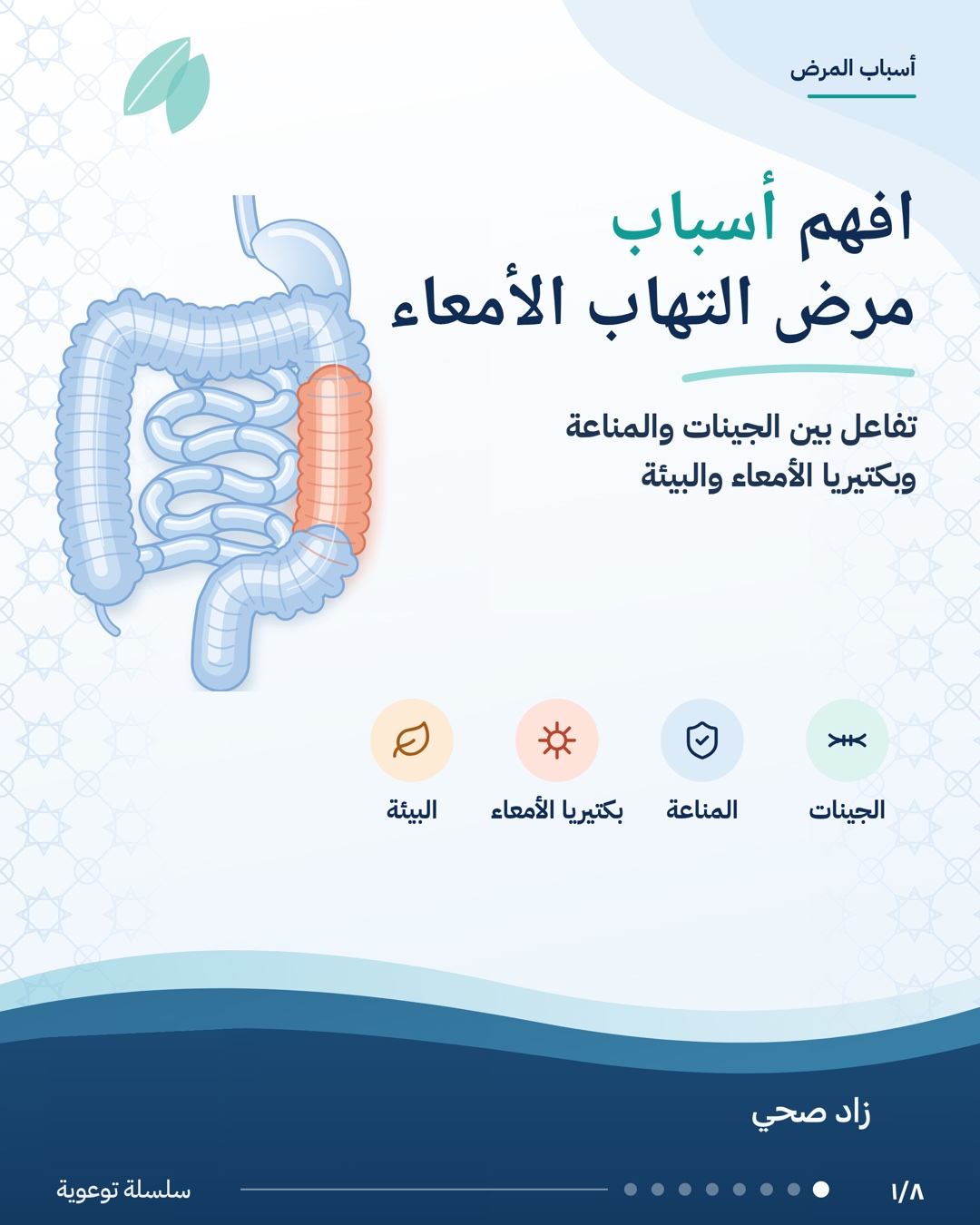
افهم أسباب مرض التهاب الأمعاء
تفاعل بين الجينات والمناعة وبكتيريا الأمعاء والبيئة
- الجينات
- المناعة
- بكتيريا الأمعاء
- البيئة
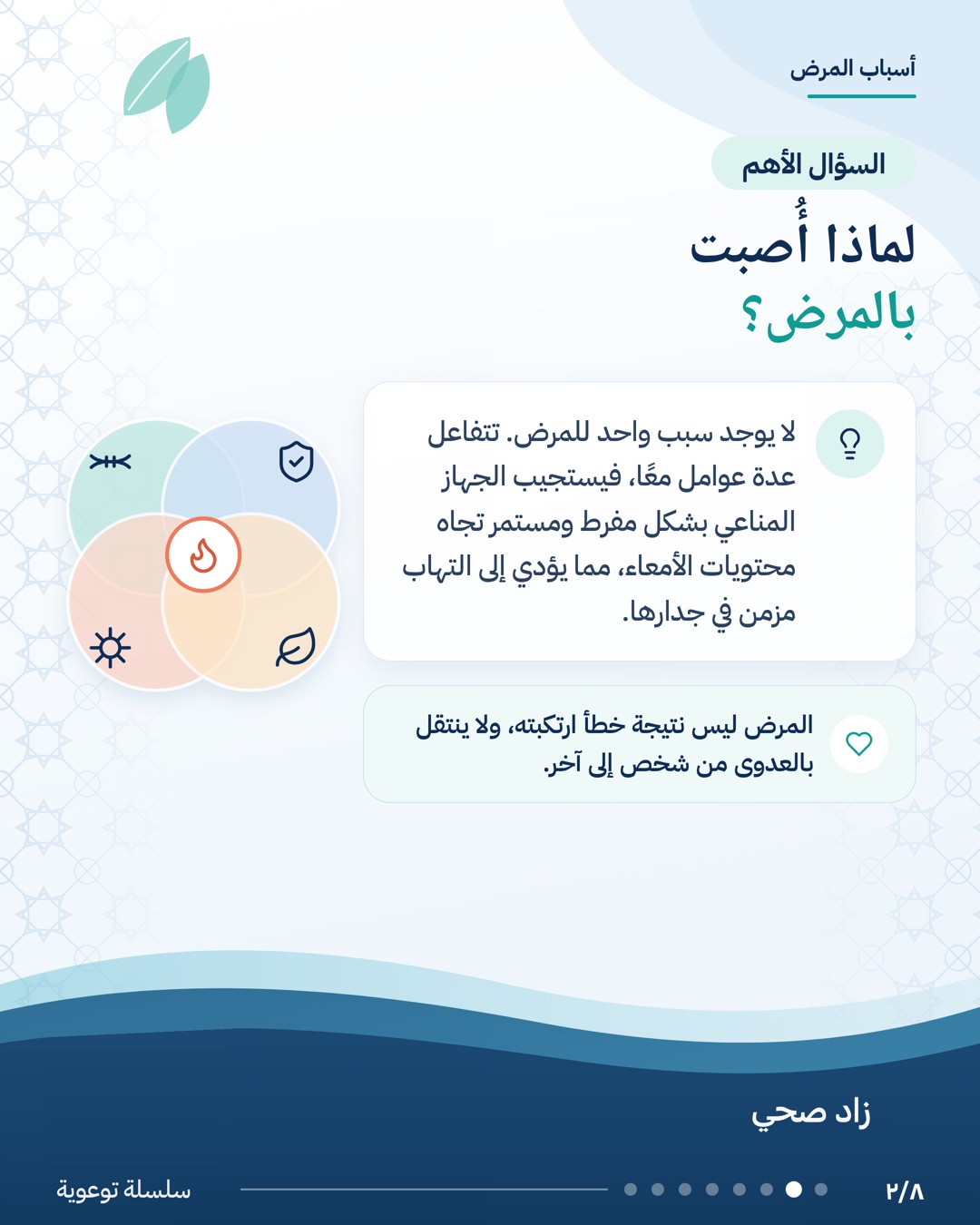
لماذا أُصبت بالمرض؟
السؤال الأهم
لا يوجد سبب واحد للمرض. تتفاعل عدة عوامل معًا، فيستجيب الجهاز المناعي بشكل مفرط ومستمر تجاه محتويات الأمعاء، مما يؤدي إلى التهاب مزمن في جدارها.
المرض ليس نتيجة خطأ ارتكبته، ولا ينتقل بالعدوى من شخص إلى آخر.
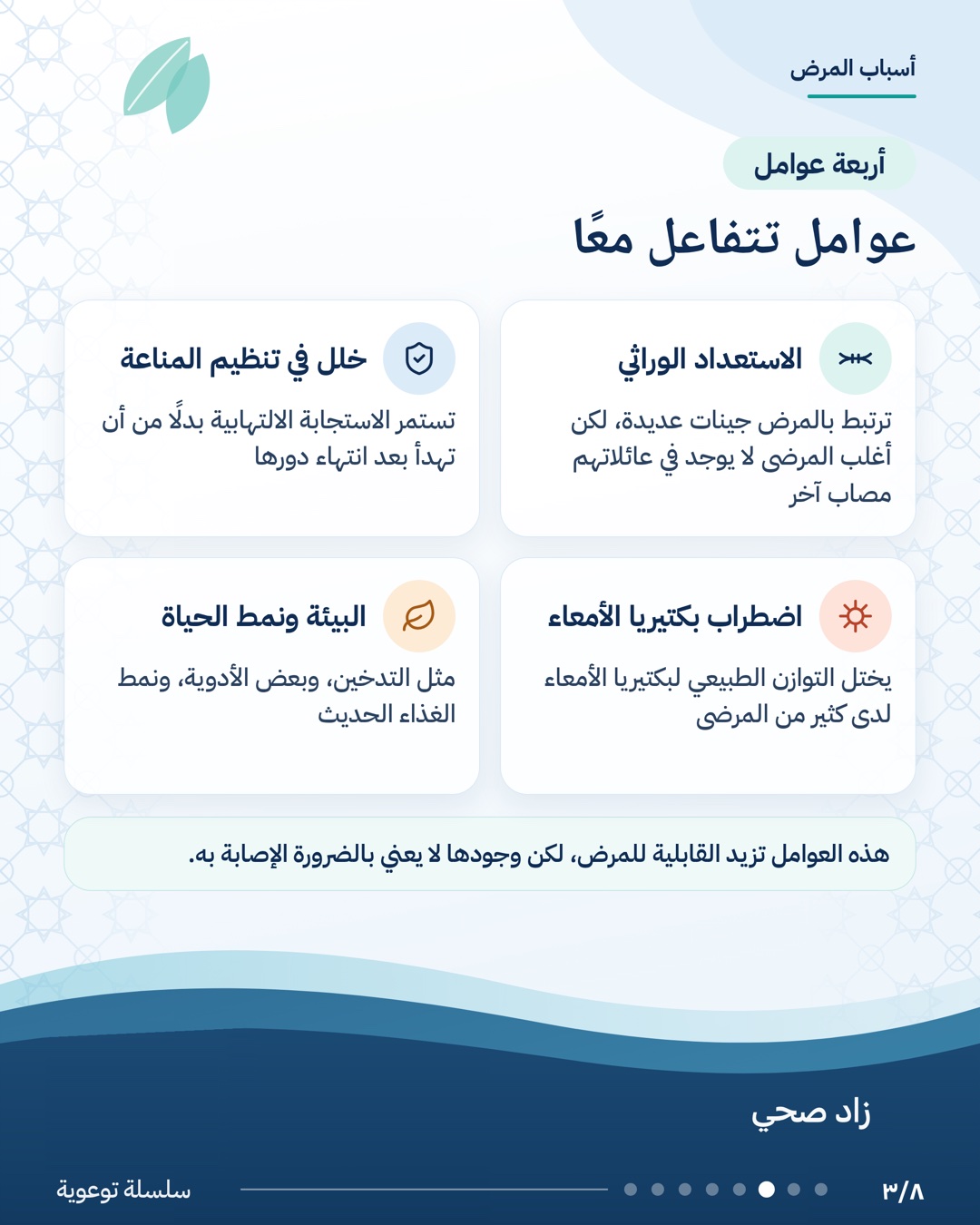
عوامل تتفاعل معًا
أربعة عوامل
- الاستعداد الوراثي — ترتبط بالمرض جينات عديدة، لكن أغلب المرضى لا يوجد في عائلاتهم مصاب آخر
- خلل في تنظيم المناعة — تستمر الاستجابة الالتهابية بدلًا من أن تهدأ بعد انتهاء دورها
- اضطراب بكتيريا الأمعاء — يختل التوازن الطبيعي لبكتيريا الأمعاء لدى كثير من المرضى
- البيئة ونمط الحياة — مثل التدخين، وبعض الأدوية، ونمط الغذاء الحديث
هذه العوامل تزيد القابلية للمرض، لكن وجودها لا يعني بالضرورة الإصابة به.
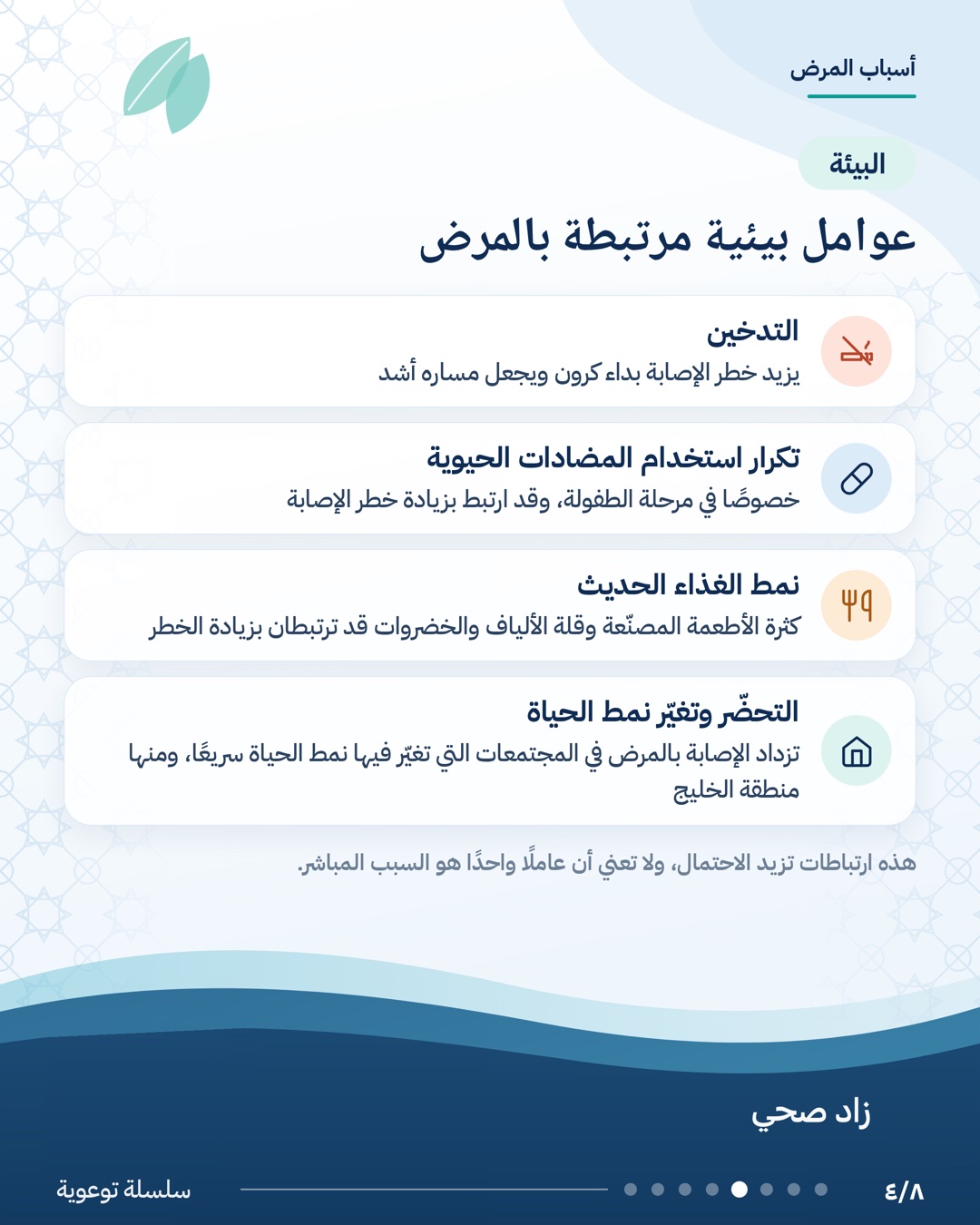
عوامل بيئية مرتبطة بالمرض
البيئة
- التدخين — يزيد خطر الإصابة بداء كرون ويجعل مساره أشد
- تكرار استخدام المضادات الحيوية — خصوصًا في مرحلة الطفولة، وقد ارتبط بزيادة خطر الإصابة
- نمط الغذاء الحديث — كثرة الأطعمة المصنّعة وقلة الألياف والخضروات قد ترتبطان بزيادة الخطر
- التحضّر وتغيّر نمط الحياة — تزداد الإصابة بالمرض في المجتمعات التي تغيّر فيها نمط الحياة سريعًا، ومنها منطقة الخليج
هذه ارتباطات تزيد الاحتمال، ولا تعني أن عاملًا واحدًا هو السبب المباشر.
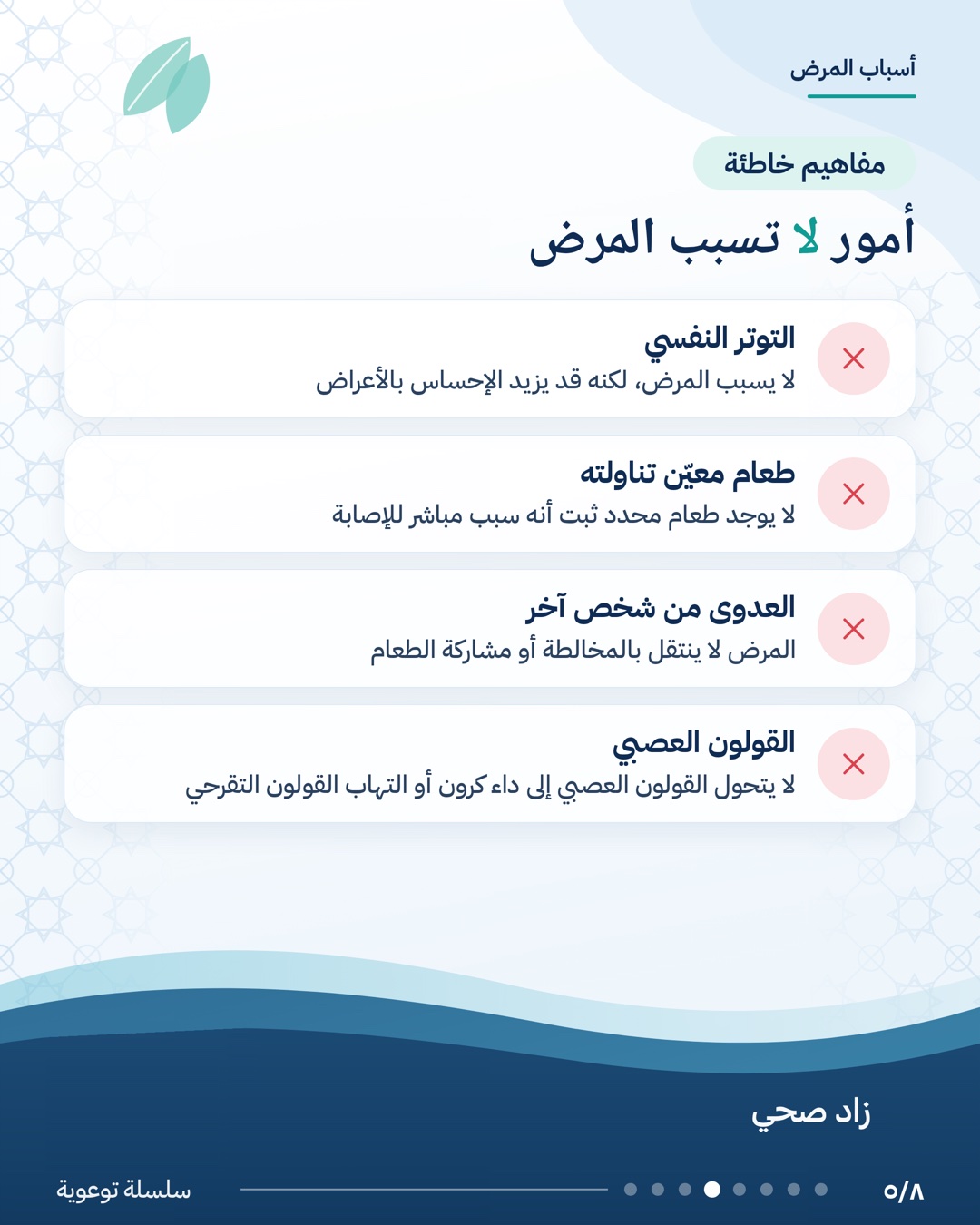
أمور لا تسبب المرض
مفاهيم خاطئة
- التوتر النفسي — لا يسبب المرض، لكنه قد يزيد الإحساس بالأعراض
- طعام معيّن تناولته — لا يوجد طعام محدد ثبت أنه سبب مباشر للإصابة
- العدوى من شخص آخر — المرض لا ينتقل بالمخالطة أو مشاركة الطعام
- القولون العصبي — لا يتحول القولون العصبي إلى داء كرون أو التهاب القولون التقرحي
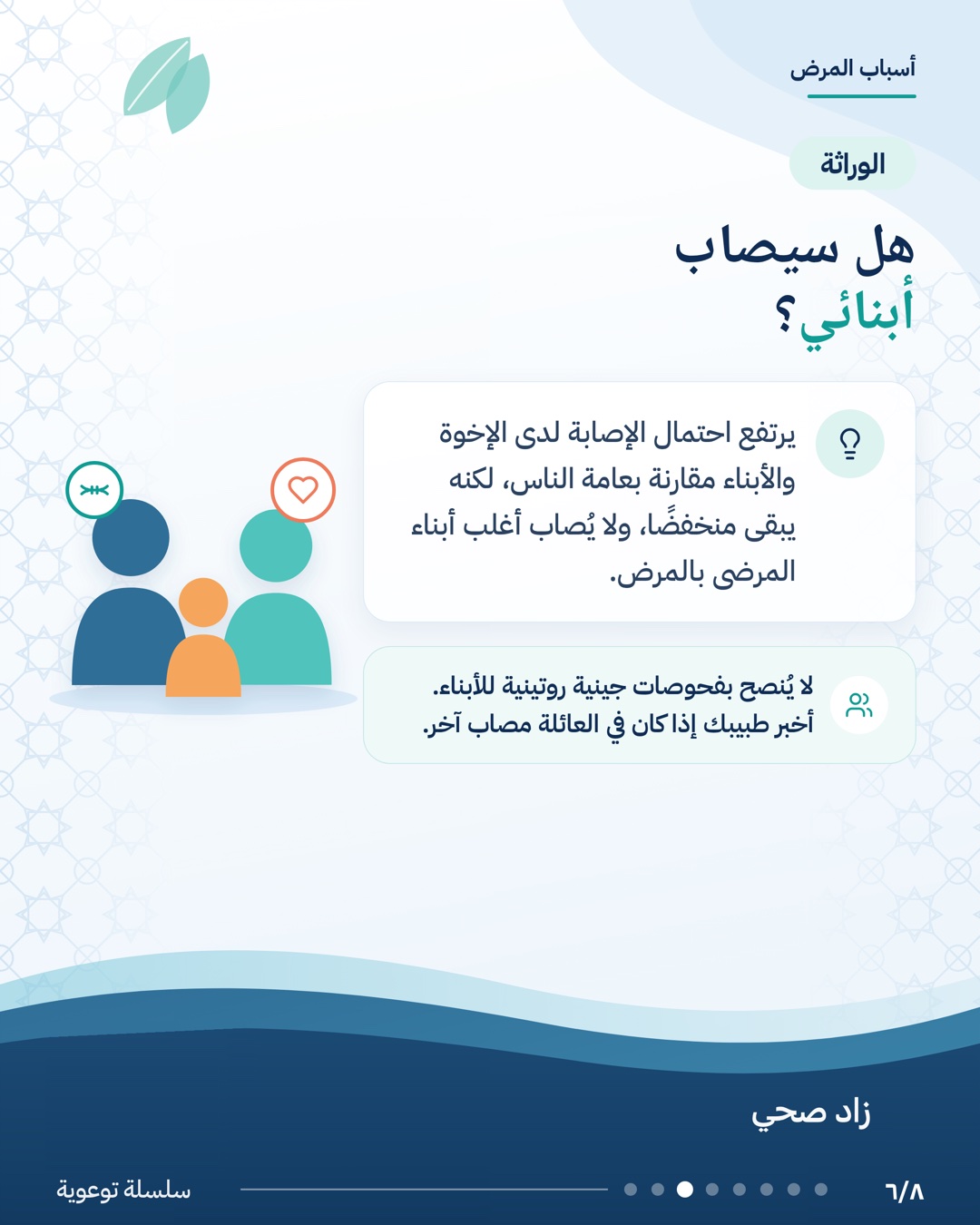
هل سيصاب أبنائي؟
الوراثة
يرتفع احتمال الإصابة لدى الإخوة والأبناء مقارنة بعامة الناس، لكنه يبقى منخفضًا، ولا يُصاب أغلب أبناء المرضى بالمرض.
لا يُنصح بفحوصات جينية روتينية للأبناء. أخبر طبيبك إذا كان في العائلة مصاب آخر.
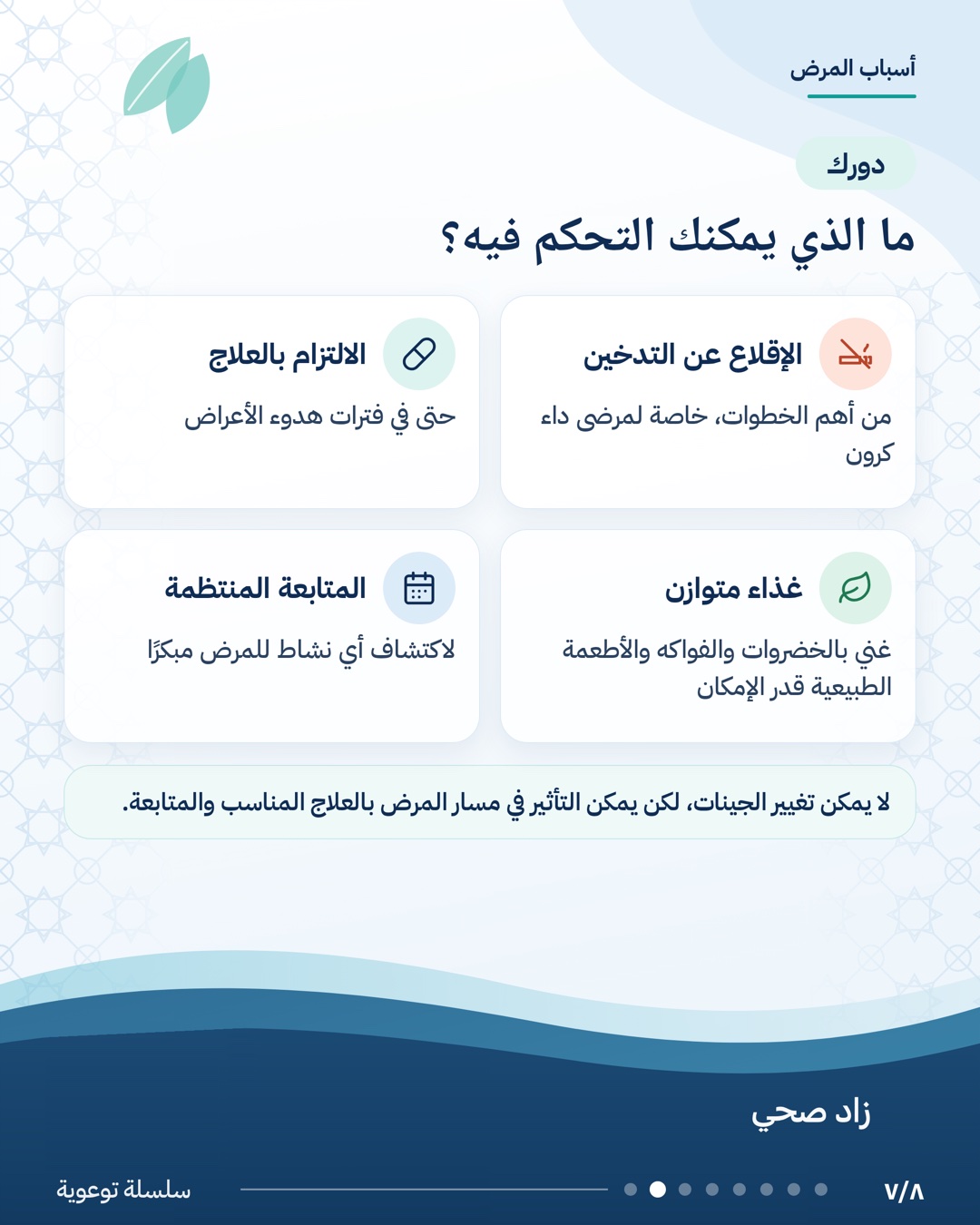
ما الذي يمكنك التحكم فيه؟
دورك
- الإقلاع عن التدخين — من أهم الخطوات، خاصة لمرضى داء كرون
- الالتزام بالعلاج — حتى في فترات هدوء الأعراض
- غذاء متوازن — غني بالخضروات والفواكه والأطعمة الطبيعية قدر الإمكان
- المتابعة المنتظمة — لاكتشاف أي نشاط للمرض مبكرًا
لا يمكن تغيير الجينات، لكن يمكن التأثير في مسار المرض بالعلاج المناسب والمتابعة.
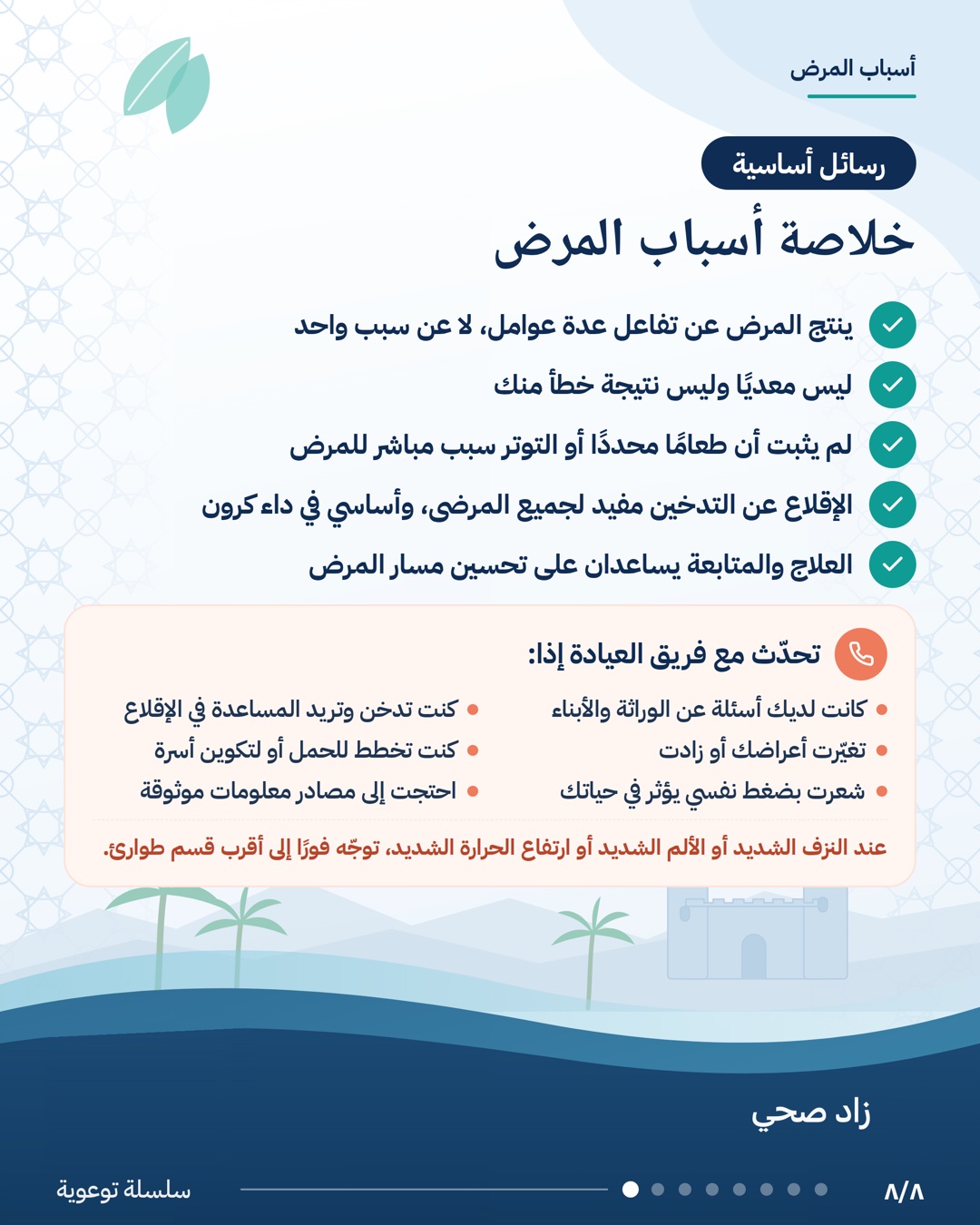
خلاصة أسباب المرض
رسائل أساسية
- ينتج المرض عن تفاعل عدة عوامل، لا عن سبب واحد
- ليس معديًا وليس نتيجة خطأ منك
- لم يثبت أن طعامًا محددًا أو التوتر سبب مباشر للمرض
- الإقلاع عن التدخين مفيد لجميع المرضى، وأساسي في داء كرون
- العلاج والمتابعة يساعدان على تحسين مسار المرض
تحدّث مع فريق العيادة إذا:
- كانت لديك أسئلة عن الوراثة والأبناء
- تغيّرت أعراضك أو زادت
- شعرت بضغط نفسي يؤثر في حياتك
- كنت تدخن وتريد المساعدة في الإقلاع
- كنت تخطط للحمل أو لتكوين أسرة
- احتجت إلى مصادر معلومات موثوقة
عند النزف الشديد أو الألم الشديد أو ارتفاع الحرارة الشديد، توجّه فورًا إلى أقرب قسم طوارئ.
Understanding the causes of IBD
An interaction between genes, immunity, gut bacteria and the environment
- Genes
- Immunity
- Gut bacteria
- Environment
Why did I get the disease?
The most important question
There is no single cause. Several factors interact, so the immune system reacts too strongly and continuously to the contents of the bowel, leading to long-term (chronic) inflammation in the bowel wall.
The disease is not the result of something you did wrong, and it does not spread from one person to another.
Factors that interact
Four factors
- Genetic tendency — many genes are linked to the disease, but most patients have no one else affected in their family
- Faulty immune regulation — the inflammatory response carries on instead of settling once its job is done
- Disturbed gut bacteria — the natural balance of gut bacteria is upset in many patients
- Environment and lifestyle — such as smoking, some medicines, and the modern diet
These factors make the disease more likely, but having them does not necessarily mean you will get it.
Environmental factors linked to the disease
Environment
- Smoking — increases the risk of Crohn's disease and makes its course more severe
- Repeated use of antibiotics — especially in childhood; this has been linked to a higher risk
- The modern diet — lots of processed food and too little fibre and vegetables may be linked to a higher risk
- Urbanisation and lifestyle change — the disease is becoming more common in communities where lifestyle has changed quickly, including the Gulf region
These are associations that increase the likelihood; they do not mean that any single factor is the direct cause.
Things that do not cause the disease
Misconceptions
- Psychological stress — it does not cause the disease, but it may make you feel your symptoms more
- A particular food you ate — no specific food has been proven to directly cause the disease
- Catching it from someone else — the disease is not spread by close contact or sharing food
- Irritable bowel syndrome (IBS) — IBS does not turn into Crohn's disease or ulcerative colitis
Will my children get it?
Inheritance
Brothers, sisters and children have a higher chance of getting the disease than the general population, but the chance remains low, and most children of patients do not get the disease.
Routine genetic tests for children are not recommended. Tell your doctor if someone else in the family is affected.
What can you control?
Your role
- Stopping smoking — one of the most important steps, especially for people with Crohn's disease
- Sticking to your treatment — even when symptoms are quiet
- A balanced diet — rich in vegetables, fruit and natural foods as far as possible
- Regular follow-up — to pick up any disease activity early
Genes cannot be changed, but the course of the disease can be influenced with the right treatment and follow-up.
Causes of the disease: the summary
Key messages
- The disease results from several factors interacting, not from a single cause
- It is not infectious and it is not your fault
- No specific food, and not stress, has been proven to directly cause the disease
- Stopping smoking helps all patients, and is essential in Crohn's disease
- Treatment and follow-up help improve the course of the disease
Talk to the clinic team if:
- You have questions about inheritance and your children
- Your symptoms have changed or got worse
- You feel psychological stress affecting your life
- You smoke and want help to stop
- You are planning a pregnancy or to start a family
- You need reliable sources of information
If you have heavy bleeding, severe pain or a very high temperature, go straight to the nearest emergency department.

