




النص المكتوب للشرائحText version of the slides (English and Arabic)
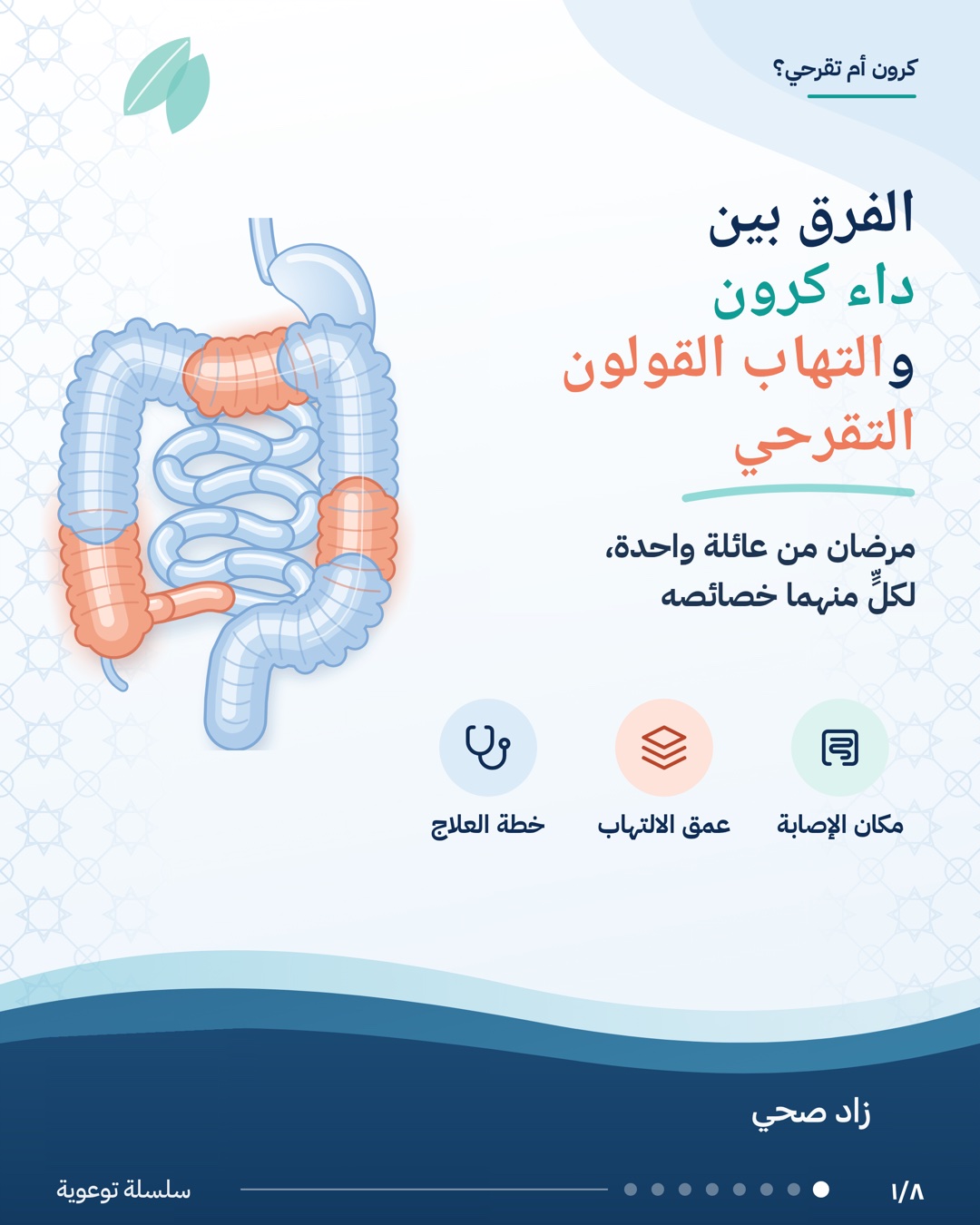
الفرق بين داء كرون والتهاب القولون التقرحي
مرضان من عائلة واحدة، لكلٍّ منهما خصائصه
- مكان الإصابة
- عمق الالتهاب
- خطة العلاج
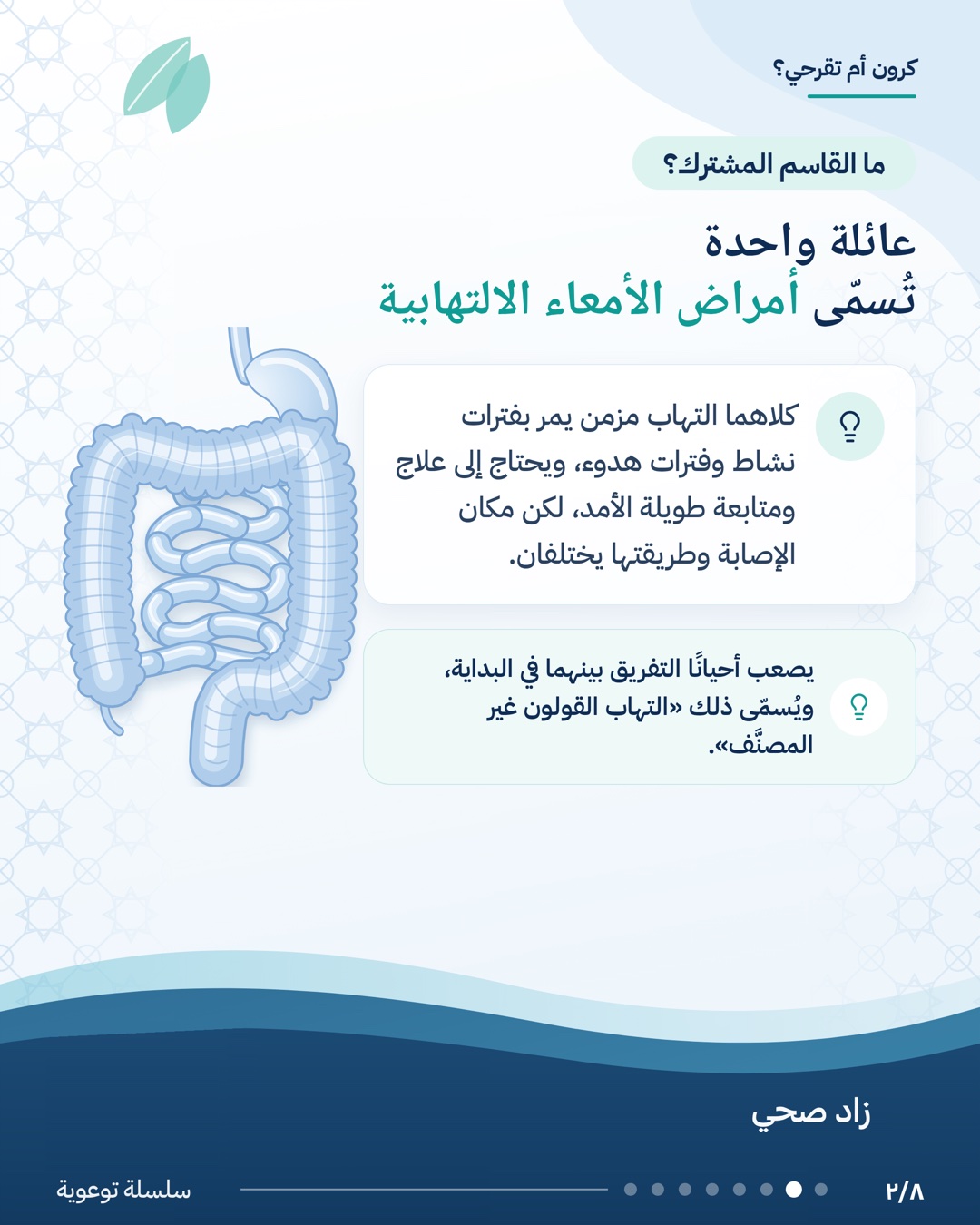
عائلة واحدة تُسمّى أمراض الأمعاء الالتهابية
ما القاسم المشترك؟
كلاهما التهاب مزمن يمر بفترات نشاط وفترات هدوء، ويحتاج إلى علاج ومتابعة طويلة الأمد، لكن مكان الإصابة وطريقتها يختلفان.
يصعب أحيانًا التفريق بينهما في البداية، ويُسمّى ذلك «التهاب القولون غير المصنَّف».
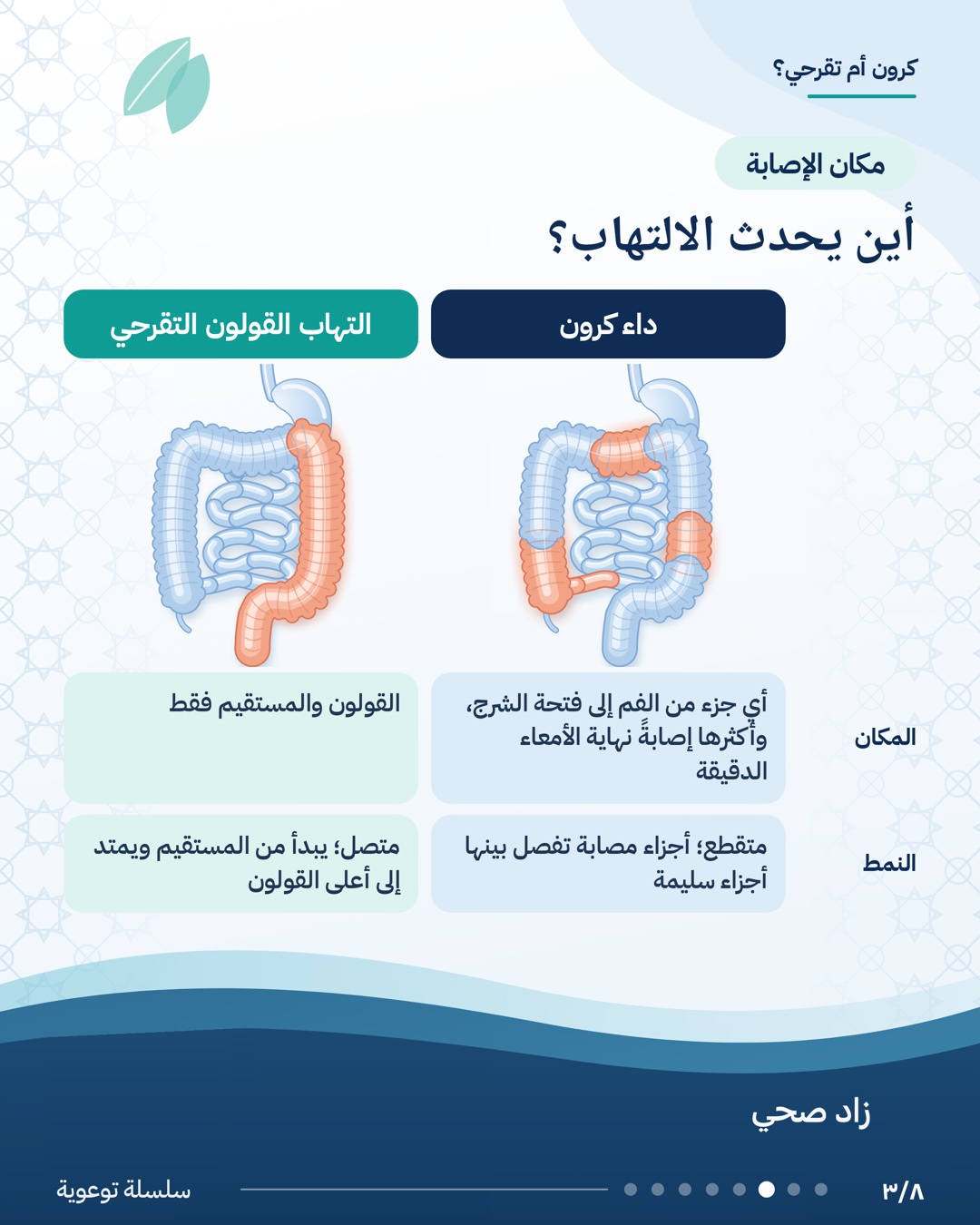
أين يحدث الالتهاب؟
مكان الإصابة
داء كرون:
- المكان: أي جزء من الفم إلى فتحة الشرج، وأكثرها إصابةً نهاية الأمعاء الدقيقة
- النمط: متقطع؛ أجزاء مصابة تفصل بينها أجزاء سليمة
التهاب القولون التقرحي:
- المكان: القولون والمستقيم فقط
- النمط: متصل؛ يبدأ من المستقيم ويمتد إلى أعلى القولون
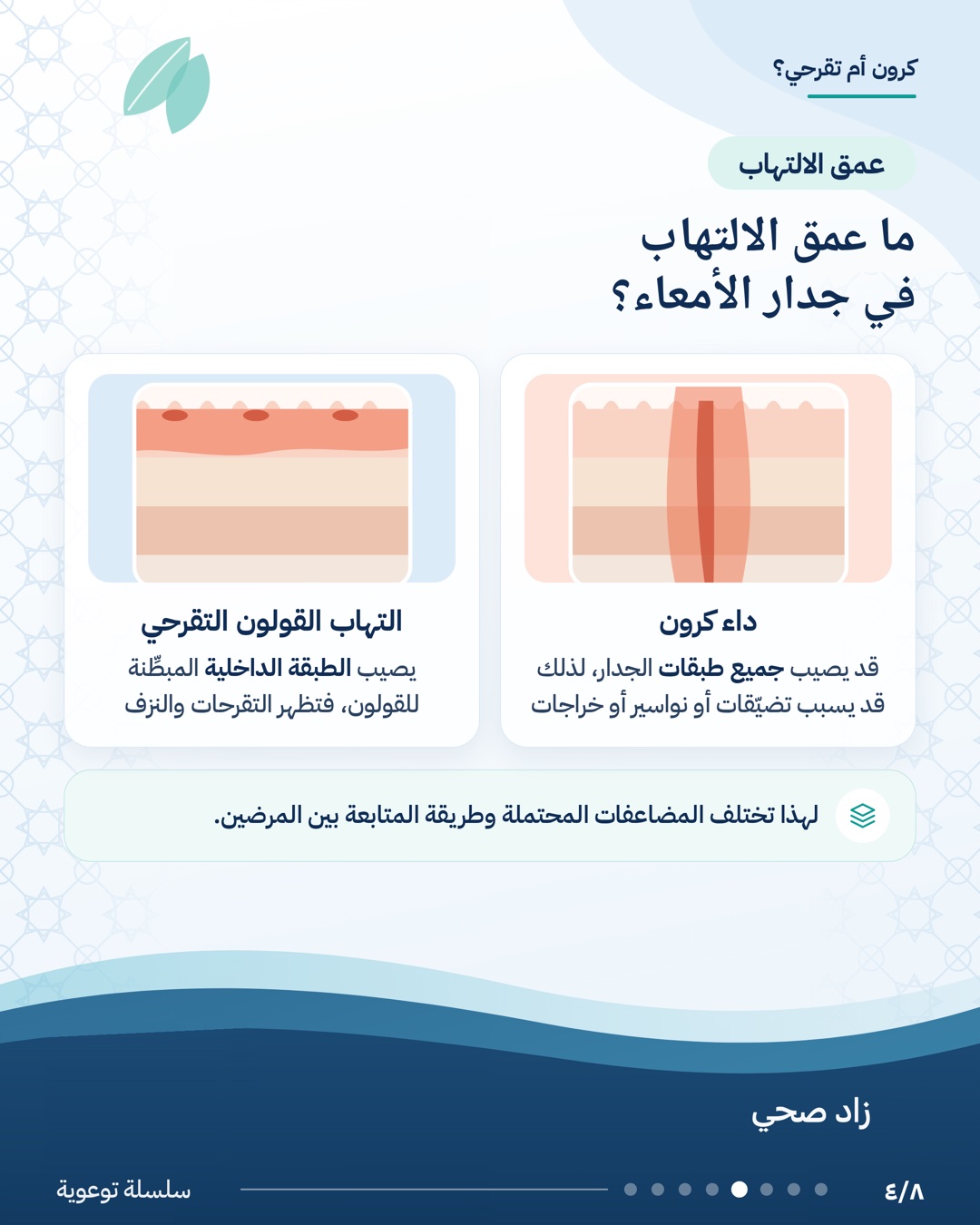
ما عمق الالتهاب في جدار الأمعاء؟
عمق الالتهاب
- داء كرون — قد يصيب جميع طبقات الجدار، لذلك قد يسبب تضيّقات أو نواسير أو خراجات
- التهاب القولون التقرحي — يصيب الطبقة الداخلية المبطِّنة للقولون، فتظهر التقرحات والنزف
لهذا تختلف المضاعفات المحتملة وطريقة المتابعة بين المرضين.
بماذا يشعر المريض؟
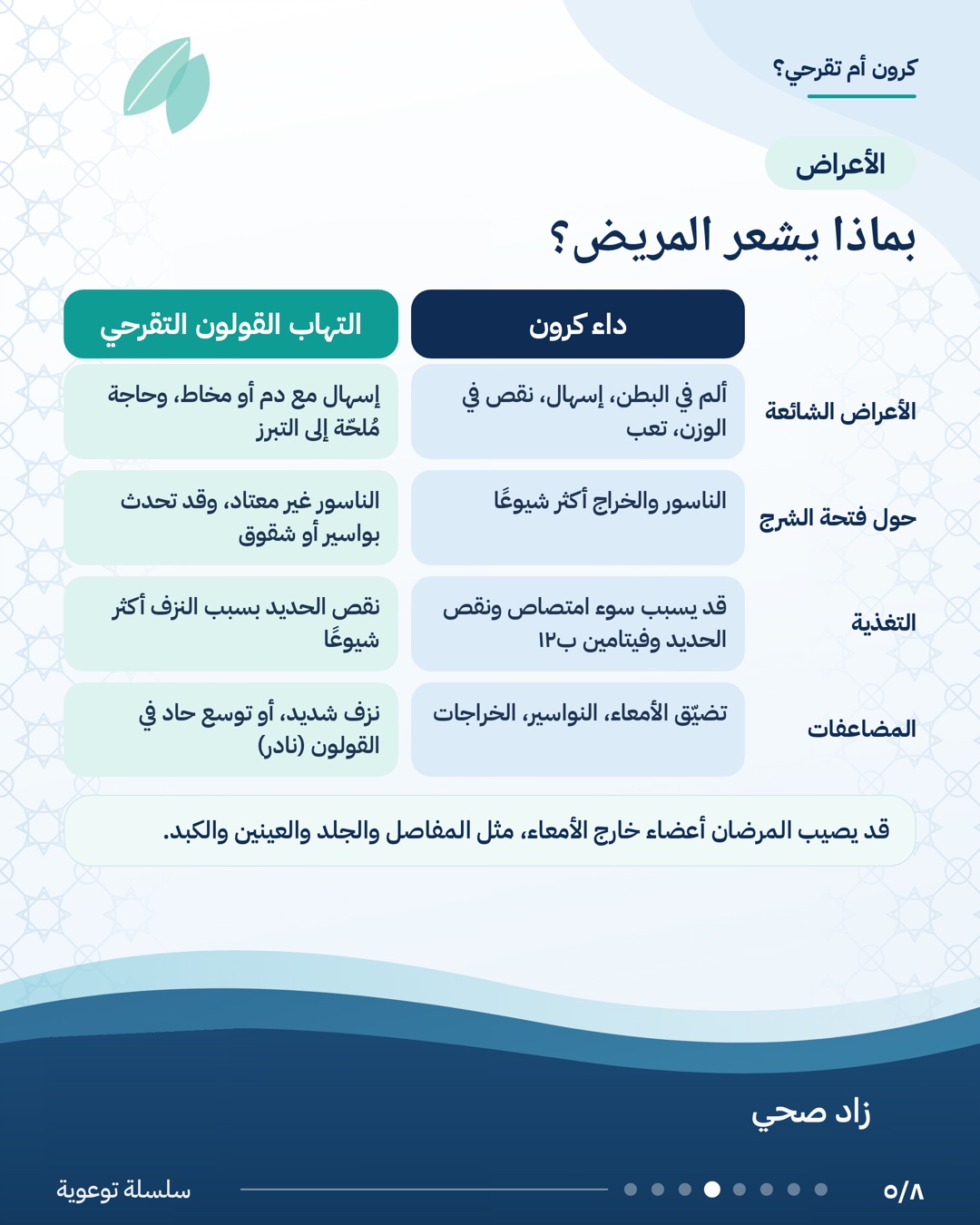
الأعراض
داء كرون:
- الأعراض الشائعة: ألم في البطن، إسهال، نقص في الوزن، تعب
- حول فتحة الشرج: الناسور والخراج أكثر شيوعًا
- التغذية: قد يسبب سوء امتصاص ونقص الحديد وفيتامين ب١٢
- المضاعفات: تضيّق الأمعاء، النواسير، الخراجات
التهاب القولون التقرحي:
- الأعراض الشائعة: إسهال مع دم أو مخاط، وحاجة مُلحّة إلى التبرز
- حول فتحة الشرج: الناسور غير معتاد، وقد تحدث بواسير أو شقوق
- التغذية: نقص الحديد بسبب النزف أكثر شيوعًا
- المضاعفات: نزف شديد، أو توسع حاد في القولون (نادر)
قد يصيب المرضان أعضاء خارج الأمعاء، مثل المفاصل والجلد والعينين والكبد.
كيف يفرّق الطبيب بينهما؟
التشخيص
- القصة المرضية والفحص السريري — بما في ذلك فحص المنطقة المحيطة بفتحة الشرج
- التحاليل — تحاليل الدم، وقياس الكالبروتكتين في البراز
- المنظار مع أخذ عينات — لرؤية شكل الالتهاب وتوزيعه وفحص العينات تحت المجهر
- الأشعة — الموجات الصوتية للأمعاء أو الرنين المغناطيسي لتقييم الأمعاء الدقيقة
يعتمد التشخيص على جمع هذه النتائج معًا، وليس على فحص واحد.
هل يختلف العلاج؟
العلاج
- الميسالازين — علاج أساسي في التهاب القولون التقرحي الخفيف إلى المتوسط، ودوره محدود في داء كرون
- العلاجات البيولوجية والمتقدمة — تُستخدم في المرضين، مع اختلاف بعض الخيارات حسب نوع المرض
- الجراحة — في التقرحي يزيل استئصال القولون موضع المرض، أما في داء كرون فتعالج الجراحة المضاعفات وقد يعود الالتهاب بعدها
- التدخين — يزيد داء كرون سوءًا بوضوح، والإقلاع عنه مفيد لجميع المرضى
الهدف في المرضين واحد: تهدئة الالتهاب، والحفاظ على جودة الحياة، والوقاية من المضاعفات.
خلاصة الفرق بين المرضين
رسائل أساسية
- كلاهما مرض التهابي مزمن يحتاج إلى متابعة مستمرة
- داء كرون قد يصيب أي جزء من الجهاز الهضمي وبشكل متقطع
- التهاب القولون التقرحي يصيب القولون والمستقيم بشكل متصل
- معرفة نوع مرضك ومكانه تساعد في اختيار العلاج المناسب
- لا تقارن خطتك بخطة مريض آخر؛ لكل مريض خطته
تواصل مع العيادة عند:
- زيادة عدد مرات التبرز أو ظهور الدم
- ألم أو إفرازات حول فتحة الشرج
- ارتفاع الحرارة
- ألم مستمر أو متزايد في البطن
- نقص غير مبرر في الوزن
- آلام المفاصل أو احمرار العين
عند النزف الشديد أو الألم الشديد أو ارتفاع الحرارة الشديد، توجّه فورًا إلى أقرب قسم طوارئ.
Crohn's disease vs ulcerative colitis
Two conditions from the same family, each with its own features
- Where it affects
- Depth of inflammation
- Treatment plan
One family, called inflammatory bowel disease
What do they have in common?
Both are long-term (chronic) inflammation that goes through active periods and calm periods, and both need long-term treatment and follow-up. But where they affect the bowel, and how, are different.
Sometimes it is hard to tell them apart at first; this is called 'IBD unclassified' (unclassified colitis).
Where does the inflammation happen?
Where it affects
Crohn's disease:
- Location: any part from the mouth to the back passage (anus); the end of the small bowel is affected most often
- Pattern: patchy; affected sections separated by healthy sections
Ulcerative colitis:
- Location: the colon (large bowel) and rectum only
- Pattern: continuous; it starts in the rectum and extends up the colon
How deep is the inflammation in the bowel wall?
Depth of inflammation
- Crohn's disease — can affect all layers of the wall, so it can cause narrowings (strictures), fistulas or abscesses
- Ulcerative colitis — affects the inner lining of the colon, causing ulcers and bleeding
This is why the possible complications and the way follow-up is done differ between the two conditions.
What does the patient feel?
Symptoms
Crohn's disease:
- Common symptoms: tummy (abdominal) pain, diarrhoea, weight loss, tiredness
- Around the back passage: fistulas and abscesses are more common
- Nutrition: may cause poor absorption and low iron and vitamin B12
- Complications: narrowing of the bowel, fistulas, abscesses
Ulcerative colitis:
- Common symptoms: diarrhoea with blood or mucus, and an urgent need to open the bowels
- Around the back passage: fistulas are unusual; piles (haemorrhoids) or tears (fissures) may occur
- Nutrition: low iron due to bleeding is more common
- Complications: severe bleeding, or sudden severe widening of the colon (rare)
Both conditions can affect organs outside the bowel, such as the joints, skin, eyes and liver.
How does the doctor tell them apart?
Diagnosis
- Medical history and examination — including examining the area around the back passage
- Tests — blood tests, and measuring calprotectin in the stool
- Endoscopy (camera test) with biopsies — to see the shape and spread of the inflammation and examine the samples under the microscope
- Scans — bowel ultrasound or MRI to assess the small bowel
The diagnosis is based on putting all these results together, not on a single test.
Is the treatment different?
Treatment
- Mesalazine — a main treatment in mild to moderate ulcerative colitis; it has a limited role in Crohn's disease
- Biologic and advanced therapies — used in both conditions, with some options differing by disease type
- Surgery — in ulcerative colitis, removing the colon removes the diseased area; in Crohn's disease, surgery treats complications and the inflammation may come back afterwards
- Smoking — clearly makes Crohn's disease worse; stopping smoking helps all patients
The goal in both conditions is the same: calm the inflammation, maintain quality of life, and prevent complications.
The difference between the two: the summary
Key messages
- Both are long-term inflammatory conditions that need ongoing follow-up
- Crohn's disease can affect any part of the digestive tract, in a patchy way
- Ulcerative colitis affects the colon and rectum in a continuous way
- Knowing your type of disease and where it is helps choose the right treatment
- Do not compare your plan with another patient's; every patient has their own plan
Contact the clinic if you have:
- More frequent bowel movements or blood appearing
- Pain or discharge around the back passage
- A high temperature
- Ongoing or worsening tummy pain
- Unexplained weight loss
- Joint pain or a red eye
If you have heavy bleeding, severe pain or a very high temperature, go straight to the nearest emergency department.
