Information for people with inflammatory bowel disease
PE-IBD-01الإصدار 1.0 · آخر مراجعة أكتوبر 2026 · المراجعة القادمة أكتوبر 2028Version 1.0 · Last reviewed October 2026 · Next review October 2028
توضّح هذه النشرة ما هو داء كرون، وكيف نتابعه، وكيف يُعالَج، ومتى ينبغي أن تتصل بنا. يُرجى إحضارها معك إلى مواعيد العيادة.
ما هو داء كرون
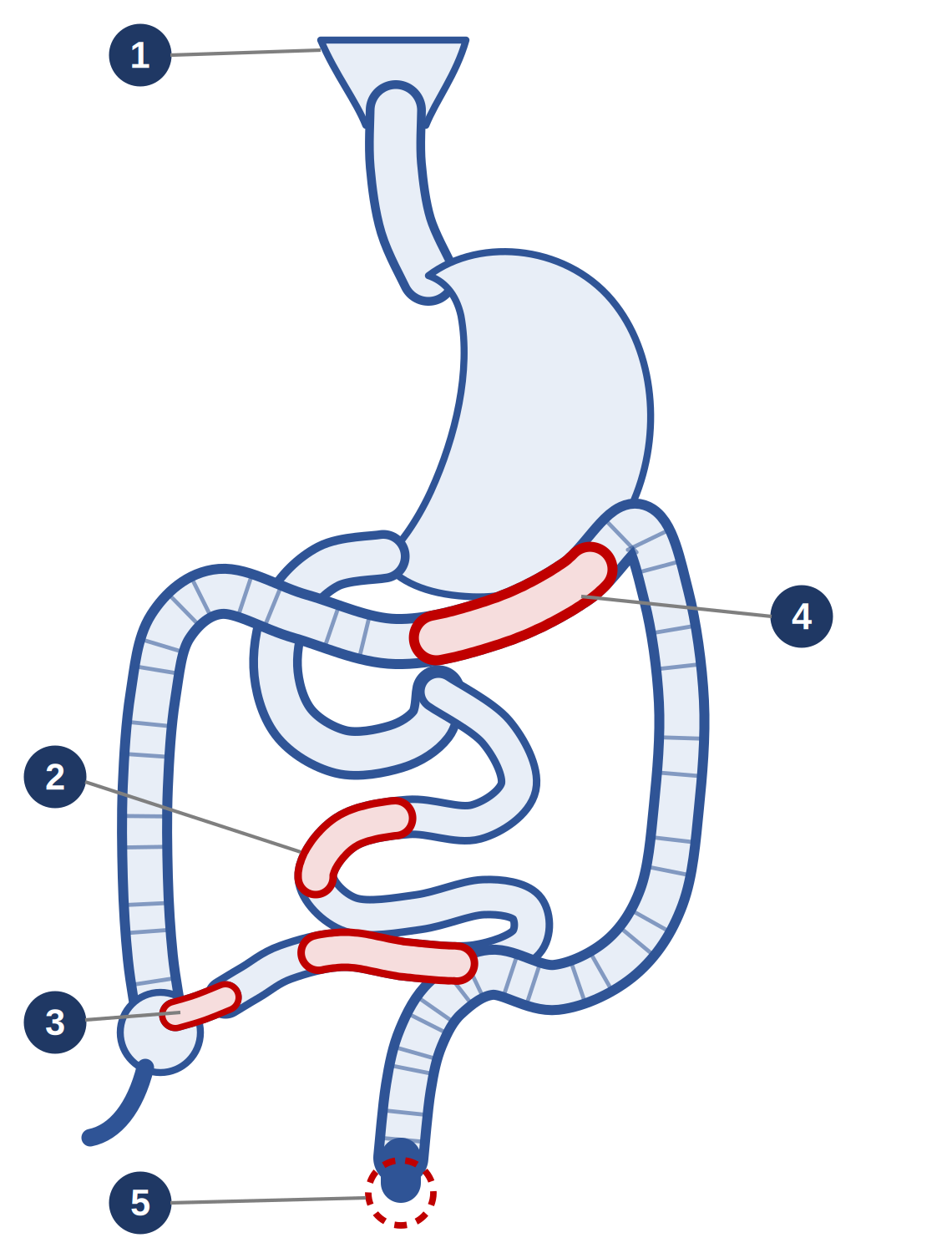
داء كرون حالة مزمنة يهاجم فيها الجهاز المناعي بطانة الأمعاء فيسبب التهاباً وتقرحات. يمكن أن يصيب أي جزء من الجهاز الهضمي من الفم إلى الشرج، غير أن الجزء الأخير من الأمعاء الدقيقة (اللفائفي الطرفي) والقولون هما أكثر المواضع إصابة. يظهر الالتهاب على شكل بقع متفرقة يفصل بينها نسيج سليم، وقد يمتد إلى جميع طبقات جدار الأمعاء. ولهذا السبب قد يسبب داء كرون تضيّقاً في الأمعاء، أو تجمعاً للصديد (خرّاج)، أو قناة غير طبيعية بين الأمعاء وسطح آخر (ناسور).
داء كرون ليس نتيجة شيء فعلته أو تناولته، وهو غير معدٍ. ويُعتقد أنه ينشأ من تفاعل بين العوامل الوراثية وبكتيريا الأمعاء وعوامل بيئية. لا يوجد علاج شافٍ نهائي، لكن يمكن السيطرة عليه جيداً لدى معظم المرضى.
1 أي جزء من الفم إلى الشرج 2 بقع التهاب يفصل بينها نسيج سليم 3 اللفائفي الطرفي، أكثر المواضع إصابة 4 القولون 5 حول الشرج
نوع المرض لديك
نسجّل موضع المرض وسلوكه وفق تصنيف مونتريال. الموضع: L1 الجزء الأخير من الأمعاء الدقيقة، L2 القولون، L3 كلاهما، ويضاف L4 عند إصابة الجزء العلوي من الجهاز الهضمي. السلوك: B1 التهاب فقط، B2 تضيّق، B3 تكوّن نواسير. ويضاف الحرف p عند وجود مرض حول الشرج. سيخبرك طبيبك بنوع المرض لديك، وقد يتغير مع الوقت.
الأعراض
إسهال قد يصاحبه دم أو مخاط، والحاجة العاجلة لدخول الحمام
ألم تشنجي في البطن، غالباً في الجهة السفلية اليمنى
تعب وفقدان الشهية ونقص الوزن
تقرحات في الفم، وألم أو تورم أو إفرازات حول الشرج
أعراض خارج الأمعاء تشمل المفاصل والعينين والجلد والكبد وفقر الدم، ويصاب نحو ثلث المرضى بواحدة على الأقل من مشاكل المفاصل أو الجلد أو العينين
الفحوصات
تنظير القولون مع أخذ خزعات هو الفحص الأساسي للتشخيص ولتقييم استجابة العلاج. ويُستخدم التصوير بالرنين المغناطيسي للأمعاء الدقيقة، وهو لا يستخدم الأشعة السينية. أما تصوير الأمعاء بالموجات فوق الصوتية فهو سريع وغير مؤلم ويمكن تكراره في العيادة. وقد يُستخدم تنظير الكبسولة لفحص الأمعاء الدقيقة. وتُستخدم تحاليل الدم وتحليل الكالبروتكتين في البراز للمتابعة بين جلسات التنظير، وتفاصيلها في النشرة PE-IBD-03.
العلاج
تُعالَج نوبة النشاط عادةً بالستيرويدات (بريدنيزولون أو بوديزونيد)، ثم يُستخدم دواء آخر للحفاظ على هدأة المرض. لا تُجدي الميسالازين وأدوية 5-ASA الأخرى في داء كرون ولا يُنصح بها. أما أدوية المداومة فتشمل الآزاثيوبرين أو المركابتوبورين، والميثوتريكسات، والأدوية البيولوجية ومنها إنفليكسيماب وأداليموماب وأوستيكينوماب وفيدوليزوماب وريزانكيزوماب، ولكل منها نشرة خاصة. والتغذية السائلة الحصرية بديل عن الستيرويدات لدى بعض المرضى.
الاتجاه الحديث هو البدء بعلاج فعّال مبكراً بدلاً من انتظار تفاقم المرض. ففي تجربة بريطانية كبيرة على مرضى حديثي التشخيص، بلغت نسبة الهدأة دون ستيرويدات ودون جراحة بعد سنة 79 بالمئة لدى من بدأوا العلاج المشترك مبكراً، مقابل 15 بالمئة لدى من عولجوا بالتدرج.
هدف العلاج ليس تحسّن الأعراض فحسب، بل اختفاء الالتهاب القابل للقياس، لأن الأعراض والالتهاب لا يتوافقان دائماً. لذلك نعيد التقييم بالكالبروتكتين، وغالباً بالتنظير أو التصوير، بعد نحو ستة إلى تسعة أشهر من بدء أي علاج جديد.
الجراحة
يحتاج نحو واحد من كل خمسة مرضى بداء كرون إلى جراحة كبرى خلال السنوات الخمس الأولى بعد التشخيص. وأكثر العمليات شيوعاً استئصال جزء قصير مصاب، أو توسيع التضيّق دون استئصال، أو تصريف الخرّاج ووضع خيط تصريف للناسور، وأحياناً عمل فتحة للأمعاء على البطن. الجراحة تعالج المضاعفة ولا تشفي داء كرون، لذلك يُستمر في الدواء أو يُبدأ به بعدها لتقليل احتمال عودة المرض.
التدخين
يزيد التدخين المرض سوءاً. فالمدخنون أكثر تعرضاً لنوبات النشاط، وأكثر احتياجاً للجراحة، وأكثر احتمالاً للحاجة إلى عملية ثانية. وعند التوقف عن التدخين تعود هذه المخاطر تدريجياً إلى مستوى غير المدخنين، فلا يفوت الأوان أبداً للإقلاع. واحتمال نجاحك في الإقلاع يتضاعف نحو ثلاث مرات مع الدعم المتخصص، فاطلب منا التحويل.
سرطان القولون والمتابعة بالتنظير
إذا أصاب داء كرون القولون فإن خطر سرطان القولون يرتفع عن عامة الناس بنحو الضعف، وأكثر من ذلك بكثير إذا كان الالتهاب واسعاً أو بدأ في سن مبكرة. لذلك نوفر تنظير قولون دورياً للكشف المبكر يبدأ بعد ثماني سنوات من بداية الأعراض، وتُحدَّد الفترة بين الجلسات حسب درجة الخطورة لديك. ويبدأ هذا البرنامج من وقت التشخيص إذا كنت مصاباً أيضاً بالتهاب الأقنية الصفراوية المصلب الأولي. أما المرض المحصور في الجزء الأخير من الأمعاء الدقيقة فلا يحتاج إلى هذه المتابعة.
متى تتصل بنا
العَرَض
ما ينبغي عمله
براز رخو مصحوب بدم أو مخاط لأكثر من ثلاثة أيام
تواصل مع عيادة داء الأمعاء الالتهابي
ألم بطني جديد أو متزايد، أو استيقاظ ليلاً للتبرز
تواصل مع عيادة داء الأمعاء الالتهابي
حرارة أعلى من 38 درجة مئوية أثناء تناول دواء يؤثر على المناعة
في اليوم نفسه: اتصل بطبيبك أو راجع قسم الطوارئ
ألم بطني شديد مع قيء وانقطاع الريح والبراز
قسم الطوارئ، فقد يكون انسداداً
ألم أو تورم أو إفرازات حول الشرج مع حرارة
قسم الطوارئ، فقد يكون خرّاجاً
نزيف غزير من فتحة الشرج أو قيء دموي
قسم الطوارئ
كيف تتواصل مع طبيبك
تواصل مع طبيبك خلال أوقات العمل عبر الأرقام التي زوّدتك بها العيادة لأي أمر غير طارئ: تفاعل مع دواء، أو تغيّر في الأعراض، أو استفسار عن علاجك، أو تجديد وصفة. وأبلغ طبيبك عن أي تفاعل دوائي، فهذا ما يتيح له تقديم موعدك. أما تحاليل الدم الدورية فيمكن إجراؤها ومراجعة نتائجها في المركز الصحي القريب منك، ولا داعي لانتظارنا. وإذا كانت حالتك شديدة فتوجّه إلى قسم الطوارئ بدلاً من انتظار الرد.
التعايش مع داء كرون
لا يوجد دليل واضح على أن طعاماً بعينه يسبب داء كرون أو يشفيه. احرص على غذاء متوازن، واطلب مقابلة أخصائي التغذية إذا كنت تفقد وزنك أو تتجنب أصنافاً كثيرة من الطعام أو لديك تضيّق. ويقول نحو نصف المرضى إن المرض أثّر في صحتهم النفسية في مرحلة ما، فأخبر طبيبك إن كان يؤثر فيك لأن المساعدة متاحة. وإذا كنت تخططين للحمل فأبلغي طبيبك قبل حدوثه، إذ نهدف إلى استقرار المرض ثلاثة إلى ستة أشهر أولاً، ومعظم أدوية داء كرون تُستكمل خلال الحمل والرضاعة. أما إرشادات التطعيم فترد في النشرة PE-IBD-04.
تواصل مع طبيبك عبر الأرقام التي زوّدتك بها العيادة. وإذا كانت حالتك شديدة أو كان الوقت خارج أوقات العمل فتوجّه إلى قسم الطوارئ بدلاً من انتظار الرد. هذه النشرة معلومات عامة ولا تغني عن مشورة طبيبك. الإصدار 1.0 · تاريخ المراجعة أكتوبر 2028.
هذه النشرة معلومات عامة ولا تغني عن مشورة طبيبك المعالج.
زاد صحي، PE-IBD-01
This sheet explains what Crohn’s disease is, how it is monitored, how it is treated, and when to contact your doctor. Please bring it with you to your clinic appointments.
What Crohn’s disease is
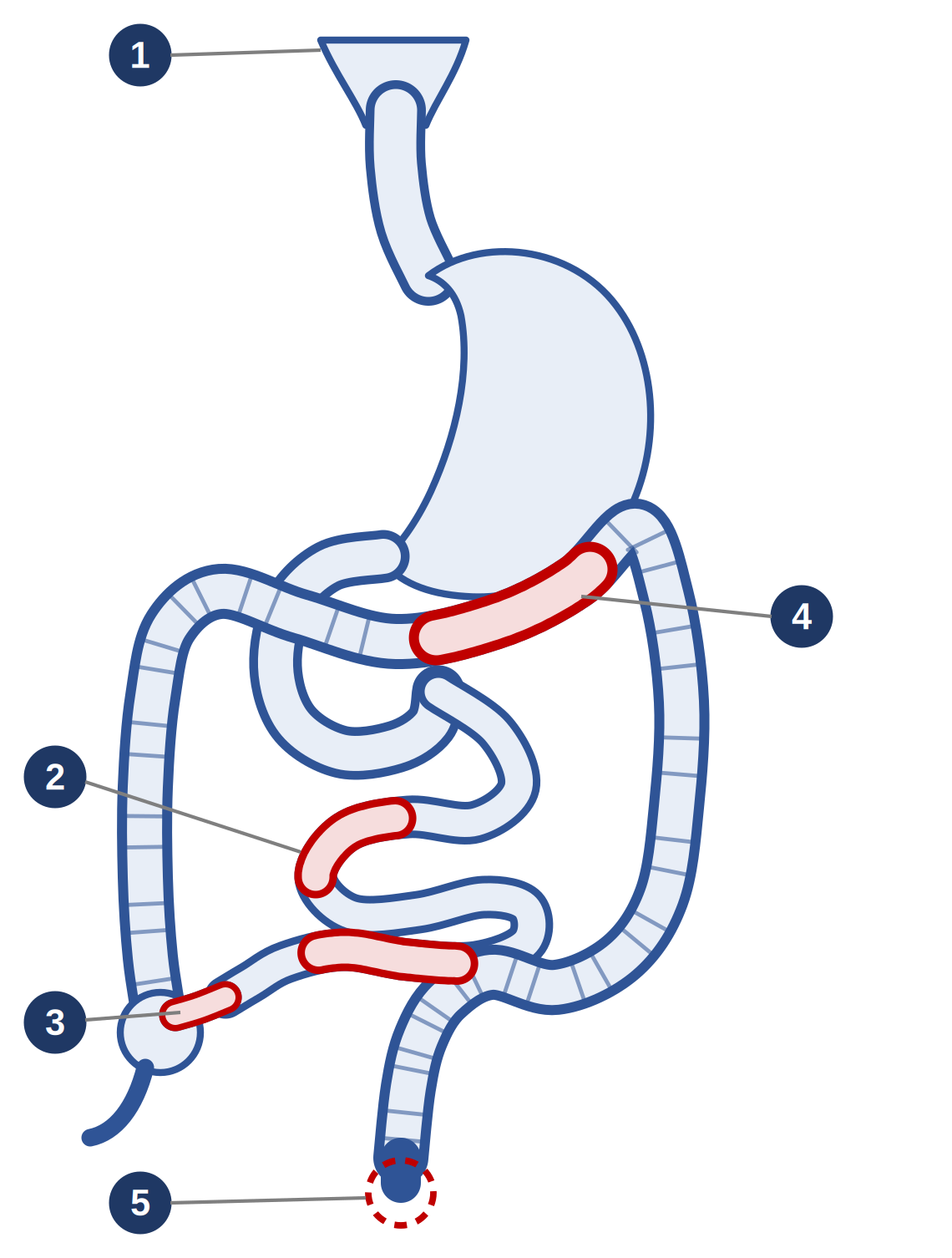
Crohn’s disease is a long-term condition in which the immune system attacks the lining of the gut and causes inflammation and ulcers. It can affect any part of the digestive tract, from the mouth to the anus, but the last part of the small bowel (the terminal ileum) and the colon are the commonest sites. The inflammation comes in patches, with healthy gut in between, and it can involve all layers of the bowel wall. This is why Crohn’s can cause narrowing (a stricture), a collection of pus (an abscess), or an abnormal channel between the bowel and another surface (a fistula).
Crohn’s disease is not caused by anything you did or ate, and it is not infectious. A mix of inherited genes, the bacteria in the gut and environmental factors is thought to cause it. It cannot be cured, but for most people it can be well controlled with treatment.
1 Any part, from mouth to anus 2 Patches of inflammation with healthy gut in between 3 Terminal ileum — the commonest site 4 Colon 5 Around the anus (perianal disease)
Your type of Crohn’s disease
We record where your disease is and how it behaves, using the Montreal classification. Location: L1 the last part of the small bowel, L2 the colon, L3 both; L4 is added if the upper gut is also involved. Behaviour: B1 inflammation only, B2 narrowing, B3 fistulising. A small “p” is added if you also have disease around the anus. Your doctor will tell you your type, and it may change over time.
Symptoms
Diarrhoea, sometimes with blood or mucus, and needing to rush to the toilet
Cramping abdominal pain, often in the lower right side
Tiredness, loss of appetite and weight loss
Mouth ulcers; pain, swelling or discharge around the anus
Problems outside the gut — joints, eyes, skin, liver and anaemia. Around one in three people with Crohn’s develop at least one joint, skin or eye problem of this kind.
Tests we use
Colonoscopy with biopsies is the main test for diagnosis and for checking how well treatment is working. MR enterography looks at the small bowel and uses no X-ray radiation. Intestinal ultrasound is quick, painless and can be repeated in clinic. Capsule endoscopy may be used for the small bowel. Blood tests and a stool test for faecal calprotectin are used between endoscopies — see sheet PE-IBD-03.
Treatment
A flare is usually settled with steroids (prednisolone or budesonide), and a separate medicine is then used to keep the disease settled. Mesalazine and other 5-ASA medicines do not work in Crohn’s disease and are not recommended. Maintenance options are azathioprine or mercaptopurine, methotrexate, and biologic medicines including infliximab, adalimumab, ustekinumab, vedolizumab and risankizumab. Each of these has its own information sheet. Exclusive liquid nutrition is an alternative to steroids in some people.
Modern practice is to start effective treatment early rather than waiting for the disease to progress. In a large UK trial of newly diagnosed patients, 79 per cent of those given early combined treatment were in remission without steroids or surgery at one year, compared with 15 per cent treated step by step.
The aim of treatment is not only that you feel better, but that we can no longer measure any inflammation — symptoms and inflammation do not always match. We usually reassess with calprotectin, and often with endoscopy or a scan, about six to nine months after starting a new treatment.
Surgery
Around one in five people with Crohn’s disease need major surgery in the first five years after diagnosis. The commonest operations are removing a short diseased segment (a resection), widening a stricture without removing bowel (a strictureplasty), draining an abscess or placing a seton for a fistula, and occasionally forming a stoma. Surgery treats the complication but does not cure Crohn’s, so medicine is usually continued or started afterwards to reduce the chance of it returning.
Smoking
Smoking makes Crohn’s disease worse. Smokers have more flares, are more likely to need surgery, and are more likely to need a second operation. When people stop smoking, these risks fall back towards those of a non-smoker, so it is never too late to stop. You are about three times more likely to succeed with specialist support than on your own; please ask your doctor to refer you.
Bowel cancer and surveillance
If Crohn’s disease affects the colon, the risk of bowel cancer is higher than in the general population — roughly double, and considerably more if the colitis is extensive or began at a young age. Because of this we offer regular surveillance colonoscopy starting eight years after your symptoms began, at an interval that depends on your own risk. Surveillance starts from the time of diagnosis if you also have primary sclerosing cholangitis. Disease limited to the last part of the small bowel does not need surveillance.
When to contact your doctor
Symptom
What to do
Loose stools with blood or mucus for more than three days
Contact the IBD clinic
New or worsening abdominal pain, or waking at night to open your bowels
Contact the IBD clinic
Fever above 38°C while on medicine that affects the immune system
Same day — contact your doctor or attend the Emergency Department
Severe abdominal pain with vomiting, and no wind or stool passing
Emergency Department — this may be a blockage
Pain, swelling or discharge around the anus with fever
Emergency Department — this may be an abscess
Heavy bleeding from the back passage, or vomiting blood
Emergency Department
How to contact your doctor
Contact your doctor during working hours, using the numbers your clinic has given you, for anything that is not an emergency — a reaction to a medicine, symptoms that are changing, a question about your treatment, or a repeat prescription. Tell your doctor about any reaction to a medicine: that is what lets your doctor bring your appointment forward. Routine blood tests can be done and reviewed at your local health centre — you do not need to wait for us for that. If you are seriously unwell, go to the Emergency Department rather than waiting for a reply.
Living with Crohn’s disease
There is no clear evidence that any particular food causes or cures Crohn’s disease. Aim for a balanced diet and ask to see the dietitian if you are losing weight, avoiding many foods, or have a stricture. About half of people with Crohn’s say the condition has affected their mental health at some point; tell your doctor if it is affecting yours, as help is available. If you are planning a pregnancy, tell your doctor before you conceive — we aim for the disease to be settled for three to six months first, and most Crohn’s medicines are continued through pregnancy and breastfeeding. Vaccination advice is in sheet PE-IBD-04.
Contact your doctor using the numbers your clinic has given you. If you are seriously unwell, or it is outside working hours, go to the Emergency Department rather than waiting for a reply. This sheet is general information and does not replace the advice of your own doctor. Version 1.0 · review date October 2028.
This leaflet is general information and does not replace advice from your own doctor.