

النص المكتوب للشرائحText version of the slides (English and Arabic)
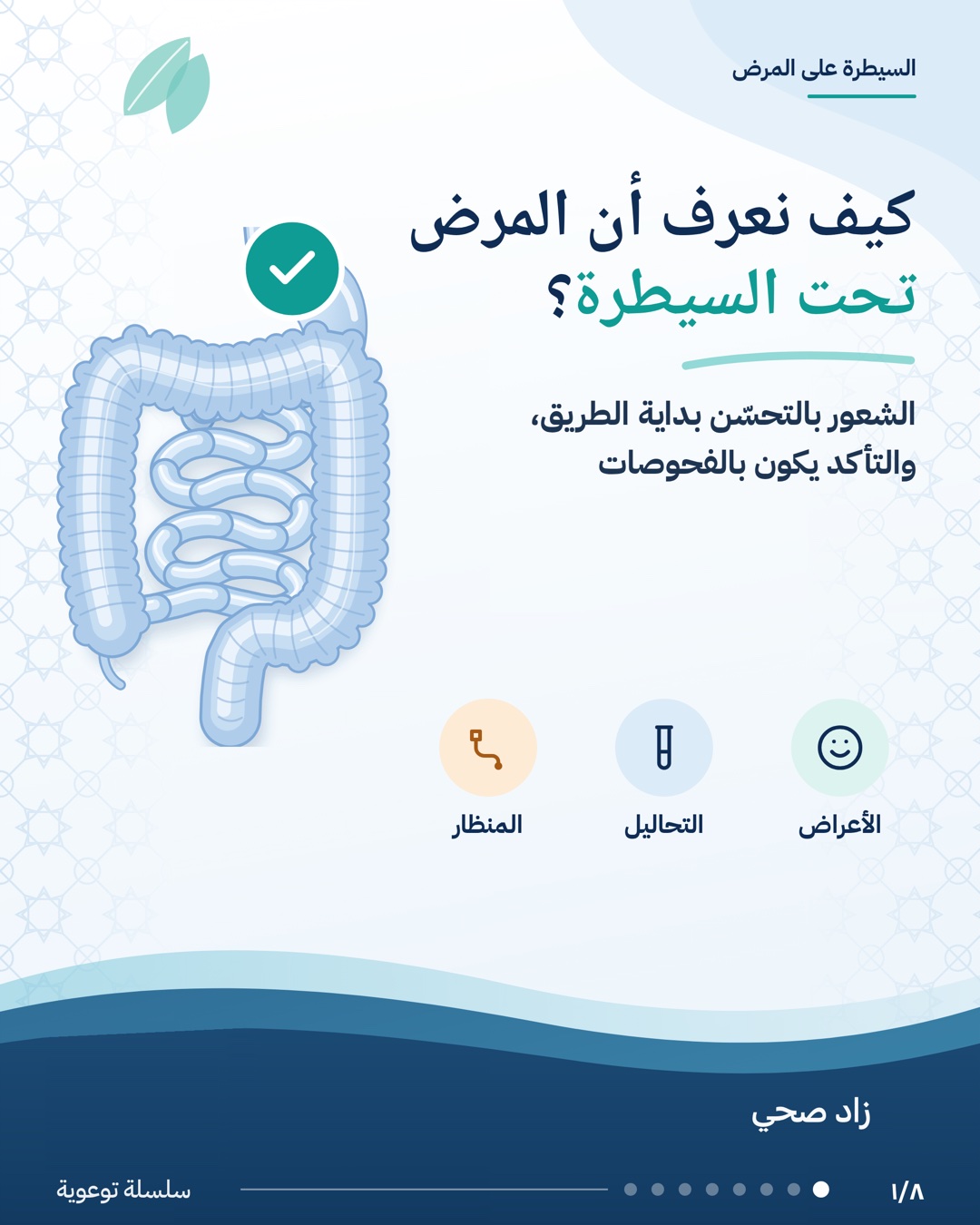
كيف نعرف أن المرض تحت السيطرة؟
الشعور بالتحسّن بداية الطريق، والتأكد يكون بالفحوصات
- الأعراض
- التحاليل
- المنظار
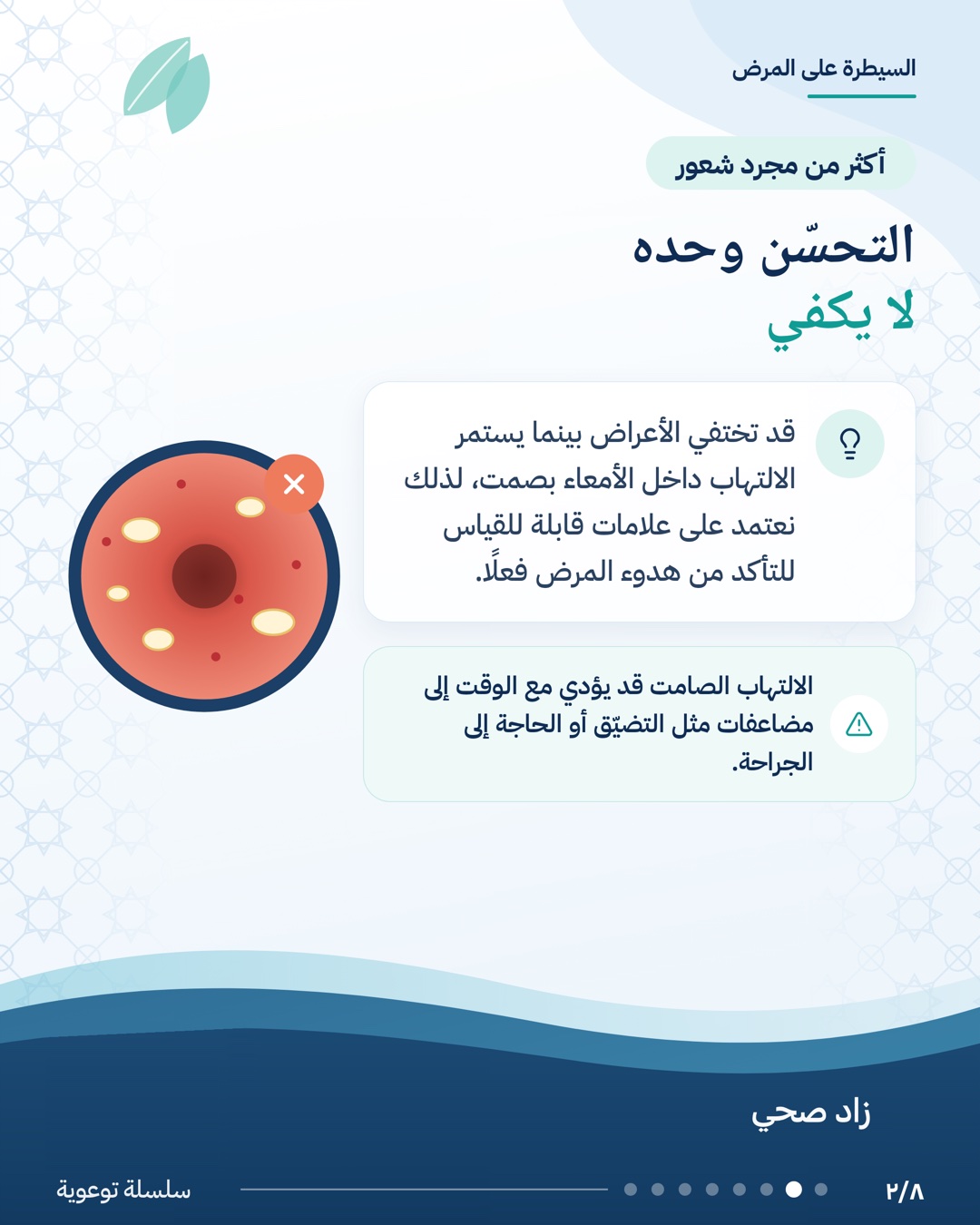
التحسّن وحده لا يكفي
أكثر من مجرد شعور
قد تختفي الأعراض بينما يستمر الالتهاب داخل الأمعاء بصمت، لذلك نعتمد على علامات قابلة للقياس للتأكد من هدوء المرض فعلًا.
الالتهاب الصامت قد يؤدي مع الوقت إلى مضاعفات مثل التضيّق أو الحاجة إلى الجراحة.
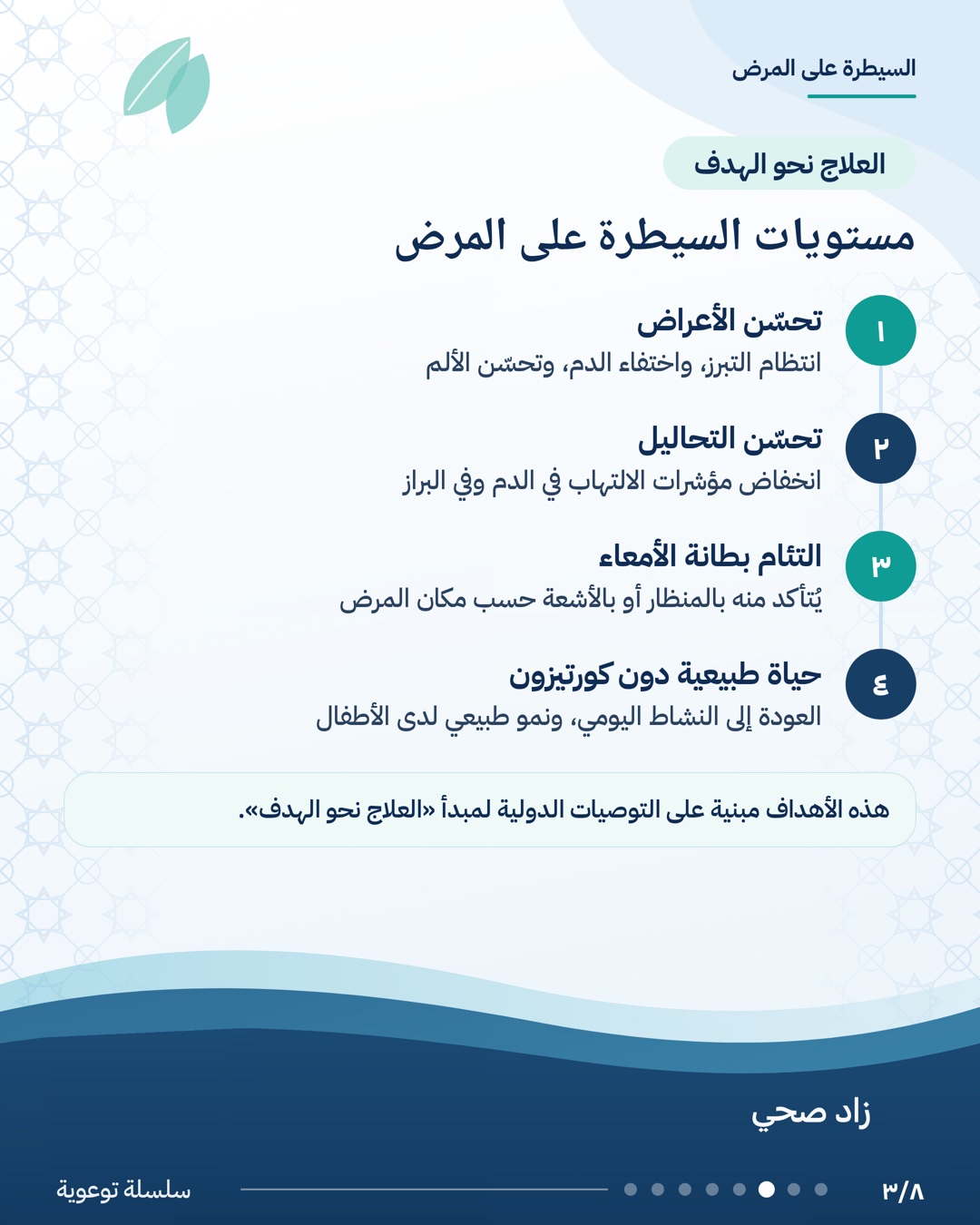
مستويات السيطرة على المرض
العلاج نحو الهدف
- تحسّن الأعراض — انتظام التبرز، واختفاء الدم، وتحسّن الألم
- تحسّن التحاليل — انخفاض مؤشرات الالتهاب في الدم وفي البراز
- التئام بطانة الأمعاء — يُتأكد منه بالمنظار أو بالأشعة حسب مكان المرض
- حياة طبيعية دون كورتيزون — العودة إلى النشاط اليومي، ونمو طبيعي لدى الأطفال
هذه الأهداف مبنية على التوصيات الدولية لمبدأ «العلاج نحو الهدف».
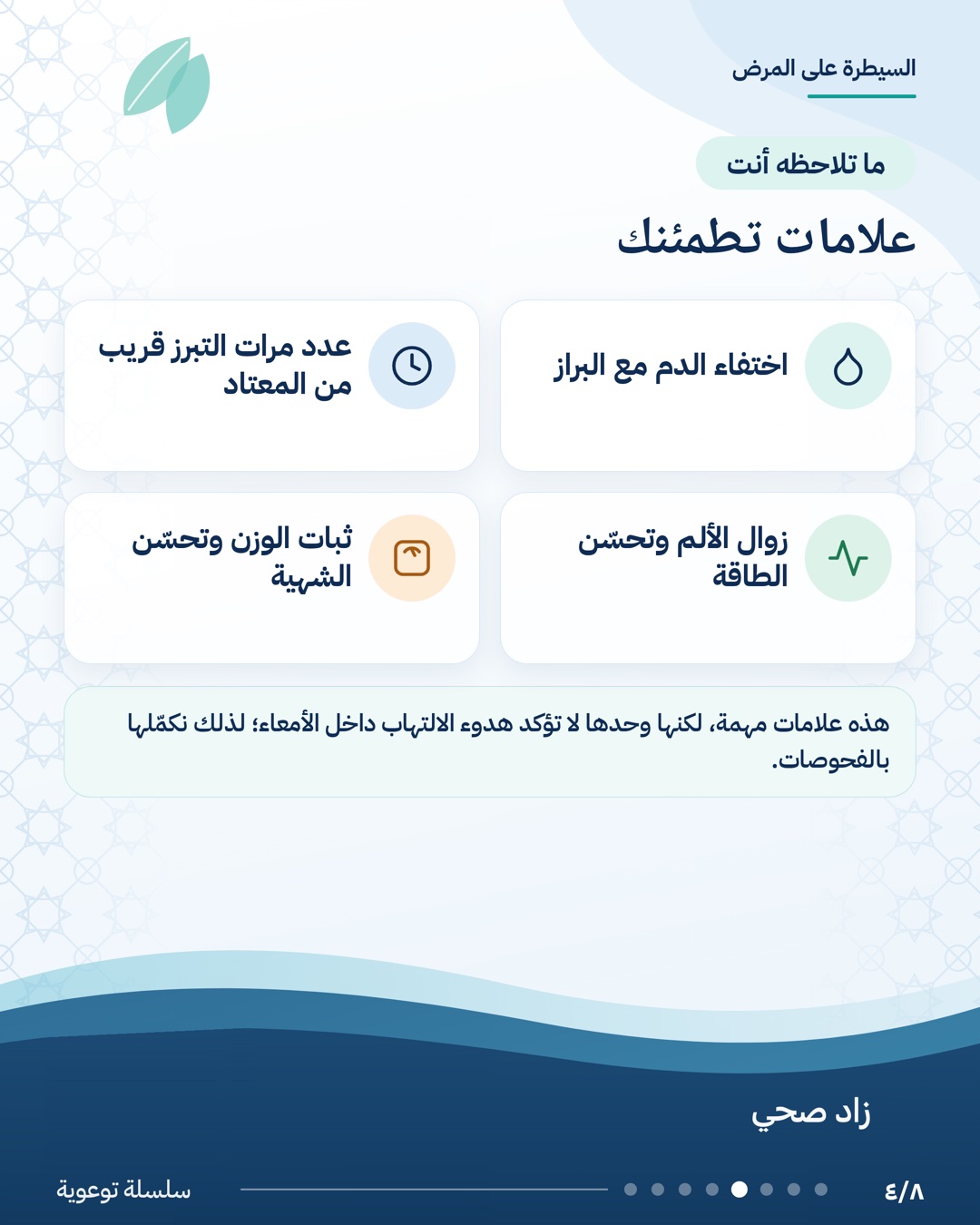
علامات تطمئنك
ما تلاحظه أنت
- اختفاء الدم مع البراز
- عدد مرات التبرز قريب من المعتاد
- زوال الألم وتحسّن الطاقة
- ثبات الوزن وتحسّن الشهية
هذه علامات مهمة، لكنها وحدها لا تؤكد هدوء الالتهاب داخل الأمعاء؛ لذلك نكمّلها بالفحوصات.
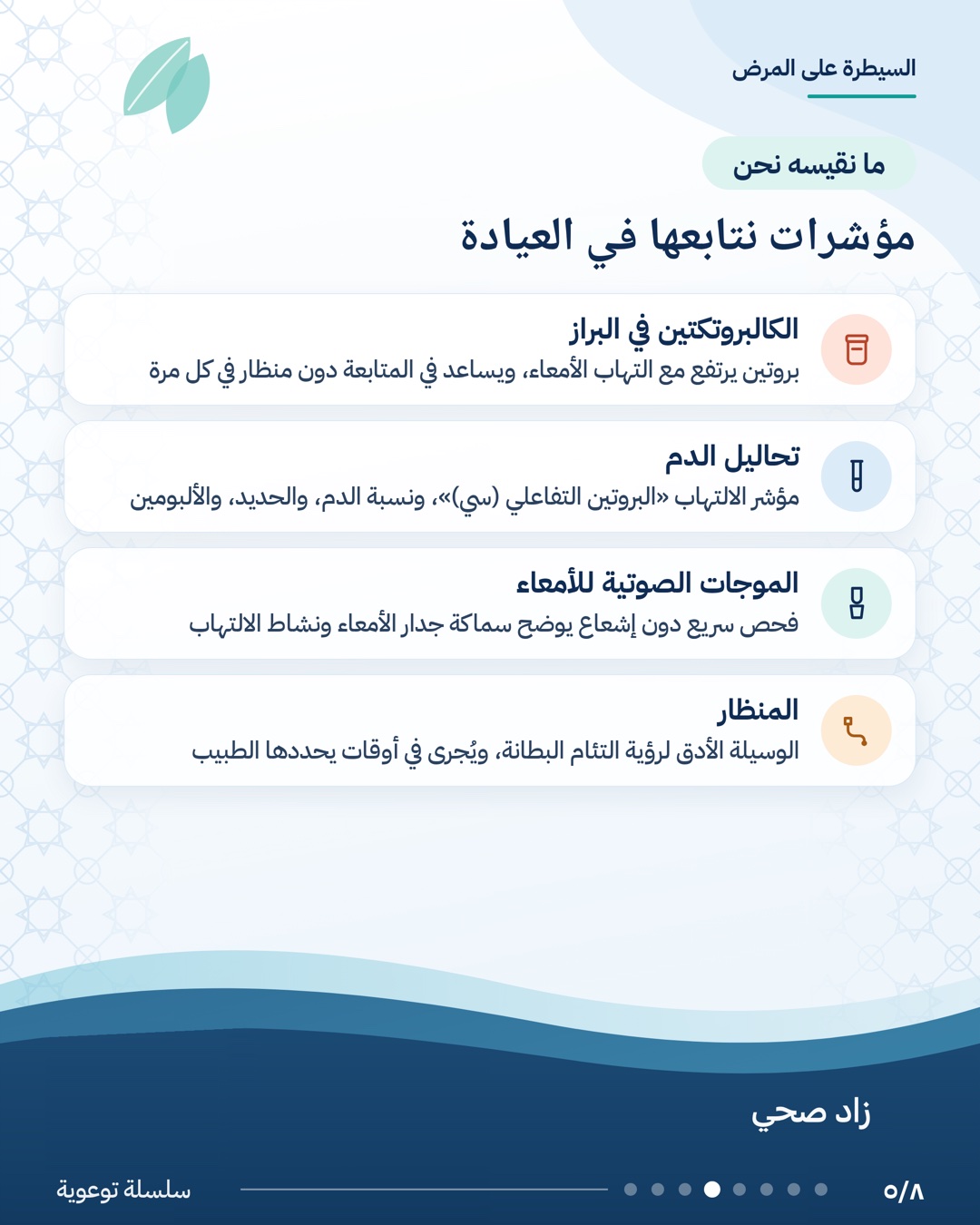
مؤشرات نتابعها في العيادة
ما نقيسه نحن
- الكالبروتكتين في البراز — بروتين يرتفع مع التهاب الأمعاء، ويساعد في المتابعة دون منظار في كل مرة
- تحاليل الدم — مؤشر الالتهاب «البروتين التفاعلي (سي)»، ونسبة الدم، والحديد، والألبومين
- الموجات الصوتية للأمعاء — فحص سريع دون إشعاع يوضح سماكة جدار الأمعاء ونشاط الالتهاب
- المنظار — الوسيلة الأدق لرؤية التئام البطانة، ويُجرى في أوقات يحددها الطبيب
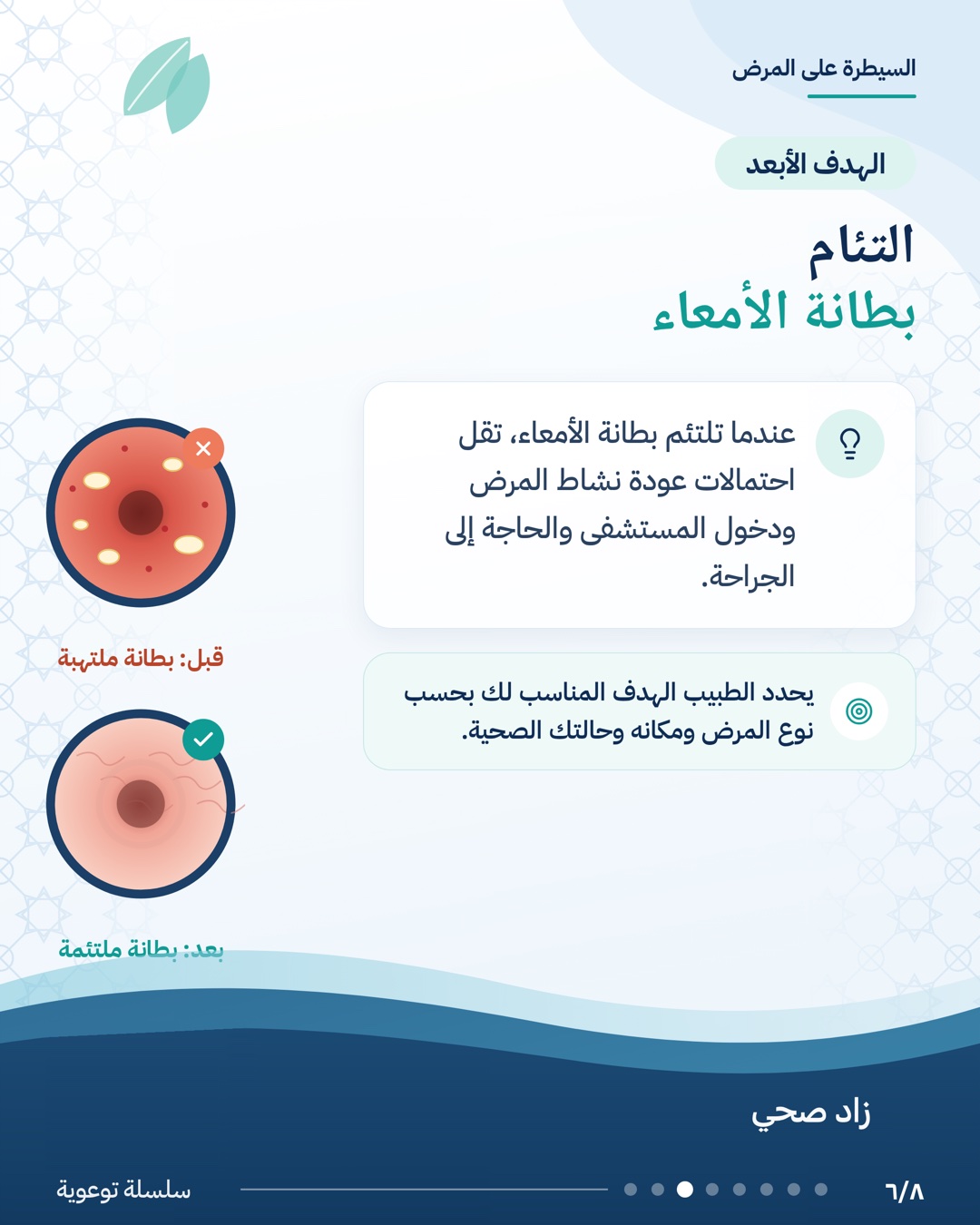
التئام بطانة الأمعاء
الهدف الأبعد
عندما تلتئم بطانة الأمعاء، تقل احتمالات عودة نشاط المرض ودخول المستشفى والحاجة إلى الجراحة.
يحدد الطبيب الهدف المناسب لك بحسب نوع المرض ومكانه وحالتك الصحية.
- قبل: بطانة ملتهبة
- بعد: بطانة ملتئمة
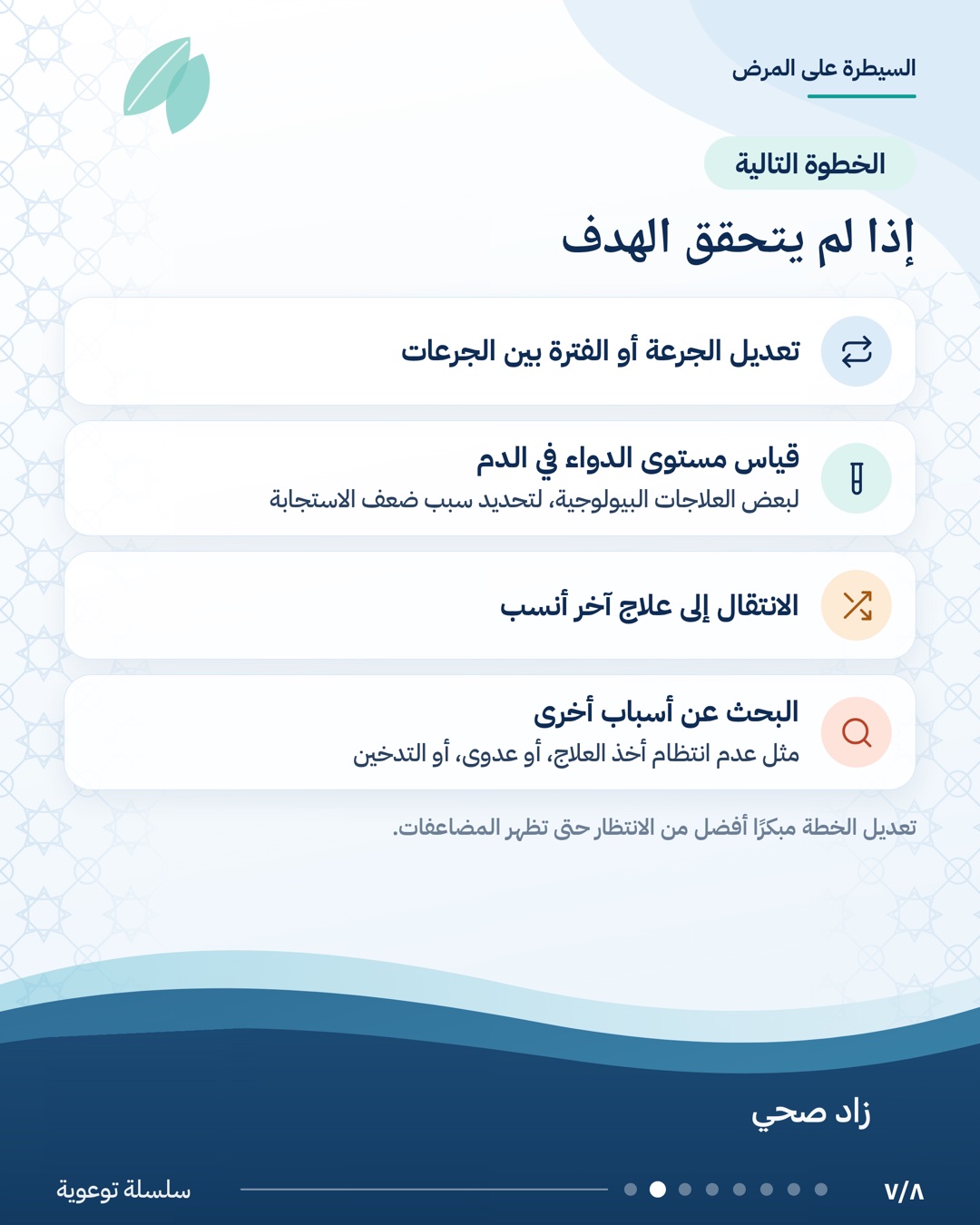
إذا لم يتحقق الهدف
الخطوة التالية
- تعديل الجرعة أو الفترة بين الجرعات
- قياس مستوى الدواء في الدم — لبعض العلاجات البيولوجية، لتحديد سبب ضعف الاستجابة
- الانتقال إلى علاج آخر أنسب
- البحث عن أسباب أخرى — مثل عدم انتظام أخذ العلاج، أو عدوى، أو التدخين
تعديل الخطة مبكرًا أفضل من الانتظار حتى تظهر المضاعفات.
خلاصة السيطرة على المرض
رسائل أساسية
- السيطرة على المرض تعني أكثر من اختفاء الأعراض
- الكالبروتكتين وتحاليل الدم أدوات متابعة أساسية
- التئام بطانة الأمعاء هدف طويل الأمد
- المتابعة تستمر حتى في فترات الهدوء
- تُعدَّل الخطة إذا لم يتحقق الهدف
تواصل مع العيادة عند:
- عودة الدم مع البراز
- ألم جديد أو متزايد في البطن
- فوات موعد تحليل أو منظار
- زيادة عدد مرات التبرز
- ارتفاع الحرارة أو نقص الوزن
- عدم التحسّن بعد تعديل العلاج
عند النزف الشديد أو الألم الشديد أو ارتفاع الحرارة الشديد، توجّه فورًا إلى أقرب قسم طوارئ.
How do we know the disease is controlled?
Feeling better is the start of the journey; confirmation comes from tests
- Symptoms
- Tests
- Endoscopy
Feeling better alone is not enough
More than just a feeling
Symptoms can disappear while inflammation carries on silently inside the bowel. So we rely on measurable signs to make sure the disease really is calm.
Silent inflammation can, over time, lead to complications such as narrowing (stricture) or needing surgery.
Levels of disease control
Treating to a target
- Better symptoms — regular bowel movements, no blood, and less pain
- Better test results — lower inflammation markers in the blood and stool
- Healing of the bowel lining — confirmed by endoscopy or scans, depending on where the disease is
- A normal life without steroids — getting back to daily activities, and normal growth in children
These targets are based on international recommendations for the 'treat to target' approach.
Reassuring signs
What you notice
- No more blood in the stool
- Number of bowel movements close to your usual
- Pain gone and more energy
- Stable weight and better appetite
These are important signs, but on their own they do not confirm that the inflammation inside the bowel has settled; so we add tests.
Markers we monitor in clinic
What we measure
- Stool calprotectin — a protein that rises with bowel inflammation; it helps with follow-up without needing an endoscopy every time
- Blood tests — the inflammation marker 'C-reactive protein (CRP)', haemoglobin, iron, and albumin
- Bowel ultrasound — a quick, radiation-free scan that shows the thickness of the bowel wall and how active the inflammation is
- Endoscopy — the most accurate way to see the lining healing; it is done at times your doctor decides
Healing of the bowel lining
The longer-term goal
When the bowel lining heals, the chances of the disease flaring again, of hospital admission, and of needing surgery go down.
Your doctor sets the right target for you based on the type and location of your disease and your general health.
- Before: inflamed lining
- After: healed lining
If the target is not reached
The next step
- Adjusting the dose or the interval between doses
- Measuring the drug level in the blood — for some biologic treatments, to find the reason for a weak response
- Switching to another, more suitable treatment
- Looking for other causes — such as not taking treatment regularly, an infection, or smoking
Adjusting the plan early is better than waiting until complications appear.
Disease control: the summary
Key messages
- Controlling the disease means more than symptoms disappearing
- Calprotectin and blood tests are key monitoring tools
- Healing of the bowel lining is a long-term goal
- Follow-up continues even during calm periods
- The plan is adjusted if the target is not reached
Contact the clinic if you have:
- Blood in the stool coming back
- New or worsening tummy pain
- A missed test or endoscopy appointment
- More frequent bowel movements
- A high temperature or weight loss
- No improvement after a change in treatment
If you have heavy bleeding, severe pain or a very high temperature, go straight to the nearest emergency department.

