
النص المكتوب للشرائحText version of the slides (English and Arabic)
فحوصاتك في عيادة أمراض الأمعاء الالتهابية
لماذا نطلبها... وماذا تخبرنا؟
- تحاليل الدم
- تحليل البراز
- المنظار
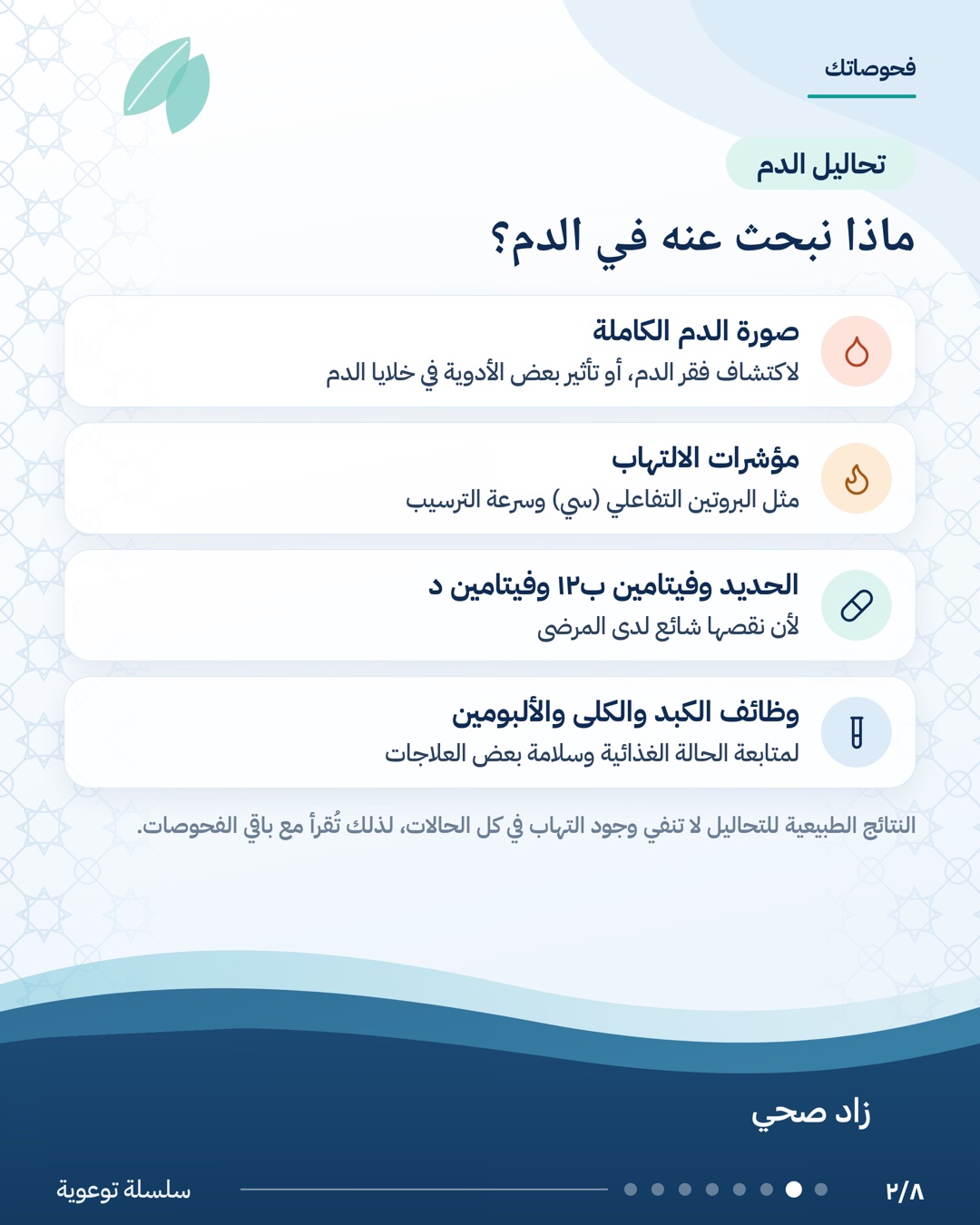
ماذا نبحث عنه في الدم؟
تحاليل الدم
- صورة الدم الكاملة — لاكتشاف فقر الدم، أو تأثير بعض الأدوية في خلايا الدم
- مؤشرات الالتهاب — مثل البروتين التفاعلي (سي) وسرعة الترسيب
- الحديد وفيتامين ب١٢ وفيتامين د — لأن نقصها شائع لدى المرضى
- وظائف الكبد والكلى والألبومين — لمتابعة الحالة الغذائية وسلامة بعض العلاجات
النتائج الطبيعية للتحاليل لا تنفي وجود التهاب في كل الحالات، لذلك تُقرأ مع باقي الفحوصات.
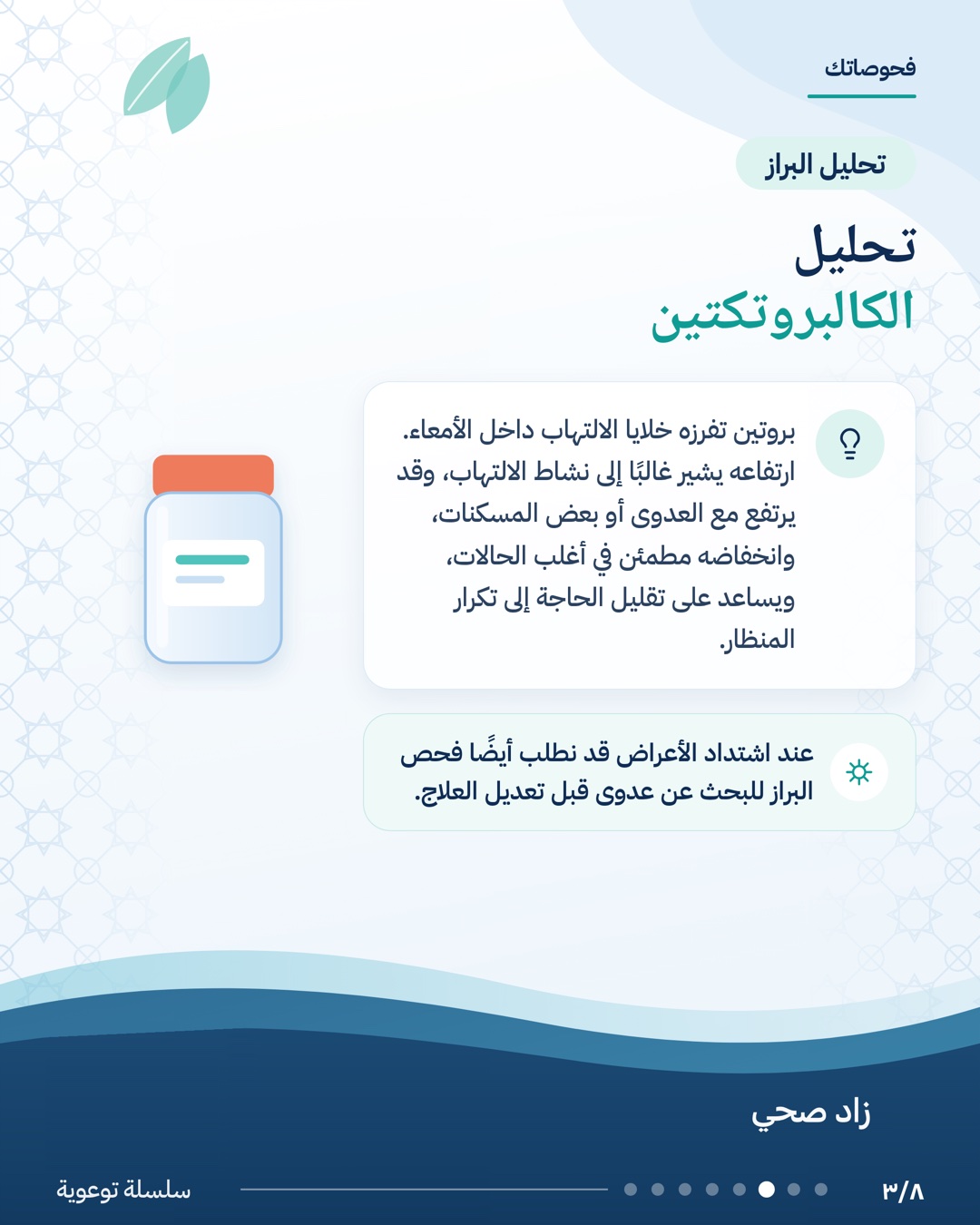
تحليل الكالبروتكتين
تحليل البراز
بروتين تفرزه خلايا الالتهاب داخل الأمعاء. ارتفاعه يشير غالبًا إلى نشاط الالتهاب، وقد يرتفع مع العدوى أو بعض المسكنات، وانخفاضه مطمئن في أغلب الحالات، ويساعد على تقليل الحاجة إلى تكرار المنظار.
عند اشتداد الأعراض قد نطلب أيضًا فحص البراز للبحث عن عدوى قبل تعديل العلاج.
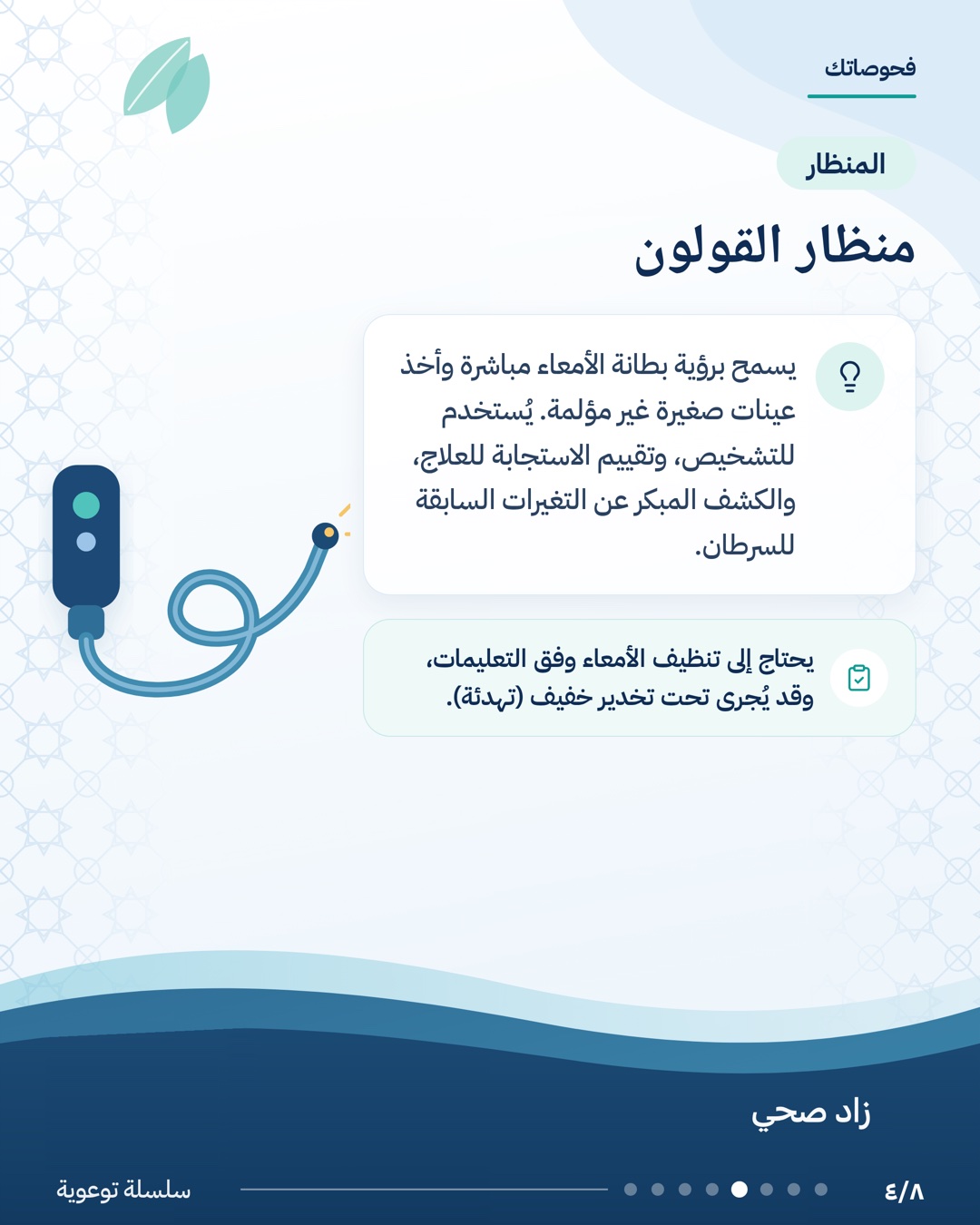
منظار القولون
المنظار
يسمح برؤية بطانة الأمعاء مباشرة وأخذ عينات صغيرة غير مؤلمة. يُستخدم للتشخيص، وتقييم الاستجابة للعلاج، والكشف المبكر عن التغيرات السابقة للسرطان.
يحتاج إلى تنظيف الأمعاء وفق التعليمات، وقد يُجرى تحت تخدير خفيف (تهدئة).
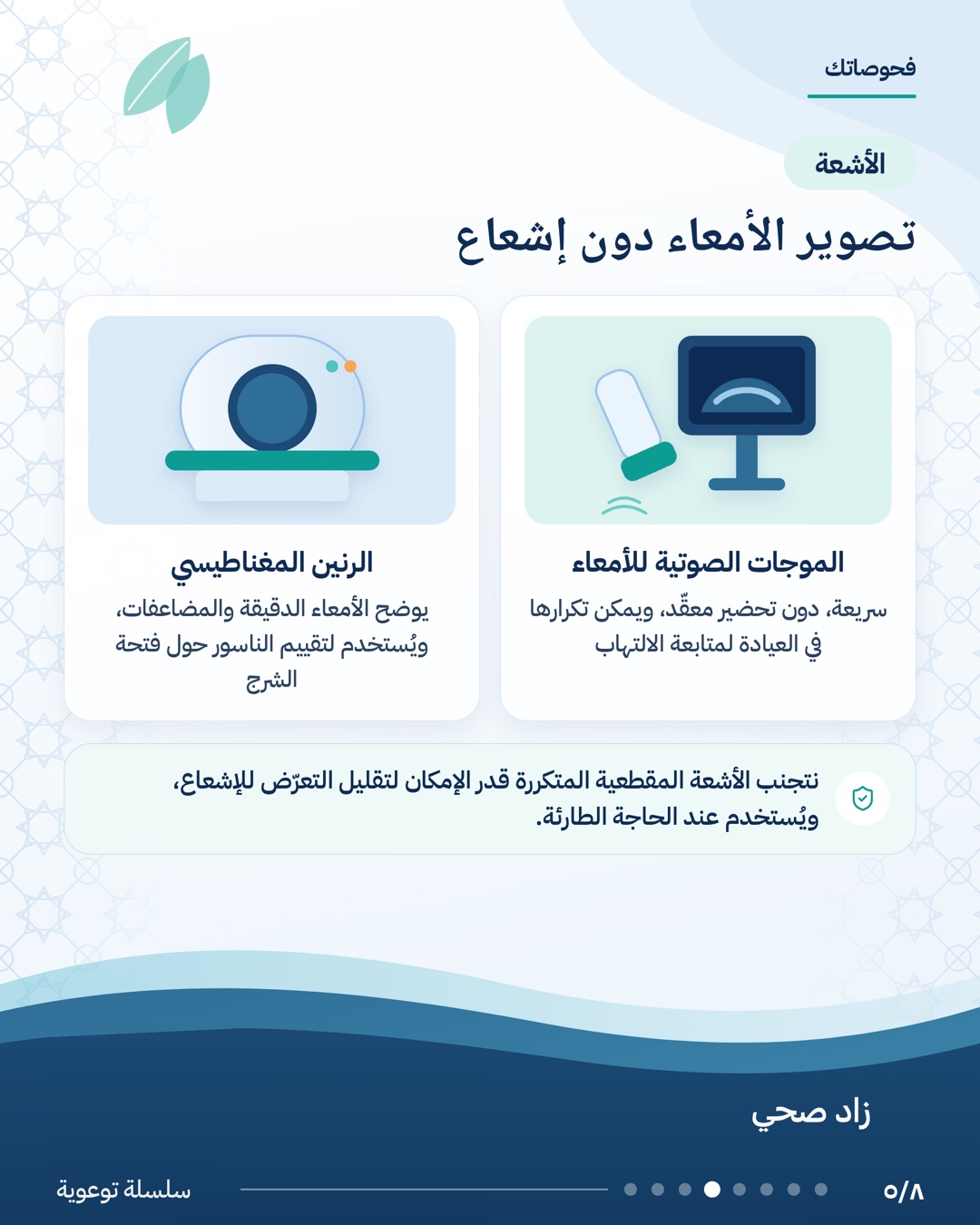
تصوير الأمعاء دون إشعاع
الأشعة
- الموجات الصوتية للأمعاء — سريعة، دون تحضير معقّد، ويمكن تكرارها في العيادة لمتابعة الالتهاب
- الرنين المغناطيسي — يوضح الأمعاء الدقيقة والمضاعفات، ويُستخدم لتقييم الناسور حول فتحة الشرج
نتجنب الأشعة المقطعية المتكررة قدر الإمكان لتقليل التعرّض للإشعاع، ويُستخدم عند الحاجة الطارئة.
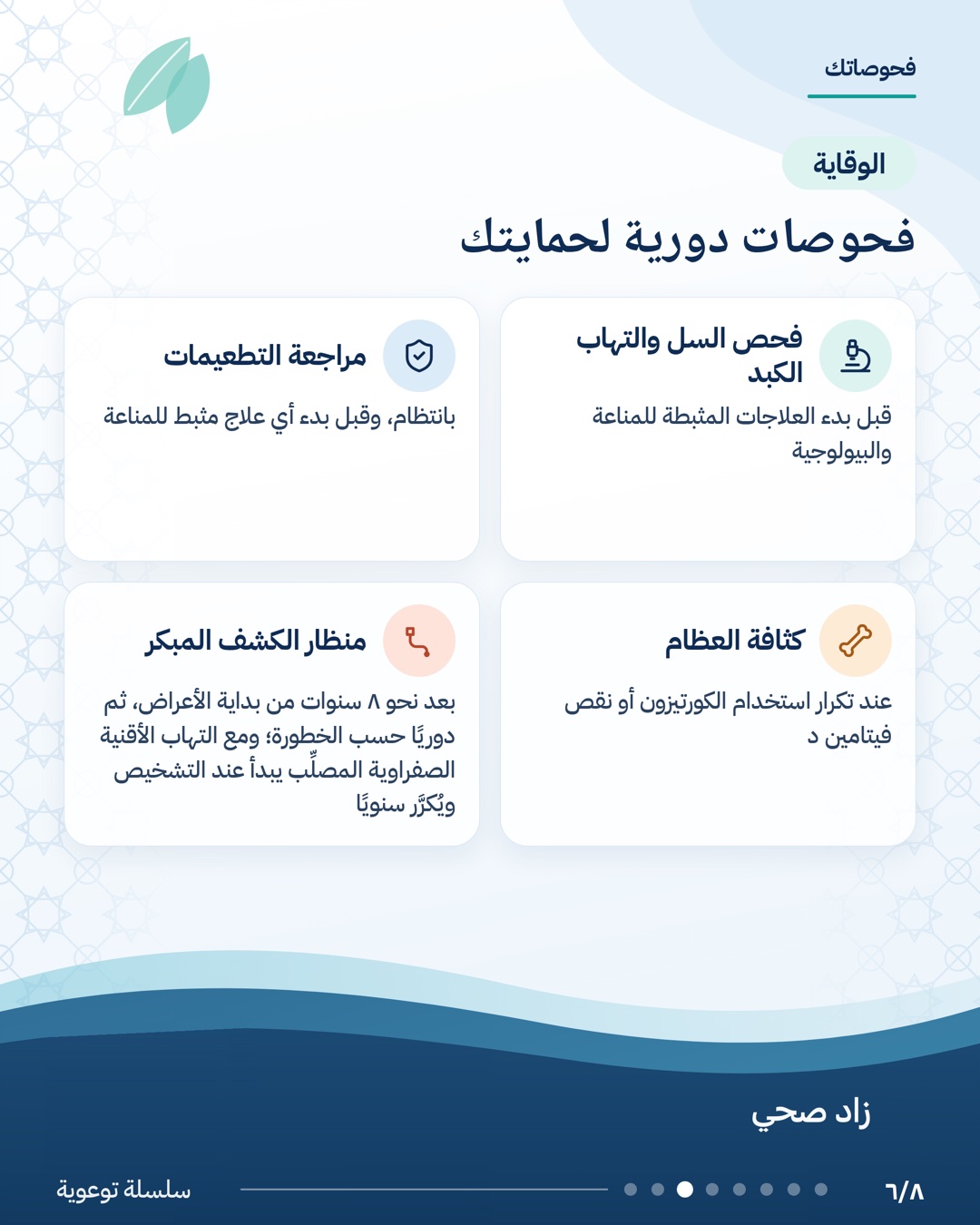
فحوصات دورية لحمايتك
الوقاية
- فحص السل والتهاب الكبد — قبل بدء العلاجات المثبطة للمناعة والبيولوجية
- مراجعة التطعيمات — بانتظام، وقبل بدء أي علاج مثبط للمناعة
- كثافة العظام — عند تكرار استخدام الكورتيزون أو نقص فيتامين د
- منظار الكشف المبكر — بعد نحو ٨ سنوات من بداية الأعراض، ثم دوريًا حسب الخطورة؛ ومع التهاب الأقنية الصفراوية المصلِّب يبدأ عند التشخيص ويُكرَّر سنويًا
كيف تستعد لفحوصاتك؟
الاستعداد
- أحضر قائمة بجميع أدويتك — بما فيها الأعشاب والمكملات
- اتبع تعليمات التحضير بدقة — خاصة الصيام وتنظيف الأمعاء قبل المنظار
- أخبرنا عن أدوية تسييل الدم أو السكري — فقد تحتاج إلى تعديل قبل المنظار
- اسأل عن نتيجتك — واعرف ماذا تعني لخطة علاجك
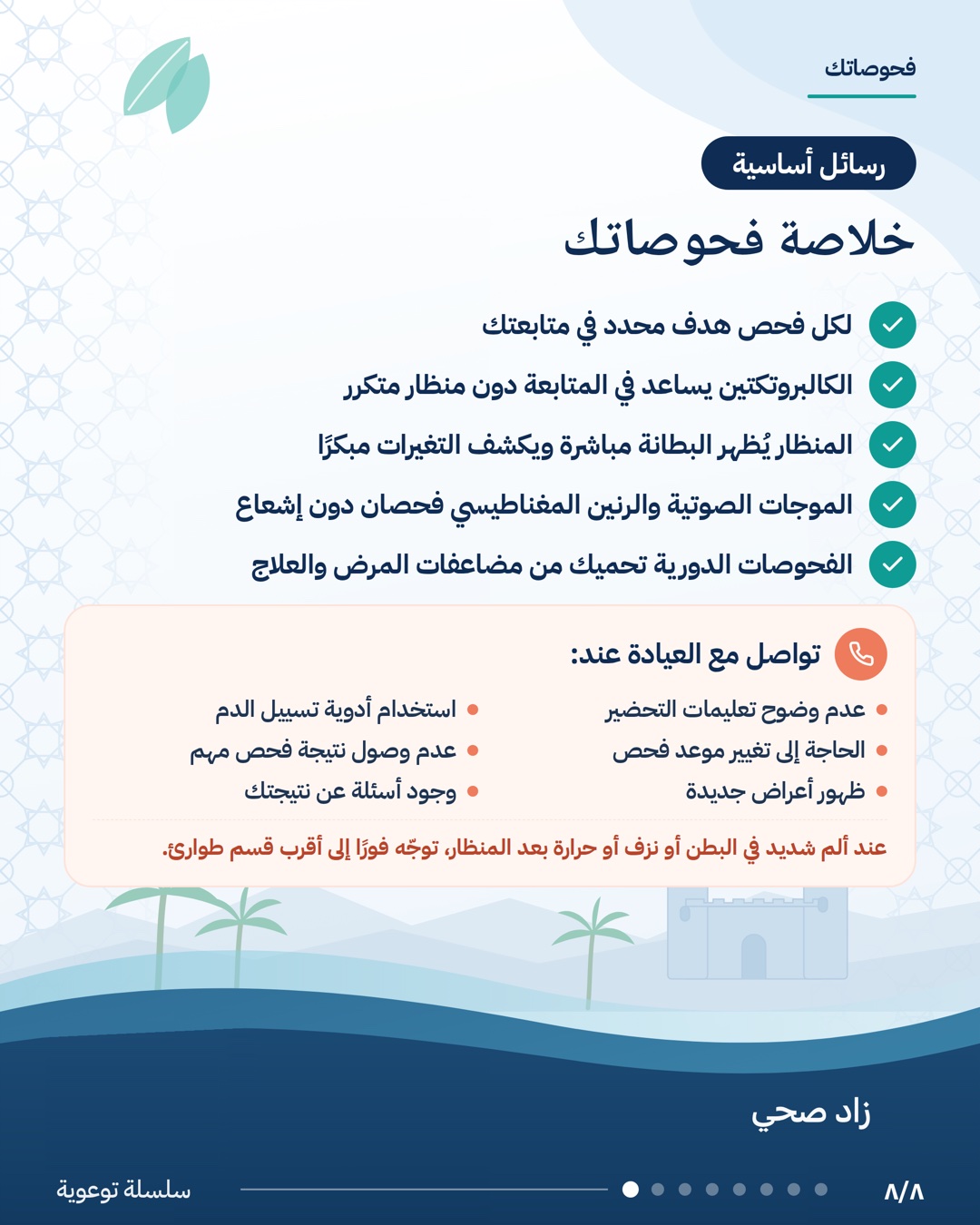
خلاصة فحوصاتك
رسائل أساسية
- لكل فحص هدف محدد في متابعتك
- الكالبروتكتين يساعد في المتابعة دون منظار متكرر
- المنظار يُظهر البطانة مباشرة ويكشف التغيرات مبكرًا
- الموجات الصوتية والرنين المغناطيسي فحصان دون إشعاع
- الفحوصات الدورية تحميك من مضاعفات المرض والعلاج
تواصل مع العيادة عند:
- عدم وضوح تعليمات التحضير
- الحاجة إلى تغيير موعد فحص
- ظهور أعراض جديدة
- استخدام أدوية تسييل الدم
- عدم وصول نتيجة فحص مهم
- وجود أسئلة عن نتيجتك
عند ألم شديد في البطن أو نزف أو حرارة بعد المنظار، توجّه فورًا إلى أقرب قسم طوارئ.
Your tests in the IBD clinic
Why do we ask for them... and what do they tell us?
- Blood tests
- Stool test
- Endoscopy
What do we look for in the blood?
Blood tests
- Full blood count — to detect anaemia, or the effect of some medicines on blood cells
- Inflammation markers — such as C-reactive protein (CRP) and the erythrocyte sedimentation rate (ESR)
- Iron, vitamin B12 and vitamin D — because low levels are common in patients
- Liver and kidney function and albumin — to monitor nutrition and the safety of some treatments
Normal blood results do not rule out inflammation in every case, so they are read together with the other tests.
The calprotectin test
Stool test
A protein released by inflammatory cells inside the bowel. A high level usually points to active inflammation, though it can also rise with infection or some painkillers. A low level is reassuring in most cases, and it helps reduce the need for repeated endoscopies.
When symptoms get worse, we may also ask for a stool test to look for infection before changing treatment.
Colonoscopy
Endoscopy
It allows the bowel lining to be seen directly and small, painless samples (biopsies) to be taken. It is used for diagnosis, to assess the response to treatment, and to detect pre-cancerous changes early.
It needs bowel preparation following the instructions, and may be done under light sedation.
Imaging the bowel without radiation
Scans
- Bowel ultrasound — quick, with no complicated preparation, and can be repeated in clinic to monitor inflammation
- MRI — shows the small bowel and complications, and is used to assess a fistula around the back passage (anus)
We avoid repeated CT scans as far as possible to reduce radiation exposure; CT is used when urgently needed.
Regular checks to protect you
Prevention
- Tuberculosis (TB) and hepatitis screening — before starting immune-suppressing and biologic treatments
- Reviewing vaccinations — regularly, and before starting any immune-suppressing treatment
- Bone density — with repeated steroid use or low vitamin D
- Surveillance colonoscopy — about 8 years after symptoms began, then regularly depending on risk; with primary sclerosing cholangitis it starts at diagnosis and is repeated every year
How to prepare for your tests
Preparation
- Bring a list of all your medicines — including herbal remedies and supplements
- Follow the preparation instructions carefully — especially fasting and bowel preparation before endoscopy
- Tell us about blood thinners or diabetes medicines — they may need adjusting before endoscopy
- Ask about your result — and find out what it means for your treatment plan
Your tests: the summary
Key messages
- Each test has a specific purpose in your follow-up
- Calprotectin helps with follow-up without repeated endoscopy
- Endoscopy shows the lining directly and detects changes early
- Ultrasound and MRI are radiation-free tests
- Regular checks protect you from complications of the disease and its treatment
Contact the clinic if:
- The preparation instructions are unclear
- You need to change a test appointment
- New symptoms appear
- You take blood-thinning medicines
- An important test result has not arrived
- You have questions about your result
If you have severe tummy pain, bleeding or a fever after an endoscopy, go straight to the nearest emergency department.

