



النص المكتوب للشرائحText version of the slides (English and Arabic)
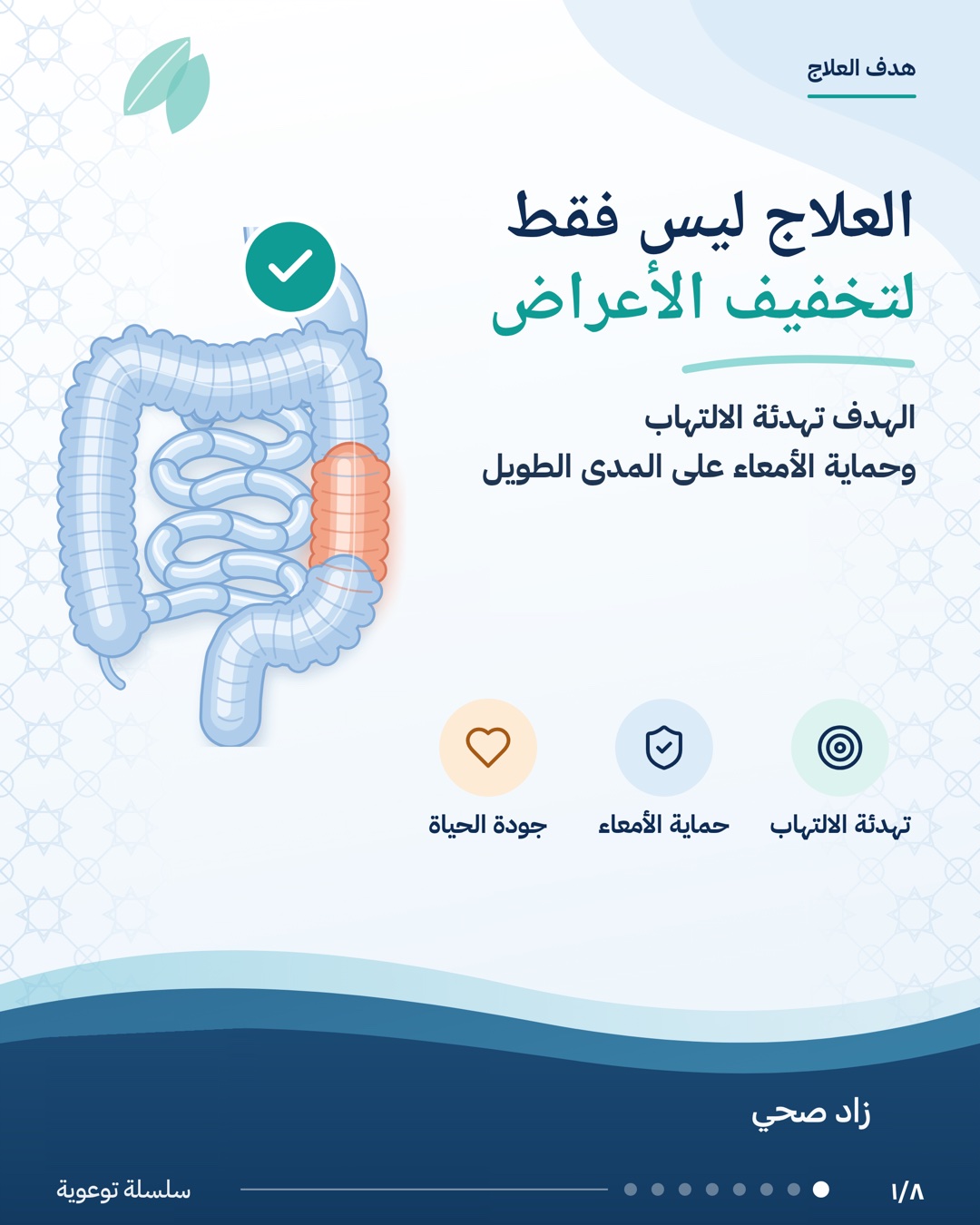
العلاج ليس فقط لتخفيف الأعراض
الهدف تهدئة الالتهاب وحماية الأمعاء على المدى الطويل
- تهدئة الالتهاب
- حماية الأمعاء
- جودة الحياة
ما تشعر به جزء صغير فقط
صورة جبل الجليد
- الأعراض
- الالتهاب داخل الأمعاء
الأعراض تشبه قمة جبل الجليد، أما الالتهاب الذي قد يستمر داخل جدار الأمعاء فهو الجزء الأكبر المخفي تحت السطح.
علاج الأعراض وحدها يشبه إزالة القمة مع بقاء الجزء الأكبر.
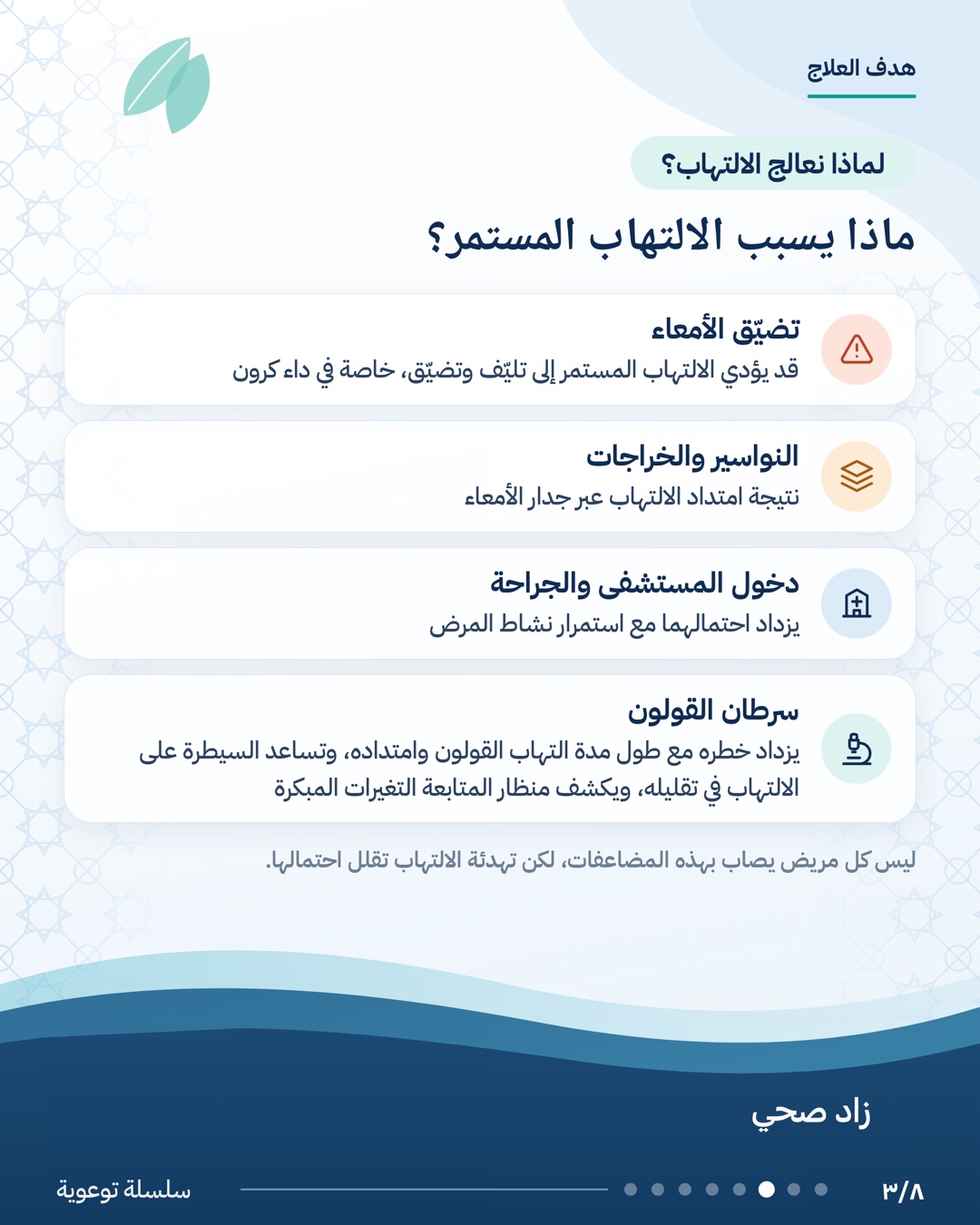
ماذا يسبب الالتهاب المستمر؟
لماذا نعالج الالتهاب؟
- تضيّق الأمعاء — قد يؤدي الالتهاب المستمر إلى تليّف وتضيّق، خاصة في داء كرون
- النواسير والخراجات — نتيجة امتداد الالتهاب عبر جدار الأمعاء
- دخول المستشفى والجراحة — يزداد احتمالها مع استمرار نشاط المرض
- سرطان القولون — يزداد خطره مع طول مدة التهاب القولون وامتداده، وتساعد السيطرة على الالتهاب في تقليله، ويكشف منظار المتابعة التغيرات المبكرة
ليس كل مريض يصاب بهذه المضاعفات، لكن تهدئة الالتهاب تقلل احتمالها.
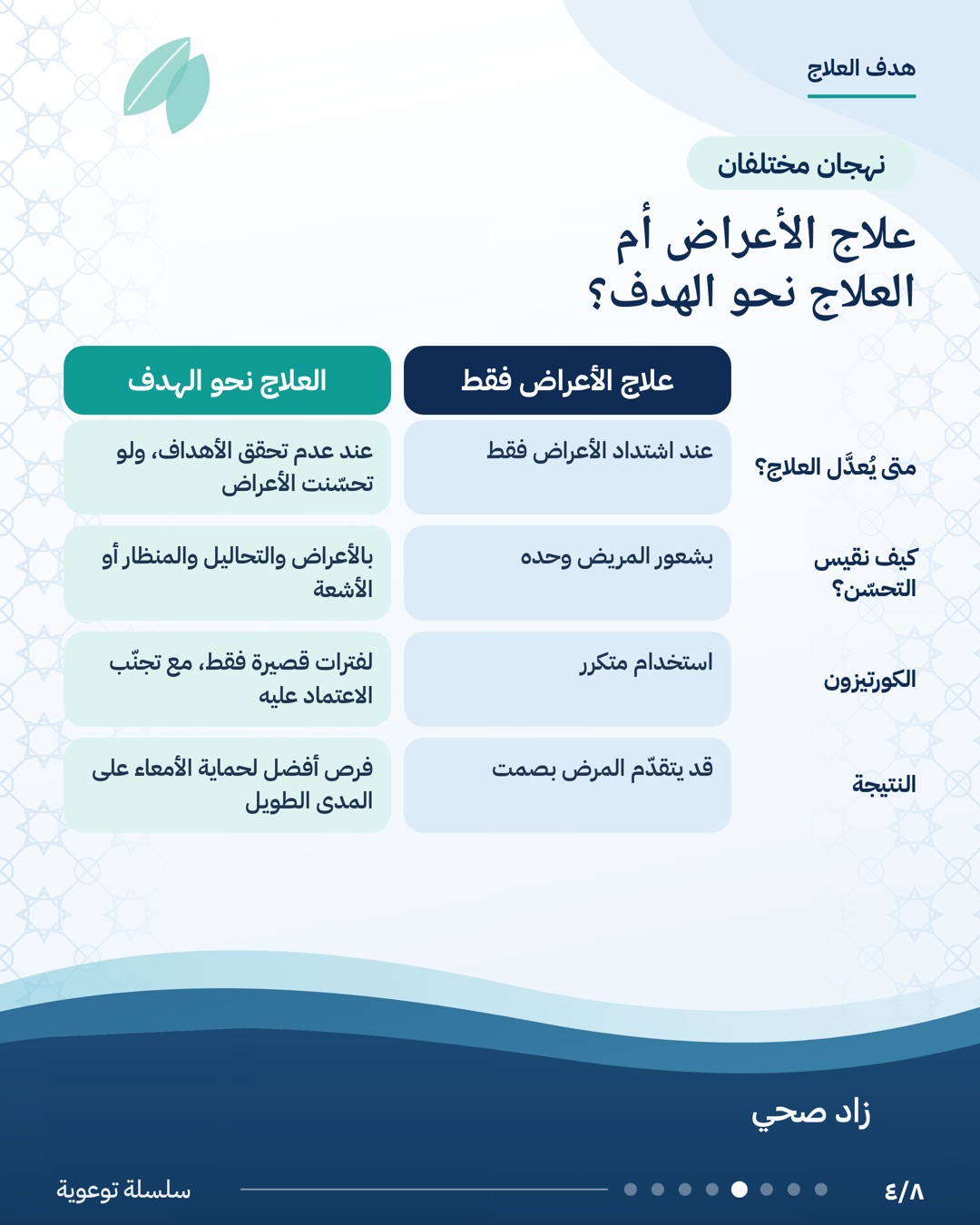
علاج الأعراض أم العلاج نحو الهدف؟
نهجان مختلفان
علاج الأعراض فقط:
- متى يُعدَّل العلاج؟ عند اشتداد الأعراض فقط
- كيف نقيس التحسّن؟ بشعور المريض وحده
- الكورتيزون: استخدام متكرر
- النتيجة: قد يتقدّم المرض بصمت
العلاج نحو الهدف:
- متى يُعدَّل العلاج؟ عند عدم تحقق الأهداف، ولو تحسّنت الأعراض
- كيف نقيس التحسّن؟ بالأعراض والتحاليل والمنظار أو الأشعة
- الكورتيزون: لفترات قصيرة فقط، مع تجنّب الاعتماد عليه
- النتيجة: فرص أفضل لحماية الأمعاء على المدى الطويل
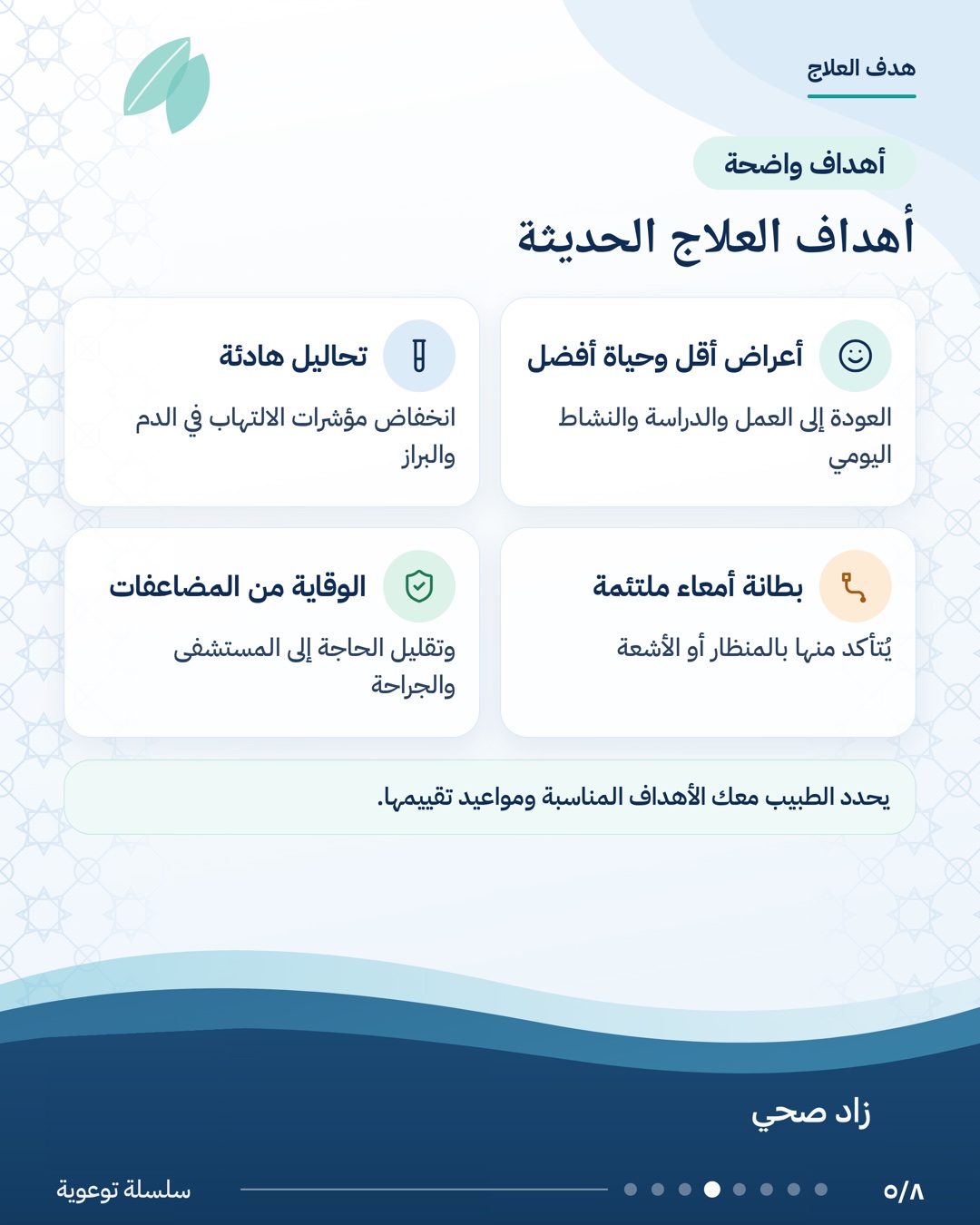
أهداف العلاج الحديثة
أهداف واضحة
- أعراض أقل وحياة أفضل — العودة إلى العمل والدراسة والنشاط اليومي
- تحاليل هادئة — انخفاض مؤشرات الالتهاب في الدم والبراز
- بطانة أمعاء ملتئمة — يُتأكد منها بالمنظار أو الأشعة
- الوقاية من المضاعفات — وتقليل الحاجة إلى المستشفى والجراحة
يحدد الطبيب معك الأهداف المناسبة ومواعيد تقييمها.
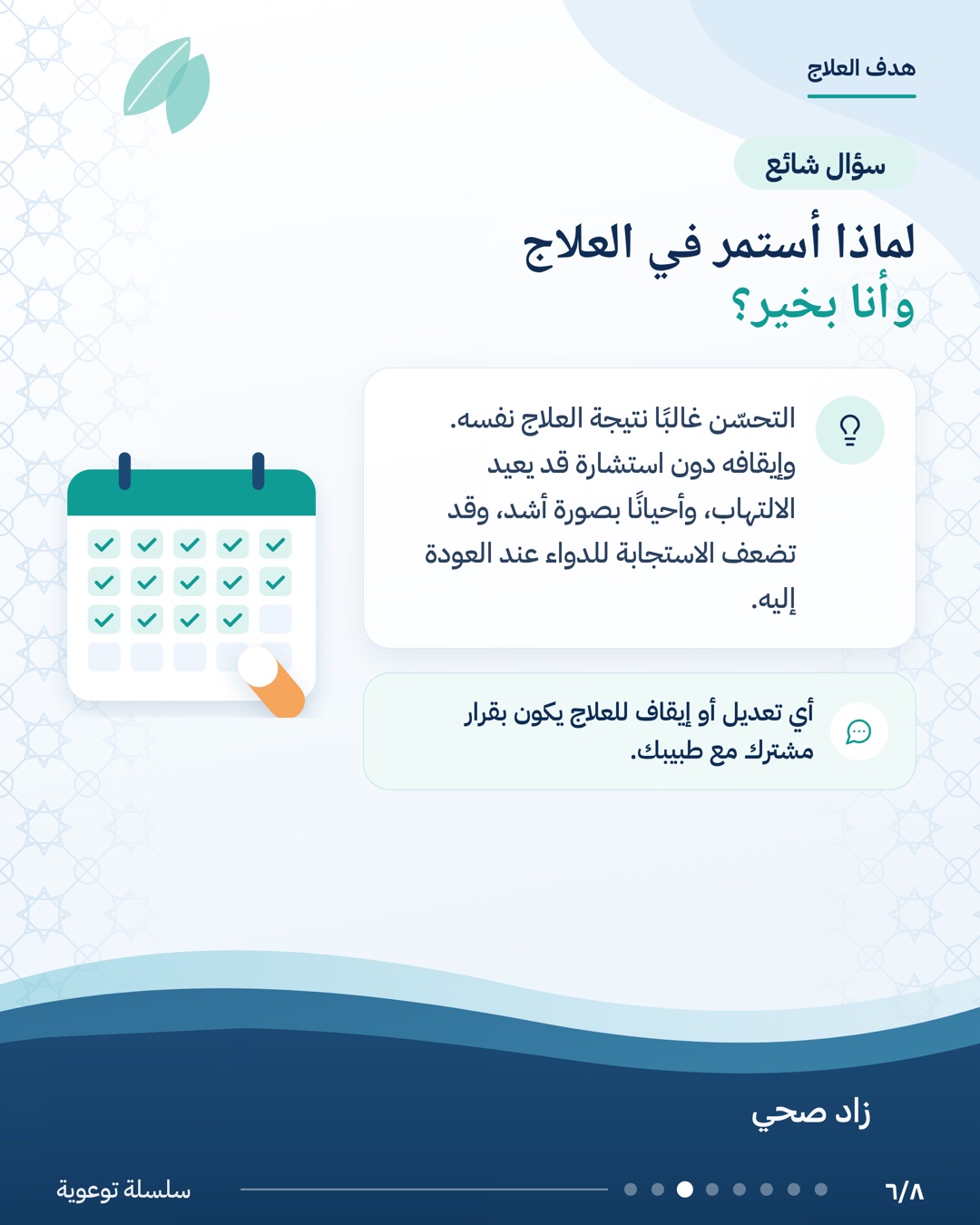
لماذا أستمر في العلاج وأنا بخير؟
سؤال شائع
التحسّن غالبًا نتيجة العلاج نفسه. وإيقافه دون استشارة قد يعيد الالتهاب، وأحيانًا بصورة أشد، وقد تضعف الاستجابة للدواء عند العودة إليه.
أي تعديل أو إيقاف للعلاج يكون بقرار مشترك مع طبيبك.
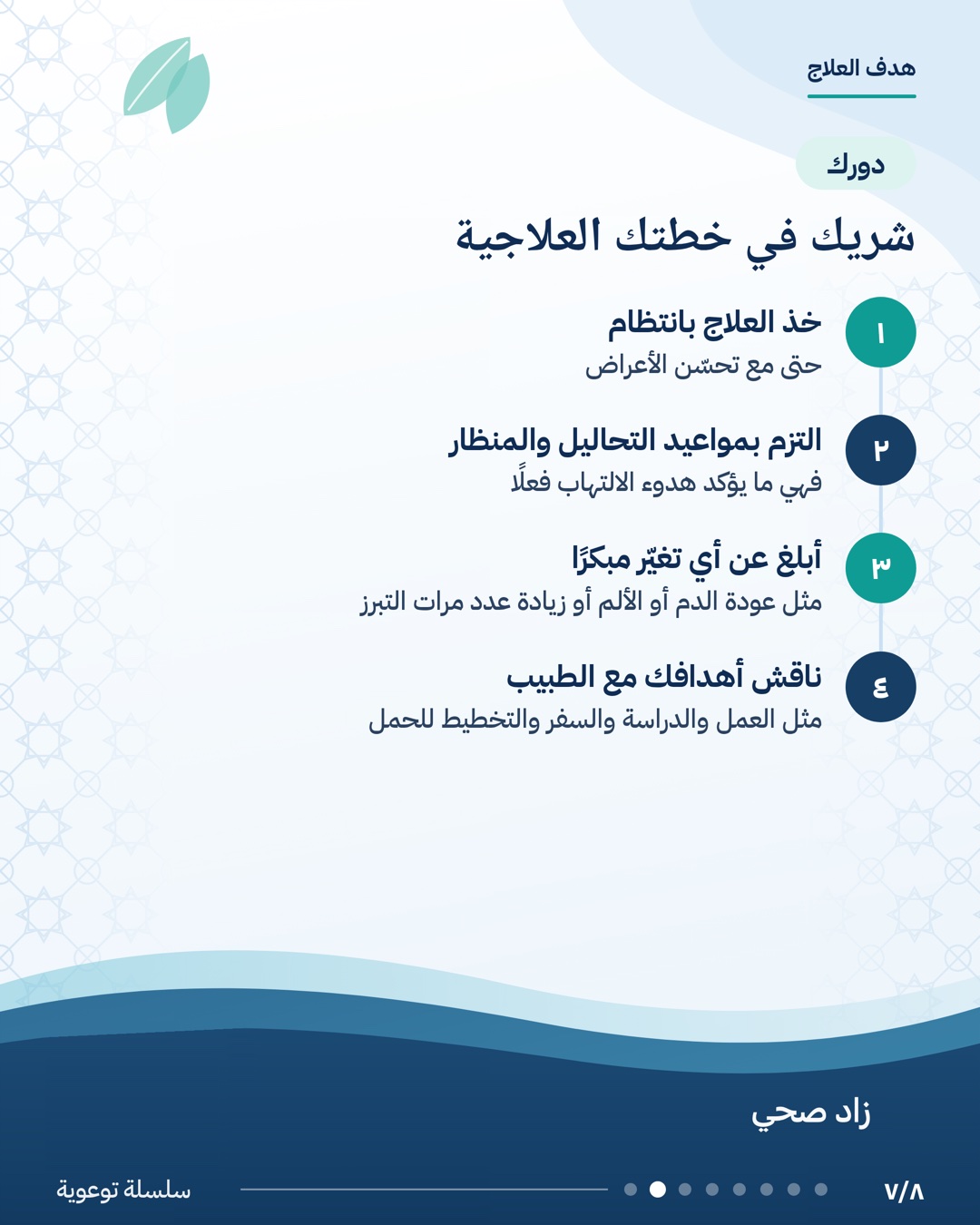
شريك في خطتك العلاجية
دورك
- خذ العلاج بانتظام — حتى مع تحسّن الأعراض
- التزم بمواعيد التحاليل والمنظار — فهي ما يؤكد هدوء الالتهاب فعلًا
- أبلغ عن أي تغيّر مبكرًا — مثل عودة الدم أو الألم أو زيادة عدد مرات التبرز
- ناقش أهدافك مع الطبيب — مثل العمل والدراسة والسفر والتخطيط للحمل
خلاصة هدف العلاج
رسائل أساسية
- الأعراض ليست المقياس الوحيد لنشاط المرض
- تهدئة الالتهاب تحمي الأمعاء على المدى الطويل
- تُحدَّد أهداف واضحة ويُقاس تحقيقها
- لا توقف العلاج عند التحسّن دون استشارة
- المتابعة المنتظمة جزء من العلاج
تواصل مع العيادة عند:
- الرغبة في إيقاف العلاج أو تغييره
- عودة الأعراض ولو كانت خفيفة
- التخطيط لحمل أو سفر طويل
- صعوبة الالتزام بالعلاج أو ظهور آثار جانبية
- فوات موعد تحليل أو منظار
- وجود أسئلة عن أهداف علاجك
عند النزف الشديد أو الألم الشديد أو ارتفاع الحرارة الشديد، توجّه فورًا إلى أقرب قسم طوارئ.
Treatment is not only about symptoms
The goal is to calm the inflammation and protect the bowel in the long term
- Calming inflammation
- Protecting the bowel
- Quality of life
What you feel is only a small part
The iceberg picture
- Symptoms
- Inflammation inside the bowel
Symptoms are like the tip of an iceberg. The inflammation that may carry on inside the bowel wall is the larger part, hidden below the surface.
Treating the symptoms alone is like removing the tip while the larger part remains.
What does ongoing inflammation cause?
Why do we treat the inflammation?
- Narrowing of the bowel — ongoing inflammation can lead to scarring (fibrosis) and narrowing, especially in Crohn's disease
- Fistulas and abscesses — caused by inflammation spreading through the bowel wall
- Hospital admission and surgery — more likely when the disease stays active
- Bowel (colon) cancer — the risk rises the longer and more extensive the colitis is; controlling inflammation helps reduce it, and surveillance colonoscopy picks up early changes
Not every patient gets these complications, but calming the inflammation makes them less likely.
Treating symptoms or treating to a target?
Two different approaches
Treating symptoms only:
- When is treatment changed? Only when symptoms get worse
- How do we measure improvement? By how the patient feels alone
- Steroids: used repeatedly
- Result: the disease may progress silently
Treating to a target:
- When is treatment changed? When the targets are not met, even if symptoms have improved
- How do we measure improvement? With symptoms, tests, and endoscopy or scans
- Steroids: for short periods only, avoiding dependence on them
- Result: a better chance of protecting the bowel in the long term
The goals of modern treatment
Clear targets
- Fewer symptoms and a better life — getting back to work, study and daily activities
- Calm test results — lower inflammation markers in the blood and stool
- A healed bowel lining — confirmed by endoscopy or scans
- Preventing complications — and reducing the need for hospital and surgery
Your doctor agrees the right targets with you and when to check them.
Why should I continue treatment when I feel well?
A common question
Feeling better is usually the result of the treatment itself. Stopping it without advice can bring the inflammation back, sometimes more severely, and the medicine may work less well when you restart it.
Any change to, or stopping of, treatment should be a shared decision with your doctor.
A partner in your treatment plan
Your role
- Take your treatment regularly — even when symptoms improve
- Keep your test and endoscopy appointments — they are what confirm that the inflammation has really settled
- Report any change early — such as blood returning, pain, or more frequent bowel movements
- Discuss your goals with your doctor — such as work, study, travel and planning a pregnancy
The goal of treatment: the summary
Key messages
- Symptoms are not the only measure of disease activity
- Calming the inflammation protects the bowel in the long term
- Clear targets are set and progress towards them is measured
- Do not stop treatment when you feel better without advice
- Regular follow-up is part of the treatment
Contact the clinic if you have:
- A wish to stop or change your treatment
- Symptoms coming back, even mild ones
- Plans for a pregnancy or long travel
- Difficulty sticking to treatment, or side effects
- A missed test or endoscopy appointment
- Questions about your treatment goals
If you have heavy bleeding, severe pain or a very high temperature, go straight to the nearest emergency department.

