

النص المكتوب للشرائحText version of the slides (English and Arabic)
الحمل ومرض التهاب الأمعاء
حمل آمن يبدأ بالتخطيط والسيطرة على المرض
- التخطيط
- هدوء المرض
- طفل بصحة جيدة
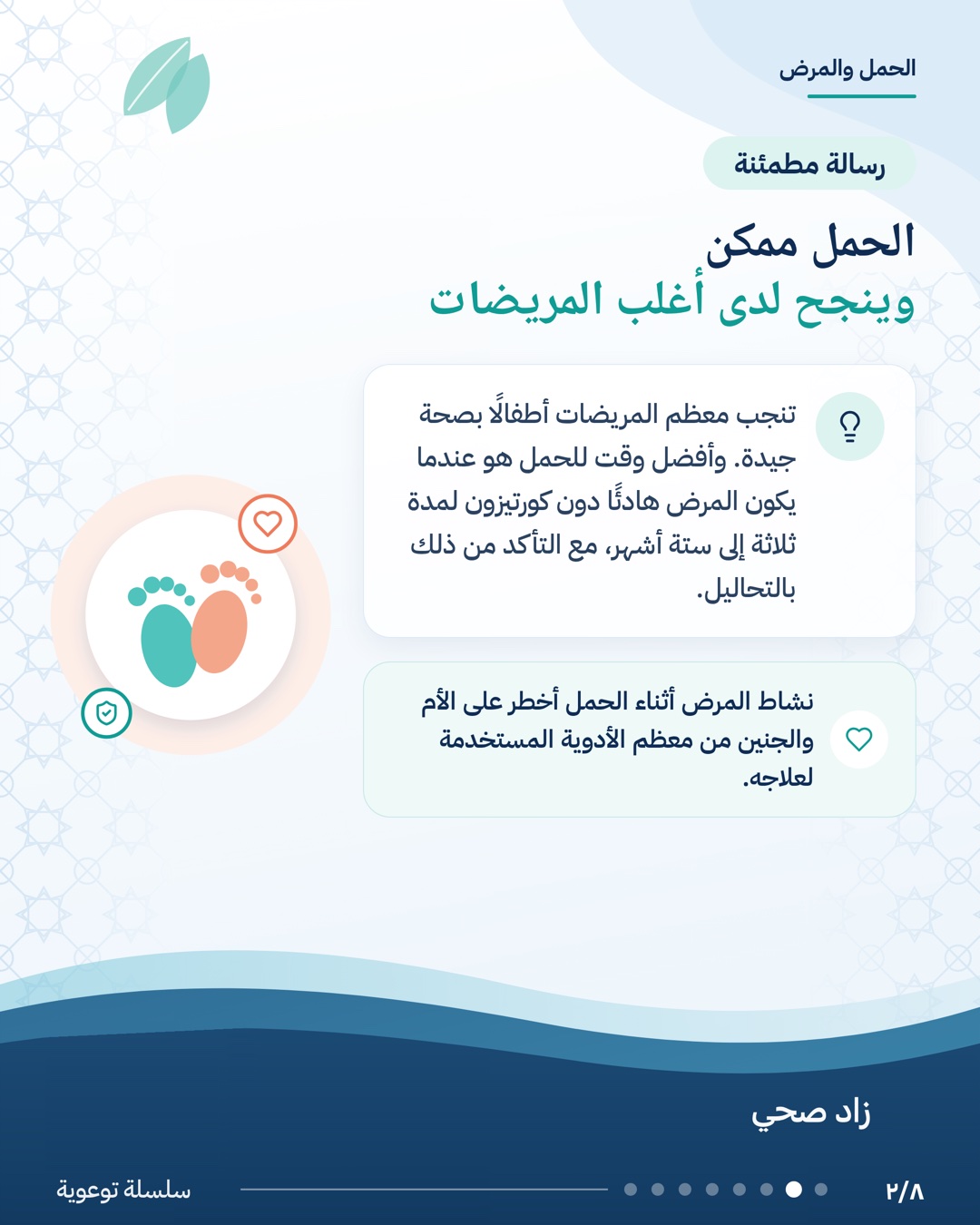
الحمل ممكن وينجح لدى أغلب المريضات
رسالة مطمئنة
تنجب معظم المريضات أطفالًا بصحة جيدة. وأفضل وقت للحمل هو عندما يكون المرض هادئًا دون كورتيزون لمدة ثلاثة إلى ستة أشهر، مع التأكد من ذلك بالتحاليل.
نشاط المرض أثناء الحمل أخطر على الأم والجنين من معظم الأدوية المستخدمة لعلاجه.
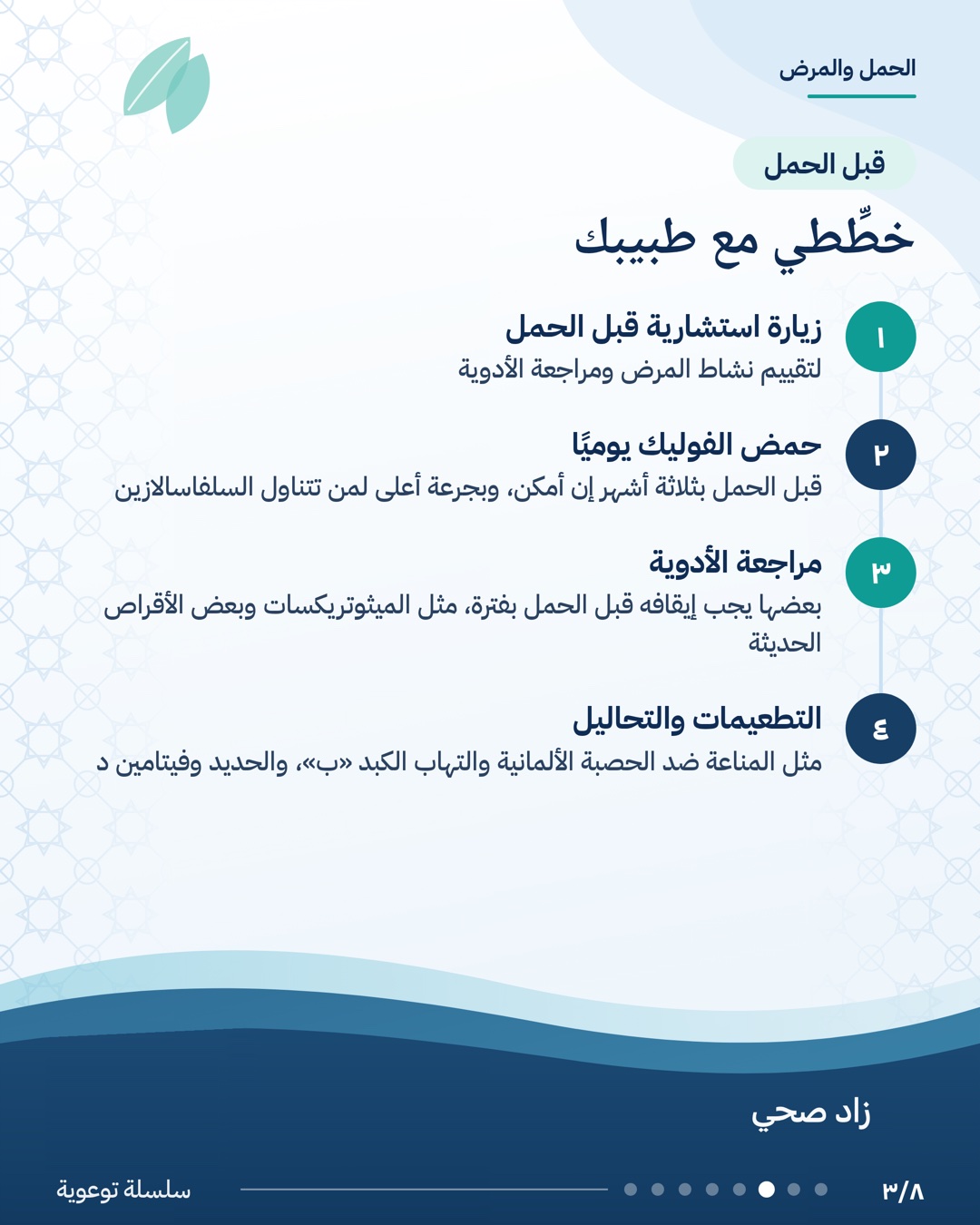
خطِّطي مع طبيبك
قبل الحمل
- زيارة استشارية قبل الحمل — لتقييم نشاط المرض ومراجعة الأدوية
- حمض الفوليك يوميًا — قبل الحمل بثلاثة أشهر إن أمكن، وبجرعة أعلى لمن تتناول السلفاسالازين
- مراجعة الأدوية — بعضها يجب إيقافه قبل الحمل بفترة، مثل الميثوتريكسات وبعض الأقراص الحديثة
- التطعيمات والتحاليل — مثل المناعة ضد الحصبة الألمانية والتهاب الكبد «ب»، والحديد وفيتامين د
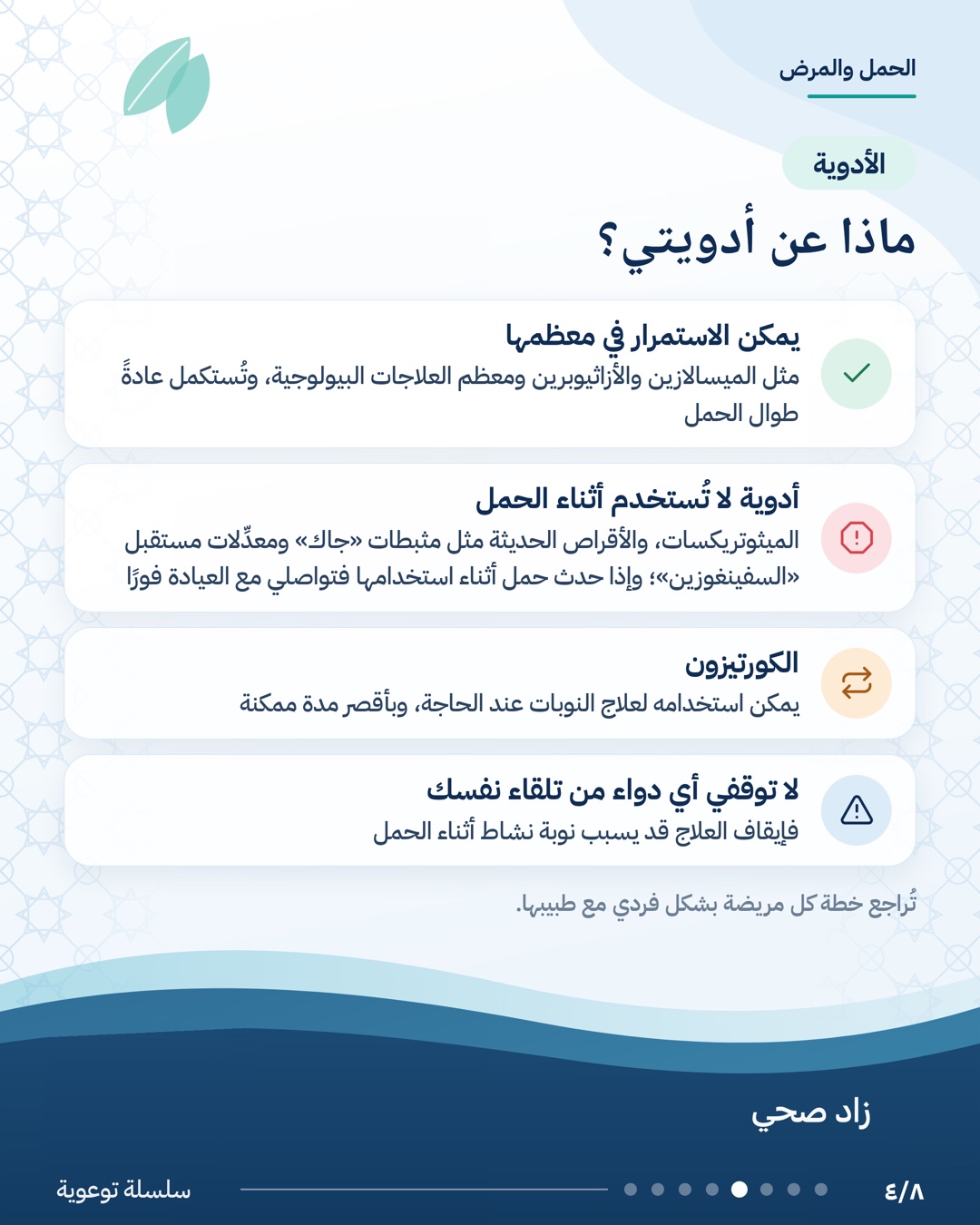
ماذا عن أدويتي؟
الأدوية
- يمكن الاستمرار في معظمها — مثل الميسالازين والأزاثيوبرين ومعظم العلاجات البيولوجية، وتُستكمل عادةً طوال الحمل
- أدوية لا تُستخدم أثناء الحمل — الميثوتريكسات، والأقراص الحديثة مثل مثبطات «جاك» ومعدِّلات مستقبل «السفينغوزين»؛ وإذا حدث حمل أثناء استخدامها فتواصلي مع العيادة فورًا
- الكورتيزون — يمكن استخدامه لعلاج النوبات عند الحاجة، وبأقصر مدة ممكنة
- لا توقفي أي دواء من تلقاء نفسك — فإيقاف العلاج قد يسبب نوبة نشاط أثناء الحمل
تُراجع خطة كل مريضة بشكل فردي مع طبيبها.
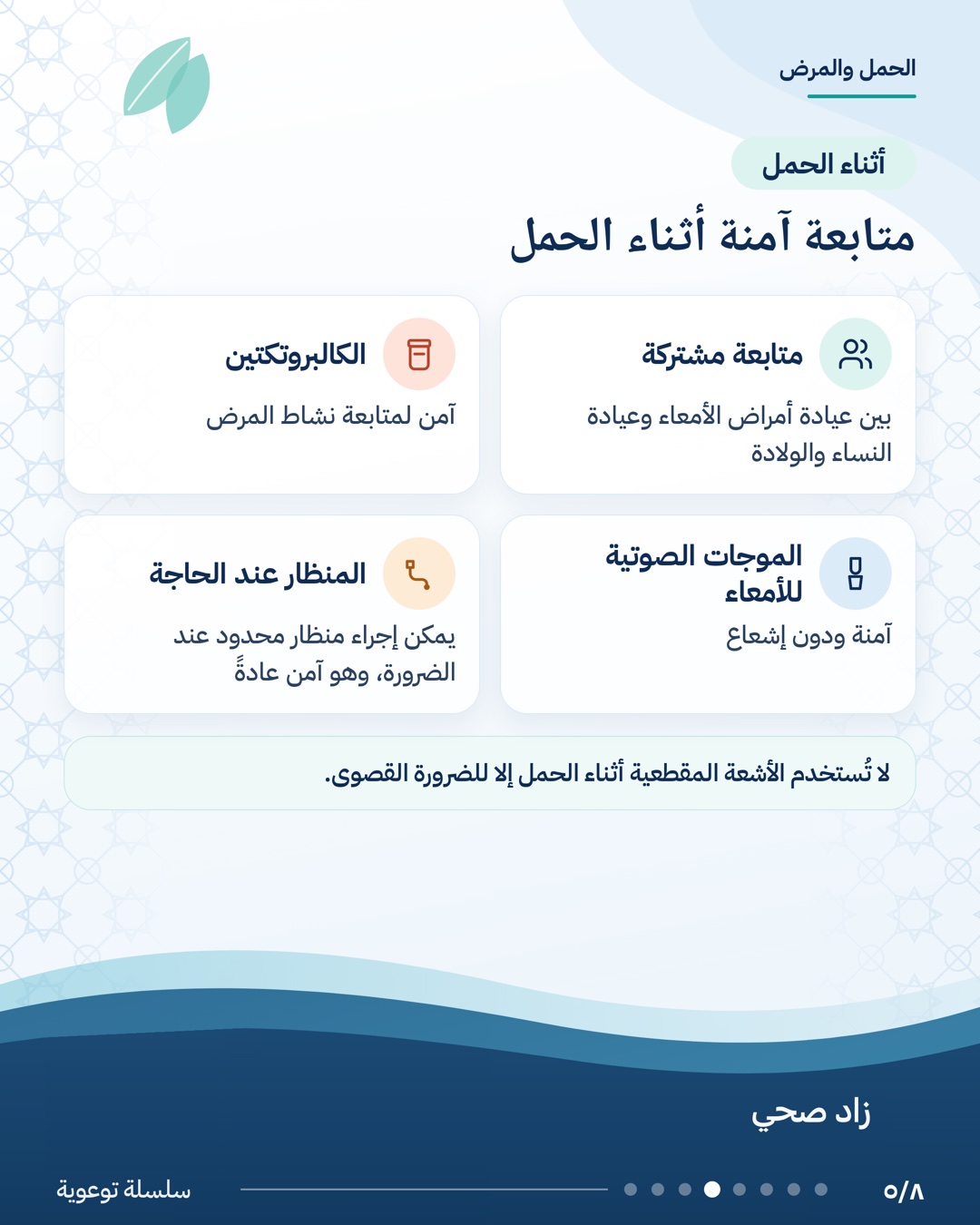
متابعة آمنة أثناء الحمل
أثناء الحمل
- متابعة مشتركة — بين عيادة أمراض الأمعاء وعيادة النساء والولادة
- الكالبروتكتين — آمن لمتابعة نشاط المرض
- الموجات الصوتية للأمعاء — آمنة ودون إشعاع
- المنظار عند الحاجة — يمكن إجراء منظار محدود عند الضرورة، وهو آمن عادةً
لا تُستخدم الأشعة المقطعية أثناء الحمل إلا للضرورة القصوى.
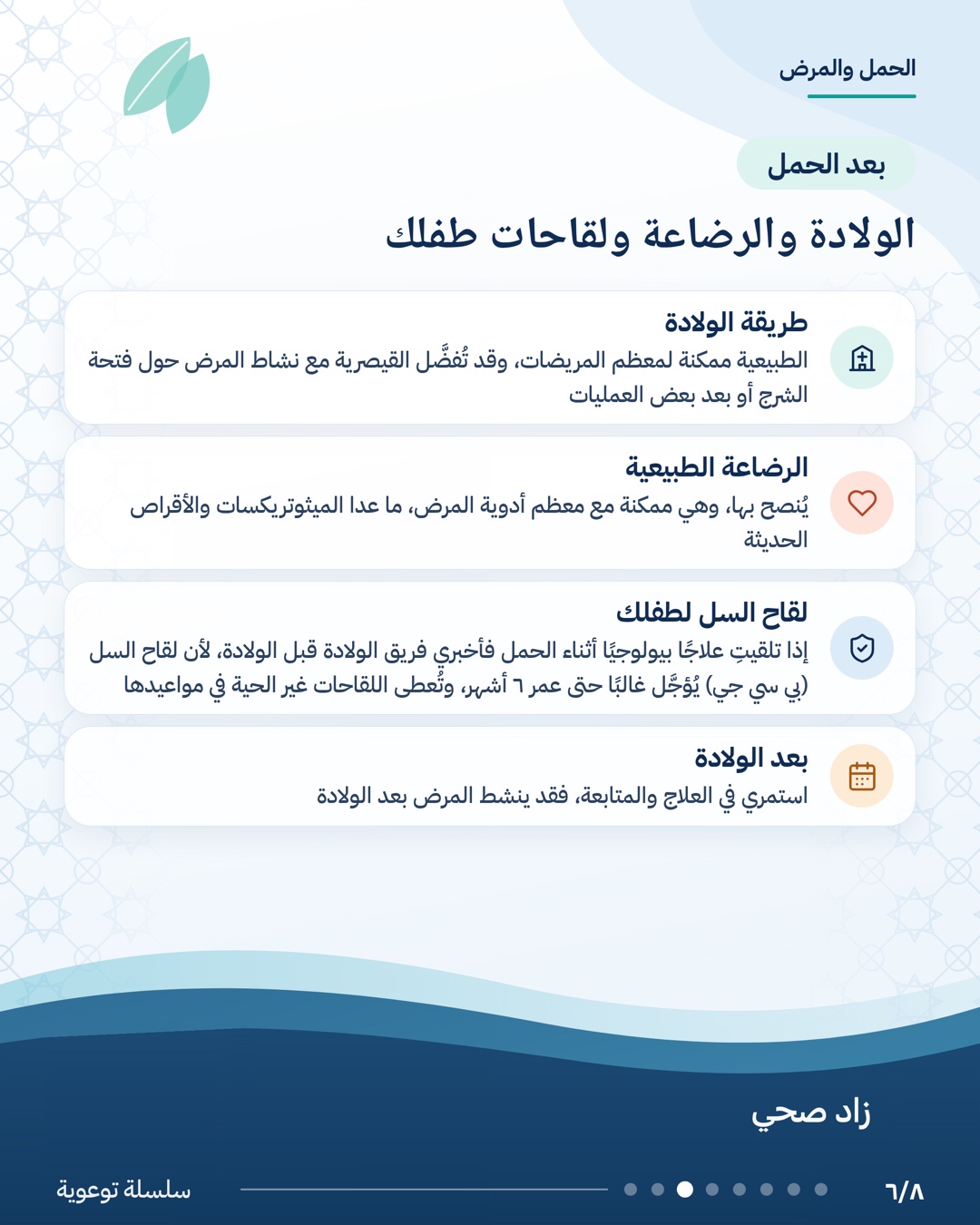
الولادة والرضاعة ولقاحات طفلك
بعد الحمل
- طريقة الولادة — الطبيعية ممكنة لمعظم المريضات، وقد تُفضَّل القيصرية مع نشاط المرض حول فتحة الشرج أو بعد بعض العمليات
- الرضاعة الطبيعية — يُنصح بها، وهي ممكنة مع معظم أدوية المرض، ما عدا الميثوتريكسات والأقراص الحديثة
- لقاح السل لطفلك — إذا تلقيتِ علاجًا بيولوجيًا أثناء الحمل فأخبري فريق الولادة قبل الولادة، لأن لقاح السل (بي سي جي) يُؤجَّل غالبًا حتى عمر ٦ أشهر، وتُعطى اللقاحات غير الحية في مواعيدها
- بعد الولادة — استمري في العلاج والمتابعة، فقد ينشط المرض بعد الولادة
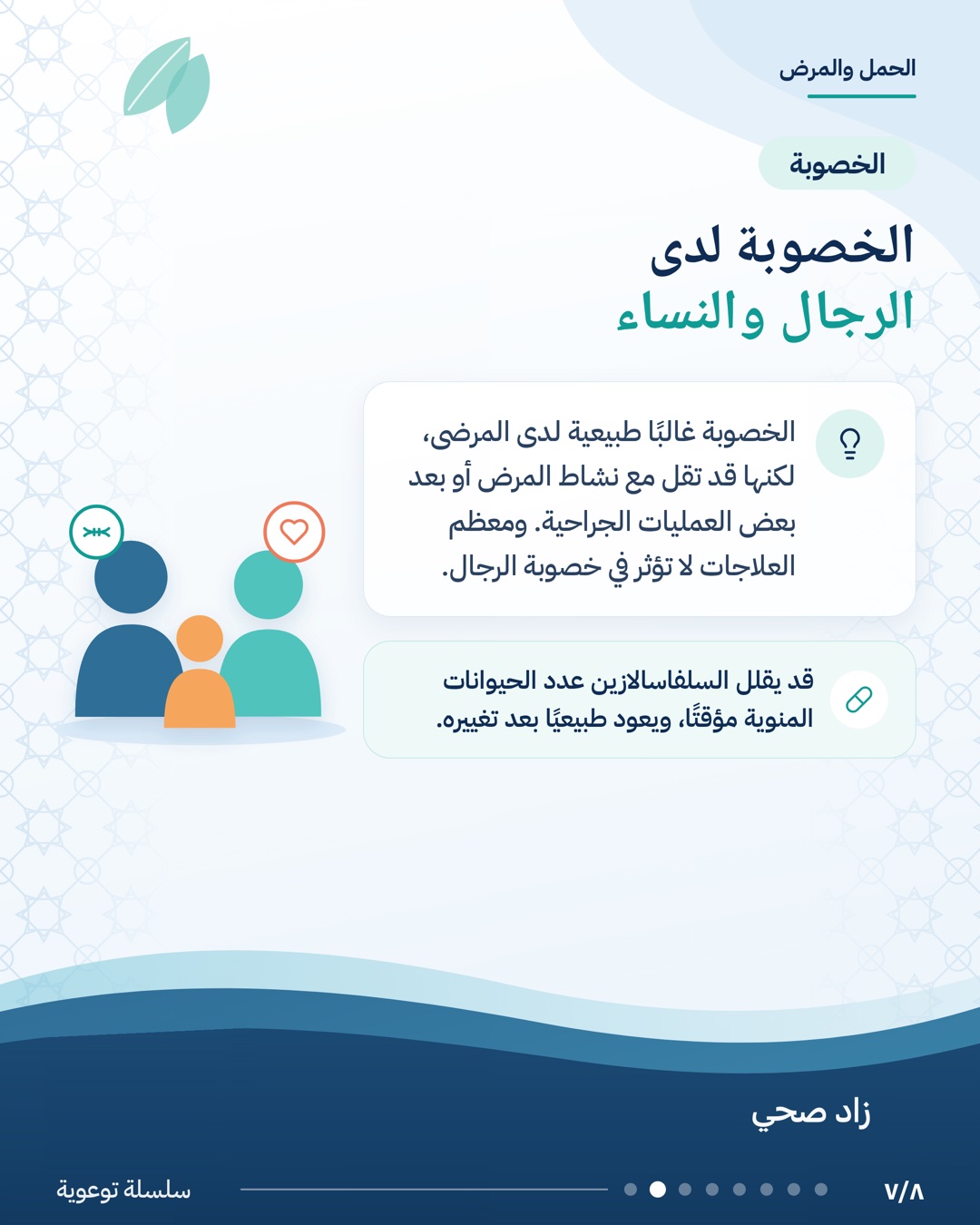
الخصوبة لدى الرجال والنساء
الخصوبة
الخصوبة غالبًا طبيعية لدى المرضى، لكنها قد تقل مع نشاط المرض أو بعد بعض العمليات الجراحية. ومعظم العلاجات لا تؤثر في خصوبة الرجال.
قد يقلل السلفاسالازين عدد الحيوانات المنوية مؤقتًا، ويعود طبيعيًا بعد تغييره.
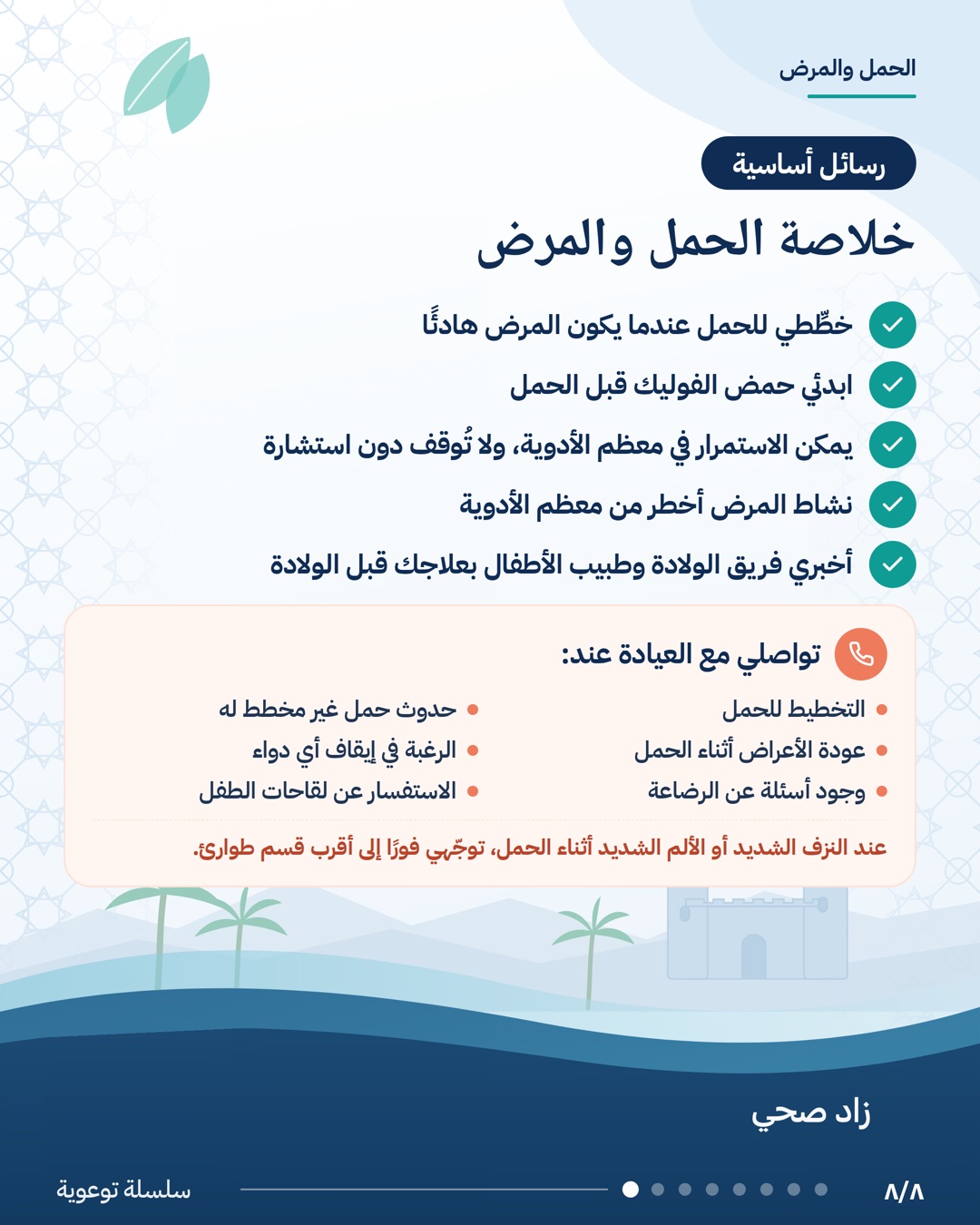
خلاصة الحمل والمرض
رسائل أساسية
- خطّطي للحمل عندما يكون المرض هادئًا
- ابدئي حمض الفوليك قبل الحمل
- يمكن الاستمرار في معظم الأدوية، ولا تُوقف دون استشارة
- نشاط المرض أخطر من معظم الأدوية
- أخبري فريق الولادة وطبيب الأطفال بعلاجك قبل الولادة
تواصلي مع العيادة عند:
- التخطيط للحمل
- عودة الأعراض أثناء الحمل
- وجود أسئلة عن الرضاعة
- حدوث حمل غير مخطط له
- الرغبة في إيقاف أي دواء
- الاستفسار عن لقاحات الطفل
عند النزف الشديد أو الألم الشديد أثناء الحمل، توجّهي فورًا إلى أقرب قسم طوارئ.
Pregnancy and IBD
A safe pregnancy starts with planning and getting the disease under control
- Planning
- Calm disease
- A healthy baby
Pregnancy is possible and goes well for most patients
A reassuring message
Most patients have healthy babies. The best time to become pregnant is when the disease has been calm, without steroids, for three to six months, confirmed by tests.
Active disease during pregnancy is more dangerous for the mother and baby than most of the medicines used to treat it.
Plan with your doctor
Before pregnancy
- A pre-pregnancy consultation — to assess disease activity and review your medicines
- Folic acid every day — starting three months before pregnancy if possible, and at a higher dose if you take sulfasalazine
- Reviewing medicines — some must be stopped a while before pregnancy, such as methotrexate and some modern tablets
- Vaccinations and tests — such as immunity to rubella (German measles) and hepatitis B, and iron and vitamin D levels
What about my medicines?
Medicines
- Most can be continued — such as mesalazine, azathioprine and most biologic treatments; they are usually continued throughout pregnancy
- Medicines not used during pregnancy — methotrexate, and modern tablets such as JAK inhibitors and S1P (sphingosine-1-phosphate) receptor modulators; if you become pregnant while taking them, contact the clinic straight away
- Steroids — can be used to treat flares when needed, for the shortest time possible
- Do not stop any medicine on your own — stopping treatment may cause a flare during pregnancy
Each patient's plan is reviewed individually with her doctor.
Safe monitoring during pregnancy
During pregnancy
- Shared care — between the IBD clinic and the obstetrics and gynaecology clinic
- Calprotectin — safe for monitoring disease activity
- Bowel ultrasound — safe and radiation-free
- Endoscopy when needed — a limited endoscopy can be done if necessary, and is usually safe
CT scans are not used during pregnancy unless absolutely necessary.
Birth, breastfeeding and your baby's vaccines
After pregnancy
- Type of delivery — a vaginal birth is possible for most patients; a caesarean section may be preferred with active disease around the back passage (anus) or after some operations
- Breastfeeding — recommended, and possible with most IBD medicines, except methotrexate and the modern tablets
- Your baby's TB vaccine — if you received a biologic treatment during pregnancy, tell the maternity team before the birth, because the TB vaccine (BCG) is usually delayed until 6 months of age; non-live vaccines are given on schedule
- After the birth — continue your treatment and follow-up, as the disease may flare after delivery
Fertility in men and women
Fertility
Fertility is usually normal in patients, but it may be lower when the disease is active or after some operations. Most treatments do not affect men's fertility.
Sulfasalazine may temporarily lower the sperm count; it returns to normal after switching medicine.
Pregnancy and the disease: the summary
Key messages
- Plan pregnancy for when the disease is calm
- Start folic acid before pregnancy
- Most medicines can be continued; do not stop them without advice
- Active disease is more dangerous than most medicines
- Tell the maternity team and the paediatrician about your treatment before the birth
Contact the clinic if you are:
- Planning a pregnancy
- Having symptoms come back during pregnancy
- Having questions about breastfeeding
- Unexpectedly pregnant
- Wanting to stop any medicine
- Asking about your baby's vaccines
If you have heavy bleeding or severe pain during pregnancy, go straight to the nearest emergency department.
