PE-PROC-02الإصدار 1.0 · آخر مراجعة أكتوبر 2026 · المراجعة القادمة أكتوبر 2028Version 1.0 · Last reviewed October 2026 · Next review October 2028
يُرجى قراءة هذه النشرة بعناية قبل موعدك وإحضارها معك يوم الفحص. وإذا كان أي أمر غير واضح، تواصل مع وحدة المناظير قبل الموعد لا في يوم الفحص.
ما هو تنظير المعدة؟
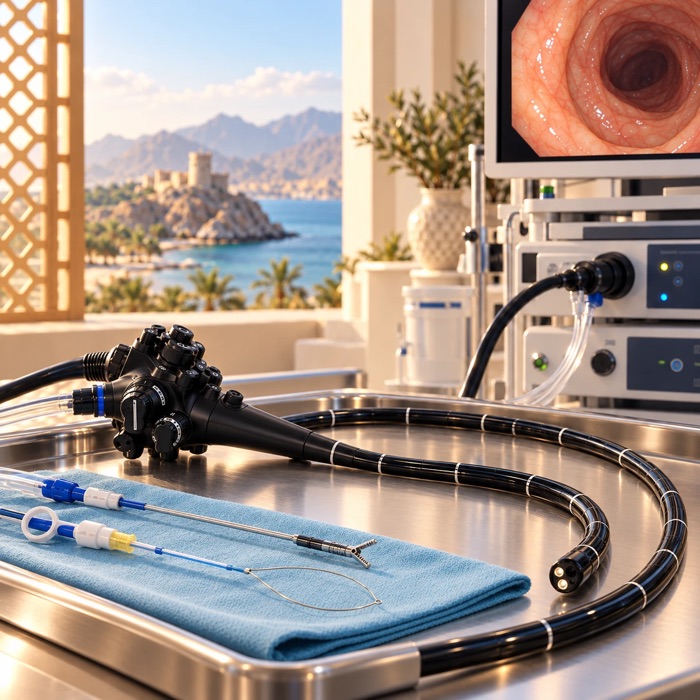
تنظير المعدة، ويُسمى أيضاً المنظار العلوي، فحص للمريء والمعدة وبداية الأمعاء الدقيقة باستخدام أنبوب رفيع مرن مزوّد بكاميرا في طرفه، يُدخل عبر الفم. وهو لا يعيق التنفس. ويستغرق الفحص نفسه عادة من ٥ إلى ١٠ دقائق، وقد تبقى في الوحدة من ساعتين إلى أربع ساعات إذا اخترت التخدير. وكثيراً ما تُؤخذ عينات نسيجية صغيرة، وهو أمر غير مؤلم.
من الأسباب الشائعة: حرقة المعدة أو الارتجاع الذي لم يستجب للعلاج، صعوبة البلع أو الألم عند البلع، عسر الهضم أو ألم أعلى البطن، الغثيان والقيء، فقر دم أو نقص وزن غير مُفسَّر، الاشتباه بنزيف من المعدة، فحص جرثومة المعدة أو مرض السيلياك، ومتابعة حالات معروفة مثل مريء باريت أو قرحة سبق علاجها.
ما فوائده؟
تنظير المعدة أدق وسيلة لفحص بطانة الجهاز الهضمي العلوي، إذ يتيح الوصول إلى تشخيص مؤكد بدلاً من الافتراض، كما تؤكد العينات وجود التهاب أو عدوى أو مرض السيلياك أو سرطان في مرحلة مبكرة. وهو علاجي أيضاً؛ فبالإمكان إيقاف النزيف وتوسيع المناطق الضيقة واستئصال الآفات المبكرة الصغيرة. والفحص الطبيعي يبعث على الطمأنينة وينهي غالباً فترة طويلة من عدم اليقين.
التحضير للفحص
امتنع عن الطعام الصلب لمدة ست ساعات قبل موعدك، والحليب والمشروبات التي تحتوي على حليب تُعدّ طعاماً.
يمكنك شرب الماء فقط حتى ساعتين قبل الموعد، ثم الامتناع عن كل شيء في الساعتين الأخيرتين.
إذا بقي طعام في المعدة يصبح الفحص غير آمن ويُلغى ويُعاد حجزه، لذا التزم بهذه الأوقات بدقة.
يجب نزع أطقم الأسنان قبل الفحص. وأخبر الطبيب مسبقاً إن كانت لديك أسنان متحركة أو تيجان أو قشور أو جسور؛ فيُستخدم واقٍ للفم لحماية الأسنان، لكن احتمال الضرر يبقى قائماً.
الأدوية
أدوية تقليل الحموضة (أوميبرازول، إيزوميبرازول، لانسوبرازول، بانتوبرازول، رابيبرازول): استمر عليها ما لم تطلب الوحدة غير ذلك. وإذا كان الفحص يشمل اختبار جرثومة المعدة فسيُطلب منك إيقافها أسبوعين، وإيقاف المضادات الحيوية والبزموت أربعة أسابيع قبل الفحص.
مميّعات الدم — الوارفارين، الأسبرين، كلوبيدوغريل، تيكاغريلور، براسوغريل، ريفاروكسابان، أبيكسابان، دابيغاتران، إيدوكسابان: تواصل مع الوحدة قبل الموعد بسبعة أيام على الأقل. وفي الفحص الروتيني مع أخذ العينات تُستمر هذه الأدوية عادة، لكن التعليمات يجب أن تصدر منّا، ولا توقفها من تلقاء نفسك.
السكري: أبلغ الوحدة مسبقاً. وستُوضع عادة في بداية القائمة، وستُعطى تعليمات مكتوبة منفصلة بشأن الإنسولين أو الأقراص.
إبر إنقاص الوزن أو السكري (سيماغلوتايد، ليراغلوتايد، دولاغلوتايد، تيرزيباتايد): أخبر الوحدة، فهذه الأدوية تبطئ إفراغ المعدة وقد تلزم تعليمات إضافية.
بقية أدويتك المنتظمة: تناولها كالمعتاد مع رشفة ماء.
بخاخ الحلق أو التخدير — الاختيار لك
يمكن إجراء الفحص ببخاخ مخدر موضعي للحلق وحده، أو بمهدئ يُعطى في الوريد، أو بالاثنين معاً. والفرق بينهما مهم لبقية يومك. فمع بخاخ الحلق وحده تبقى مستيقظاً تماماً، ويمكنك العودة إلى المنزل دون مرافق، وقيادة السيارة والعودة إلى العمل مباشرة. أما مع التخدير فتشعر بالنعاس ولا تتذكر إلا القليل، لكن يجب أن يرافقك شخص بالغ مسؤول إلى المنزل ويبقى معك، وخلال أربع وعشرين ساعة لا تقد السيارة، ولا تستخدم المواصلات العامة بمفردك، ولا تشغّل الآلات، ولا تتناول الكحول، ولا توقّع أوراقاً رسمية، ولا ترعَ أطفالاً صغاراً بمفردك. وإذا اخترت التخدير ولم يتوفر مرافق فقد يُؤجَّل الفحص.
أثناء الفحص
ستستلقي على جانبك الأيسر، ويوضع واقٍ بلاستيكي بين أسنانك، ويُعطى الأكسجين عبر الأنف مع مراقبة النبض ونسبة الأكسجين. ويُستخدم الهواء لتوسيع المعدة، لذا فالتجشؤ أثناء الفحص وبعده أمر طبيعي. وقد تشعر برغبة في التهوّع عند مرور الأنبوب في مؤخرة الحلق، وهو شعور يزول سريعاً ولا يدل على وجود خطأ، وستتمكن من التنفس والبلع بشكل طبيعي طوال الفحص.
ما هي المخاطر؟
تنظير المعدة إجراء آمن، والمضاعفات الخطيرة غير شائعة. أما التهاب الحلق الخفيف والانتفاخ لبضع ساعات فهما أثران متوقعان وليسا مضاعفة.
المضاعفة
مدى تكرارها
انثقاب جدار المريء أو المعدة
نحو ١ من كل ١٠٬٠٠٠ في الفحص الروتيني. وترتفع النسبة إذا لزم توسيع منطقة ضيقة أو استئصال آفة، وقد يستدعي الأمر إجراء عملية جراحية.
النزيف
نحو ١ من كل ١٠٠٠ في الفحص الروتيني مع أخذ العينات، ويتوقف عادة من تلقاء نفسه.
تأثير المهدئ على التنفس أو النبض أو ضغط الدم
آثار قصيرة الأمد لدى نحو ١ من كل ١٠٠. أما الأحداث الخطيرة مثل مشكلة قلبية أو تنفسية طارئة فأندر بكثير، نحو ١ من كل ٢٠٠٠. وتتم مراقبتك طوال الفحص وهذه الآثار قابلة للعلاج.
ضرر يصيب الأسنان أو التيجان أو الجسور
نادر. يُستخدم واقٍ للفم، ويقل الخطر أكثر إذا أخبرتنا مسبقاً عن أسنان متحركة أو مغطاة بتيجان.
إلغاء الفحص قبل إتمامه
يحدث أحياناً، وغالباً بسبب بقاء طعام في المعدة أو عدم تحمّل الفحص، ويُعاد حجزه بعدها.
عدم رؤية آفة أثناء الفحص
نحو ١ من كل ١٠ من سرطانات الجهاز الهضمي العلوي تُشخَّص خلال ثلاث سنوات من منظار لم يُظهرها. ولهذا يُجرى الفحص بتأنٍّ مع توثيق مصوّر، ويُعاد إذا استمرت الأعراض.
الوفاة المرتبطة مباشرة بالإجراء
نادرة جداً، نحو ١ من كل ١٠٬٠٠٠.
هل توجد بدائل؟
يمكن لابتلاع الباريوم أو التصوير المقطعي إظهار شكل المريء والمعدة، لكنهما لا يُظهران البطانة بالتفصيل، ولا يسمحان بأخذ عينات، ولا بعلاج ما يُكتشف. أما فحص النفس أو البراز فيشخّص جرثومة المعدة لكنه لا يفسّر بقية الأعراض ولا يستبعد وجود آفة. كما أن عدم إجراء الفحص خيار مطروح، وينبغي أن تناقش مع طبيبك ما قد يفوتك حينها.
بعد الفحص
إذا استُخدم بخاخ الحلق وحده فسيبقى الحلق مخدراً نحو ساعة، فامتنع عن الأكل والشرب خلالها، ثم اختبر البلع برشفات من الماء البارد قبل تناول الطعام بشكل طبيعي. وإذا تلقيت مهدئاً فسترتاح في غرفة الإفاقة، ويمكنك الأكل والشرب بعد أن تستيقظ تماماً.
وتُشرح لك النتائج قبل مغادرتك ويُسلَّم إليك تقرير مكتوب. وبما أن المهدئ يؤثر على الذاكرة، اطلب إعادة الشرح أو إعطاءه للشخص المرافق. وإذا أُجري اختبار جرثومة المعدة أثناء الفحص فالنتيجة تتوفر عادة في اليوم نفسه، أما نتائج العينات فتستغرق من أسبوعين إلى أربعة أسابيع وتُناقش في العيادة.
متى تطلب المساعدة العاجلة
توجّه إلى أقرب قسم للطوارئ إذا ظهر عليك في الساعات أو الأيام التالية للفحص أي مما يلي:
تقيؤ دم أو نزول براز أسود
ألم شديد في الرقبة أو الصدر أو البطن، أو ألم يزداد عند البلع
صعوبة في التنفس أو ألم عند التنفس
ارتفاع الحرارة إلى ٣٨ درجة مئوية أو أكثر، أو قشعريرة
خذ هذه النشرة معك وأخبر الفريق الطبي بأنك خضعت لتنظير المعدة.
للتواصل
للمواعيد والاستفسارات، تواصل مع وحدة المناظير عبر الأرقام التي زوّدتك بها. وإذا كانت حالتك شديدة أو كان الوقت خارج أوقات العمل فتوجّه إلى قسم الطوارئ بدلاً من انتظار الرد.
أُعدّت استناداً إلى معايير الجمعية البريطانية لأمراض الجهاز الهضمي للمنظار العلوي، وإرشادات مميّعات الدم البريطانية والأوروبية، وبيانات الجمعية الأمريكية لتنظير الجهاز الهضمي، والمعايير البريطانية لمعلومات المرضى. وهي تدعم مناقشتك مع طبيبك وإجراءات الموافقة ولا تحل محلها. PE-PROC-02 · الإصدار ١٫٠ · أكتوبر ٢٠٢٦ · المراجعة: أكتوبر ٢٠٢٨
هذه النشرة معلومات عامة ولا تغني عن مشورة طبيبك المعالج.
زاد صحي، PE-PROC-02
Please read this sheet carefully before your appointment and bring it with you on the day. If anything is unclear, contact the Endoscopy Unit before your procedure rather than on the day.
What is a gastroscopy?
A gastroscopy — also called an upper endoscopy or OGD — is an examination of the food pipe, stomach and the first part of the small bowel using a thin, flexible tube with a camera at its tip. The tube is passed through the mouth. It does not interfere with your breathing. The examination itself usually takes 5 to 10 minutes, although you should expect to be in the department for 2 to 4 hours if you choose sedation. Small tissue samples (biopsies) are often taken; this is painless.
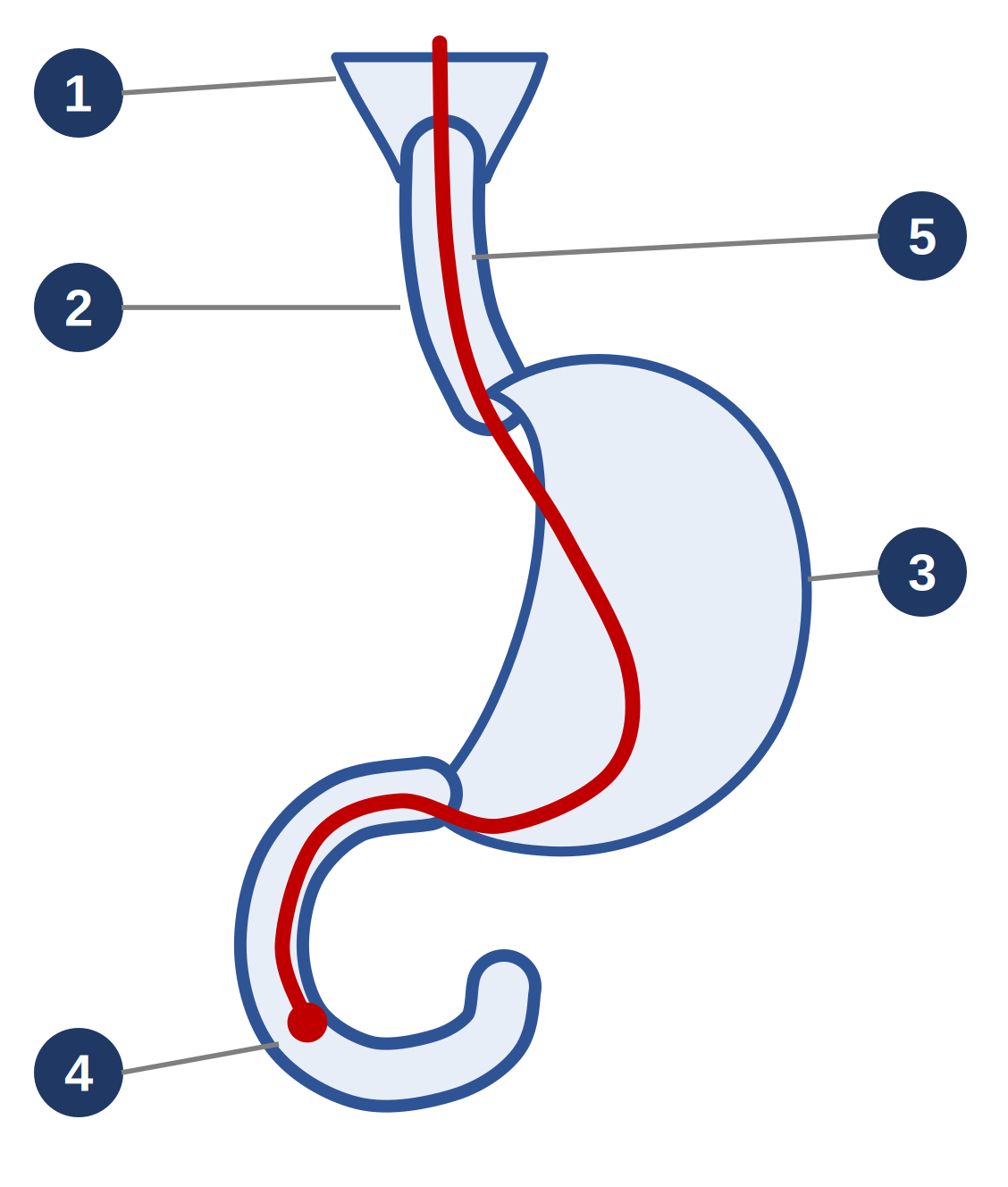
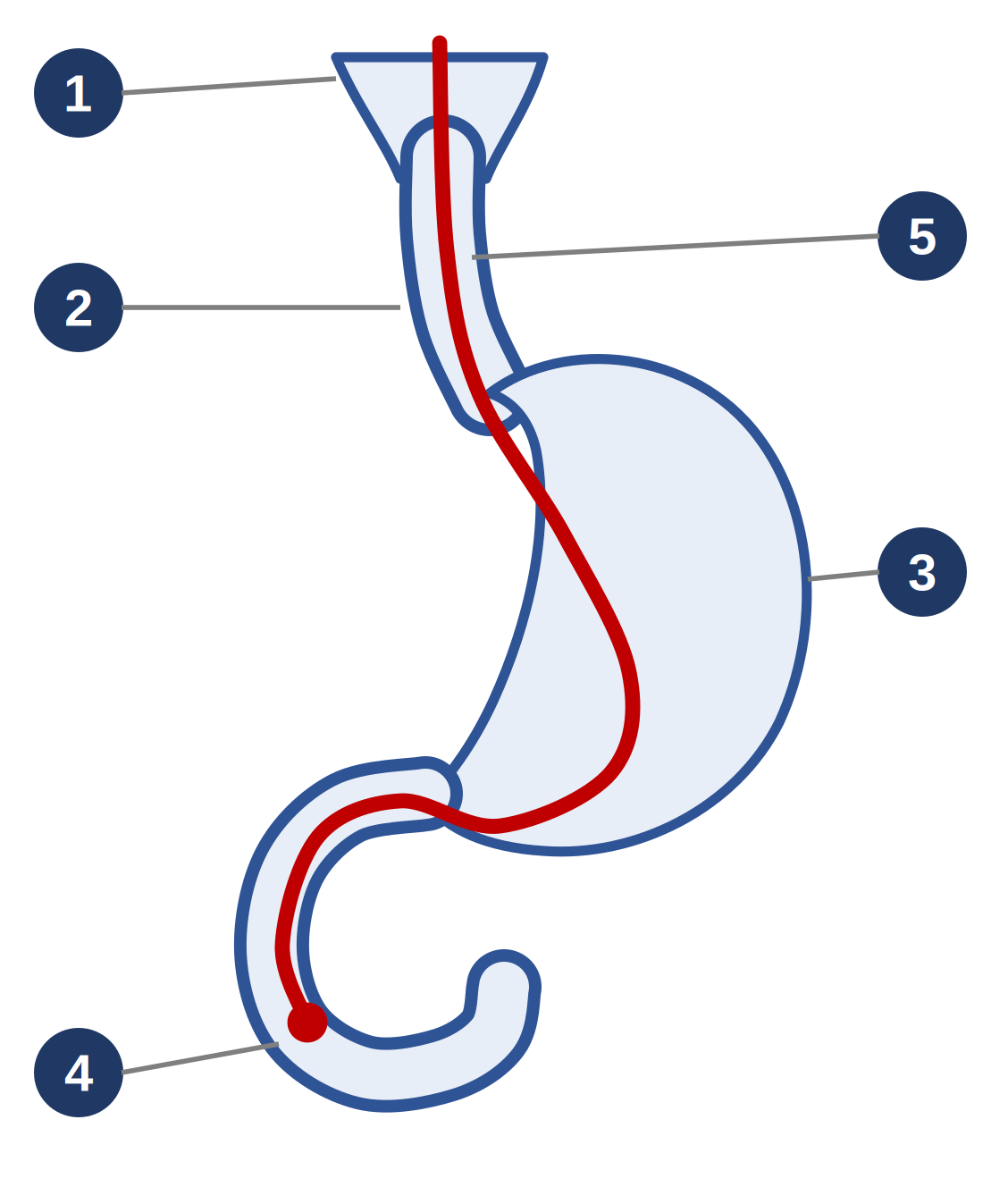
1 Mouth and throat 2 Oesophagus (food pipe) 3 Stomach 4 Duodenum (first part of the small bowel) 5 Endoscope
Why has it been recommended for me?
Common reasons include heartburn or reflux that has not responded to treatment, difficulty or pain on swallowing, indigestion or upper abdominal pain, nausea and vomiting, unexplained anaemia or weight loss, suspected bleeding from the stomach, testing for Helicobacter pylori infection or coeliac disease, and surveillance of a known condition such as Barrett’s oesophagus or a previously treated ulcer.
What are the benefits?
Gastroscopy is the most accurate way to examine the lining of the upper digestive tract. It allows a diagnosis to be made directly rather than assumed, and biopsies can confirm infection, inflammation, coeliac disease or early cancer. It is also therapeutic: bleeding can be stopped, narrowed areas stretched, and small early lesions removed.
Preparing for the test
Do not eat any solid food for 6 hours before your appointment. Milk and milky drinks count as food.
You may drink water only, up to 2 hours before your appointment. Nothing at all in the last 2 hours.
If there is food left in the stomach the examination is unsafe and has to be abandoned and rebooked, so please follow these times exactly.
Dentures must be removed before the test. Tell the endoscopist beforehand if you have loose teeth, crowns, veneers or bridgework — a mouthguard is used to protect your teeth, but damage is still possible.
Your medicines
Acid-reducing tablets (omeprazole, esomeprazole, lansoprazole, pantoprazole, rabeprazole): continue them unless the unit instructs otherwise. If you are being tested for Helicobacter pylori you will be asked to stop them for 2 weeks, and to stop antibiotics and bismuth for 4 weeks, before the test.
Blood thinners — warfarin, aspirin, clopidogrel, ticagrelor, prasugrel, rivaroxaban, apixaban, dabigatran, edoxaban: contact the unit at least 7 days before. For a routine examination with biopsies these are usually continued, but the instruction must come from us. Do not stop them on your own.
Diabetes: tell the unit in advance. You will normally be placed early on the list and given separate written instructions for your insulin or tablets.
Weight-loss or diabetes injections (semaglutide, liraglutide, dulaglutide, tirzepatide): tell the unit, as these slow stomach emptying and extra instructions may be needed.
All your other regular medicines: take them as usual with a sip of water.
Throat spray or sedation — your choice
You can have the test with a local anaesthetic throat spray alone, or with sedation given into a vein, or with both, and the difference matters for the rest of your day. With throat spray alone you stay fully awake, you can go home unaccompanied, and you can drive and return to work immediately. With sedation you become drowsy and remember little, but you must be taken home by a responsible adult who stays with you, and for 24 hours you must not drive, travel alone on public transport, operate machinery, drink alcohol, sign legal documents, or care for young children on your own. If you choose sedation and have no escort, the procedure may be postponed.
During the test
You will lie on your left side. A plastic mouthguard is placed between your teeth and oxygen is given through the nose while your pulse and oxygen level are monitored. Air is used to open up the stomach, so belching during and after the test is normal. You may retch when the tube passes the back of the throat; this settles quickly and does not mean anything is wrong.
What are the risks?
Gastroscopy is a safe procedure and serious complications are uncommon. A sore throat and bloating for a few hours afterwards are expected effects rather than complications.
Complication
How often it happens
Perforation (a tear in the wall of the food pipe or stomach)
About 1 in 10,000 for a routine examination. The risk is higher if a narrowing has to be stretched or a lesion removed, and surgery is sometimes needed.
Bleeding
About 1 in 1,000 for a routine examination with biopsies. It usually stops on its own.
Effects of sedation on breathing, heart rate or blood pressure
Short-lived effects in about 1 in 100. Serious events such as a heart or breathing emergency are far rarer, around 1 in 2,000. You are monitored throughout and these effects can be treated.
Damage to teeth, crowns or bridgework
Rare. A mouthguard is used, and the risk is reduced further if you tell the endoscopy unit in advance about loose or capped teeth.
The test has to be abandoned
Occasionally, most often when food remains in the stomach or the test is not tolerated. It is then rebooked.
A lesion not seen during the test
About 1 in 10 cancers of the upper digestive tract are diagnosed within three years of an endoscopy that did not show them. The examination is therefore unhurried and photographed, and repeat testing is arranged if symptoms persist.
Death directly related to the procedure
Extremely rare — about 1 in 10,000.
Are there alternatives?
A barium swallow or a CT scan can show the shape of the food pipe and stomach but not the lining in detail, and neither allows biopsies or treatment. A breath or stool test can diagnose Helicobacter pylori but will not explain other symptoms or exclude a lesion. Choosing not to have the test is also an option; discuss with your doctor what might be missed.
After the test
If you had throat spray only, your throat stays numb for about an hour. Do not eat or drink during that hour; then test your swallow with a few sips of cold water before eating normally. If you had sedation you will rest in the recovery area, and you can eat and drink once you are fully awake.
The findings are explained to you before you leave and a written report is given. Sedation affects memory, so ask for the information to be repeated or given to the person accompanying you. If a test for Helicobacter pylori was done during the procedure the result is usually available the same day; biopsy results take 2 to 4 weeks and are discussed in clinic.
When to get urgent help
Go to the nearest emergency department if, in the hours or days after the test, you develop:
vomiting of blood, or black tarry stools
severe pain in the neck, chest or abdomen, or pain that worsens on swallowing
difficulty breathing, or pain on breathing
fever of 38 °C or above, or shivering
Take this sheet with you and tell the staff that you have had a gastroscopy.
Contact
For appointments and questions, contact the endoscopy unit using the numbers it has given you. If you are seriously unwell, or it is outside working hours, go to the Emergency Department rather than waiting for a reply.
Based on BSG/AUGIS upper GI endoscopy standards, BSG/ESGE antithrombotic guidance, ASGE adverse-event data and NHS patient-information conventions. Supports but does not replace the discussion with your doctor and the consent process. PE-PROC-02 · Version 1.0 · October 2026 · Review due: October 2028
This leaflet is general information and does not replace advice from your own doctor.