PE-PROC-17الإصدار 1.0 · آخر مراجعة أكتوبر 2026 · المراجعة القادمة أكتوبر 2028Version 1.0 · Last reviewed October 2026 · Next review October 2028
يمكن إجراء معظم فحوص التنظير بأكثر من طريقة، والاختيار يؤثر في بقية يومك أكثر بكثير مما يؤثر في الفحص نفسه. اقرأ هذه النشرة قبل موعدك، لأن أحد الخيارات يستوجب أن ترتب من يوصلك إلى المنزل.
قبل حضورك، أياً كان الخيار
امتنع عن الطعام ست ساعات قبل موعدك، واقتصر على السوائل الصافية حتى ساعتين قبله. وينطبق ذلك على الفحص بلا تخدير وعلى بخاخ الحلق أيضاً، لأن الحاجة إلى المهدئ قد تظهر في اليوم نفسه
تناول أدويتك المعتادة مع رشفة ماء ما لم يُطلب منك غير ذلك. وإن كنت تستعمل الأنسولين أو أقراص السكري فاتصل بوحدة المناظير مسبقاً ليُعدَّل الدواء حول فترة الصيام
خياراتك
الخيار
ماذا يعني لك
بخاخ الحلق وحده (لتنظير المعدة)
مخدر موضعي يُرش على مؤخرة الحلق. تبقى مستيقظاً تماماً وتتذكر الفحص. ولا تحتاج مرافقاً، ويمكنك القيادة والعودة إلى العمل، لكن امتنع عن الأكل والشرب نحو ساعة حتى يزول تخدير حلقك
غاز الاستنشاق
يُستنشق أثناء الفحص ويزول مفعوله خلال دقائق. ولا تحتاج مرافقاً، وتصبح لائقاً للقيادة بعد نحو ثلاثين دقيقة
بدون أي تخدير
يخضع كثيرون لتنظير القولون أو لفحص قصير بهذه الطريقة، ويفيد معظمهم بانزعاج بسيط. ولا تحتاج مرافقاً
مهدئ عبر الوريد
مهدئ يُصاحبه أحياناً مسكّن. تصبح ناعساً مرتاحاً ولا تتذكر غالباً إلا القليل. ويُشترط وجود مرافق وتنطبق قواعد الأربع والعشرين ساعة أدناه
تخدير عام
يُستخدم للإجراءات الطويلة أو المعقدة، ويُرتَّب مع فريق التخدير بتعليماته الخاصة
إذا اخترت المهدئ
المهدئ ليس كالتخدير العام. فستكون ناعساً مرتاحاً لا فاقداً للوعي، وستستطيع الاستجابة للفريق. ولا يتذكر معظم المرضى شيئاً يُذكر بعده، ولهذا نستكمل موافقتك قبل إعطاء أي مهدئ، ونعطيك النتائج مكتوبة لتأخذها معك، فما يُشرح لك في منطقة الإفاقة قد لا يبقى في ذاكرتك. واصطحب معك من تحب أن يسمع النتائج أيضاً.
قاعدة المرافق
يجب أن يوصلك إلى المنزل شخص بالغ عمره 18 سنة فأكثر. ويمكنك الذهاب بالسيارة أو بسيارة أجرة، لكن ليس وحدك
وينبغي أن يكون هناك من يمكنه إسنادك خلال الأربع والعشرين ساعة التالية. ولا يلزم أن يجلس معك طوال الوقت، لكن ينبغي ألا تكون وحدك تماماً
وإذا تعذّر عليك ترتيب ذلك فأخبر وحدة المناظير قبل اليوم المحدد لا في صباحه. فكثيراً ما يمكننا إجراء الفحص ببخاخ الحلق أو بغاز الاستنشاق أو دون تخدير، ولا يحتاج أي منها مرافقاً، وهذا أفضل بكثير من إلغاء الموعد
خلال 24 ساعة بعد المهدئ، لا
تقُد سيارة ولا تركب دراجة
تشغّل آلات ولا تطبخ ولا تستخدم أي شيء ساخن أو حاد
توقّع مستندات قانونية ولا تتخذ قرارات مهمة
تشرب الكحول ولا تتناول أقراصاً منوّمة
تكن البالغ الوحيد المسؤول عن طفل صغير أو شخص يعتمد عليك
والسبب ليس أنك ستشعر بالنعاس، فقد تشعر بأنك طبيعي تماماً، بل أن الأدوية المهدئة تؤثر في الحكم وسرعة رد الفعل مدة أطول من تأثيرها في شعورك باليقظة، ولا يمكنك تقدير ذلك في نفسك بصورة موثوقة. والقيادة وردود أفعالك متأثرة بالأدوية مخالفة قانونية وقد لا يغطيك تأمينك.
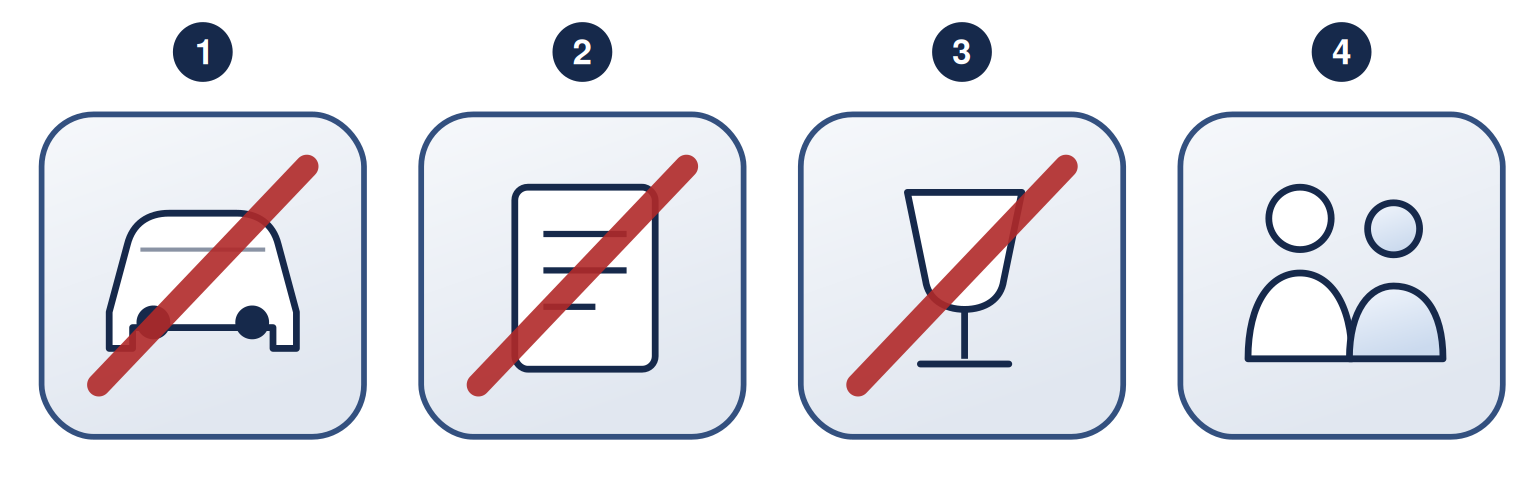
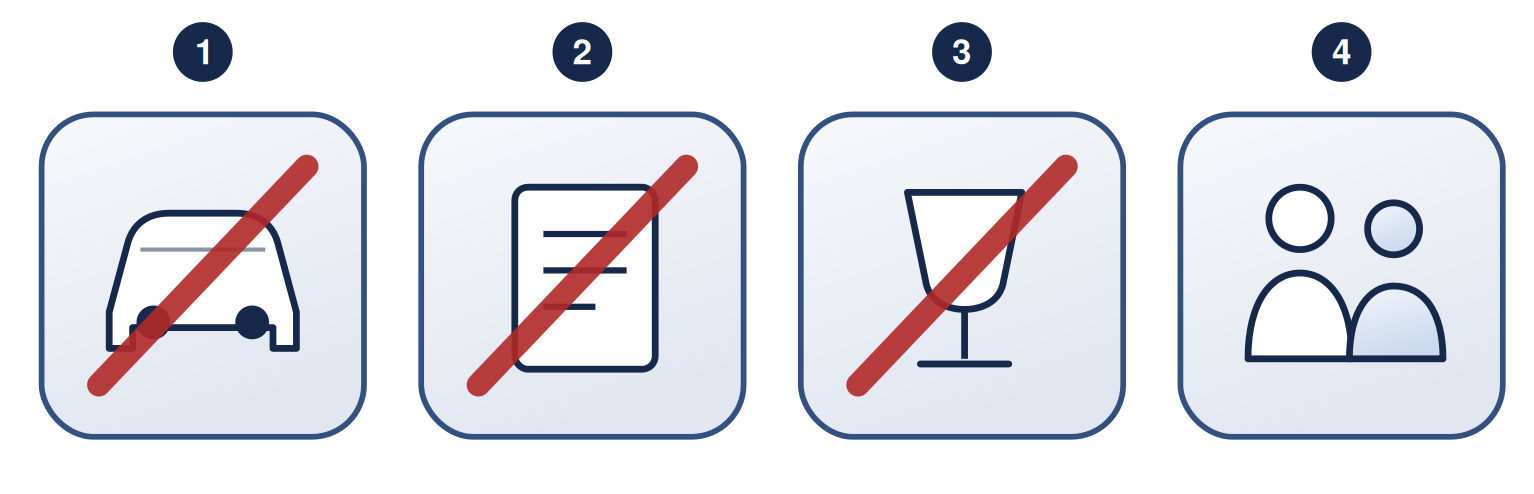
خلال 24 ساعة بعد المهدئ: ١ لا تقد سيارة ولا دراجة ٢ لا توقّع مستندات ولا تتخذ قرارات مهمة ٣ لا كحول ٤ شخص بالغ مسؤول يوصلك ويبقى قريباً منك
مخاطر التخدير
التخدير آمن لكنه ليس خالياً من المخاطر. فالانخفاضات العابرة في مستوى الأكسجين أو ضغط الدم شائعة وتُعالَج فوراً، ولهذا يُراقَب تنفسك ونبضك وضغطك وأكسجينك طوال الوقت ويُعطى الأكسجين عبر الأنف. أما المشاكل الخطيرة فنادرة. ويرتفع الخطر لدى كبار السن والضعفاء، ومن لديهم أمراض قلبية أو رئوية مهمة أو انقطاع النفس النومي أو وزن مرتفع، ومن يتناولون مسكنات قوية بانتظام. أخبر وحدة المناظير بكل ذلك مسبقاً. وتتوفر في الغرفة أدوية تعكس مفعول بعض المهدئات وتُستخدم عند الحاجة، وإن كان ليس لكل مهدئ دواء معاكس، ولهذا فإن المراقبة لا الدواء المعاكس هي ما يجعل التخدير آمناً.
قبل مغادرتك
ستُقيَّم رسمياً للتأكد من لياقتك للمغادرة: عودتك إلى مستوى يقظتك المعتاد، وعودة النبض وضغط الدم والتنفس إلى وضعها الطبيعي، ومعالجة أي انزعاج. ولا بد من حضور مرافقك قبل خروجك. واطلب نتائجك مكتوبة، واطرح أي سؤال لديك حينها، فذلك أسهل من محاولة التذكر لاحقاً.
وفي المنزل، اتصل بوحدة المناظير أو توجّه إلى قسم الطوارئ إذا أصابك ألم في الصدر أو البطن أو ضيق نفس أو حمى أو نزف، ولا تنسب ذلك إلى المهدئ.
للمواعيد والاستفسارات، تواصل مع وحدة المناظير عبر الأرقام التي زوّدتك بها. وإذا كانت حالتك شديدة أو كان الوقت خارج أوقات العمل فتوجّه إلى قسم الطوارئ بدلاً من انتظار الرد. الإصدار 1.0 · تاريخ المراجعة أكتوبر 2028.
هذه النشرة معلومات عامة ولا تغني عن مشورة طبيبك المعالج.
زاد صحي، PE-PROC-17
Most endoscopy tests can be done in more than one way, and the choice affects the rest of your day far more than it affects the test itself. Read this before your appointment, because one of the options requires you to arrange for someone to take you home.
Before you come, whichever option you choose
Have nothing to eat for six hours before your appointment, and clear fluids only up to two hours before. This applies to an unsedated test and to throat spray as well, because sedation may still be needed on the day.
Take your regular medicines with a sip of water unless you have been told otherwise. If you take insulin or tablets for diabetes, telephone the endoscopy unit beforehand so the dose can be adjusted around the fast.
Your options
Option
What it means for you
Throat spray only (gastroscopy)
A local anaesthetic sprayed on the back of the throat. You stay fully awake and remember the test. No escort needed; you may drive home and go back to work — but have nothing to eat or drink for about an hour until your throat is no longer numb.
Gas and air (Entonox)
Breathed in during the test and wears off within minutes. No escort needed; you are fit to drive about 30 minutes afterwards.
No sedation at all
Many people have a colonoscopy or a short test this way, and most report little discomfort. No escort needed.
Sedation through a drip
A sedative, sometimes with a painkiller. You become drowsy and relaxed and usually remember little. An escort is required, and the 24-hour rules below apply.
General anaesthetic
Used for long or complex procedures. Arranged with the anaesthetic team, with its own instructions.
If you choose sedation
Sedation is not the same as a general anaesthetic. You will be sleepy and comfortable rather than unconscious, and you will be able to respond to the team. Most people remember little or nothing afterwards, which is why we go through your consent before any sedation is given, and why we give you written results to take home — anything explained to you in the recovery area may not stay in your memory. Bring someone with you if you would like them to hear the results too.
The escort rule
A responsible adult aged 18 or over must take you home. You may go by car or taxi, but not alone.
Someone should be available to support you for the next 24 hours. They do not have to sit with you the whole time, but you should not be entirely on your own.
If you cannot arrange this, tell the endoscopy unit before the day rather than on the morning. We can often do the test with throat spray, with gas and air, or with no sedation, none of which need an escort — which is far better than cancelling.
For 24 hours after sedation, do not
drive a car or ride a bicycle;
operate machinery, cook, or use anything hot or sharp;
sign legal documents or make important decisions;
drink alcohol, or take sleeping tablets;
be the only adult responsible for a young child or a dependent person.
The reason is not that you will feel drowsy — you may well feel perfectly normal. It is that sedative medicines affect judgement and reaction time for longer than they affect how alert you feel, and you cannot reliably judge this in yourself. Driving while your reactions are impaired by medicines is an offence and you may not be covered by your insurance.
For 24 hours after sedation: 1 do not drive or cycle 2 do not sign documents or make important decisions 3 no alcohol 4 a responsible adult takes you home and stays within reach
The risks of sedation
Sedation is safe but not risk-free. Brief dips in oxygen level or blood pressure are common and are treated on the spot — this is why your breathing, pulse, blood pressure and oxygen are monitored throughout and why oxygen is given through the nose. Serious problems are rare. The risk is higher if you are elderly or frail, have significant heart or lung disease, sleep apnoea or a high body weight, or take regular strong painkillers. Tell the endoscopy unit about all of these beforehand. Medicines that reverse the effect of some sedatives are kept in the room and are used if they are needed, though not every sedative has one — which is why the monitoring, and not the reversal drug, is what keeps sedation safe.
Before you go home
You will be assessed formally to make sure you are fit to leave: back to your normal level of alertness, with pulse, blood pressure and breathing back to normal, and any discomfort dealt with. Your escort must be present before you are discharged. Ask for your findings in writing, and ask any question you have then — it is easier than trying to remember later.
At home, contact the endoscopy unit or go to the Emergency Department if you develop chest or abdominal pain, breathlessness, fever, or bleeding — do not put these down to the sedation.
For appointments and questions, contact the endoscopy unit using the numbers it has given you. If you are seriously unwell, or it is outside working hours, go to the Emergency Department rather than waiting for a reply. Version 1.0 · review date October 2028.
This leaflet is general information and does not replace advice from your own doctor.