تنظير القولون السيني المرن في التهاب القولون التقرحي
Flexible Sigmoidoscopy for Ulcerative Colitis
ما تحتاج معرفته قبل الفحص وبعده
What you need to know before and after the test
PE-PROC-04الإصدار 1.0 · آخر مراجعة أكتوبر 2026 · المراجعة القادمة أكتوبر 2028Version 1.0 · Last reviewed October 2026 · Next review October 2028
يُرجى قراءة هذه النشرة بعناية قبل موعدك وإحضارها معك يوم الفحص. وإذا كان أي أمر غير واضح، تواصل مع وحدة المناظير أو ممرضة أمراض الأمعاء الالتهابية قبل الموعد لا في يوم الفحص.
ما هو تنظير القولون السيني المرن؟
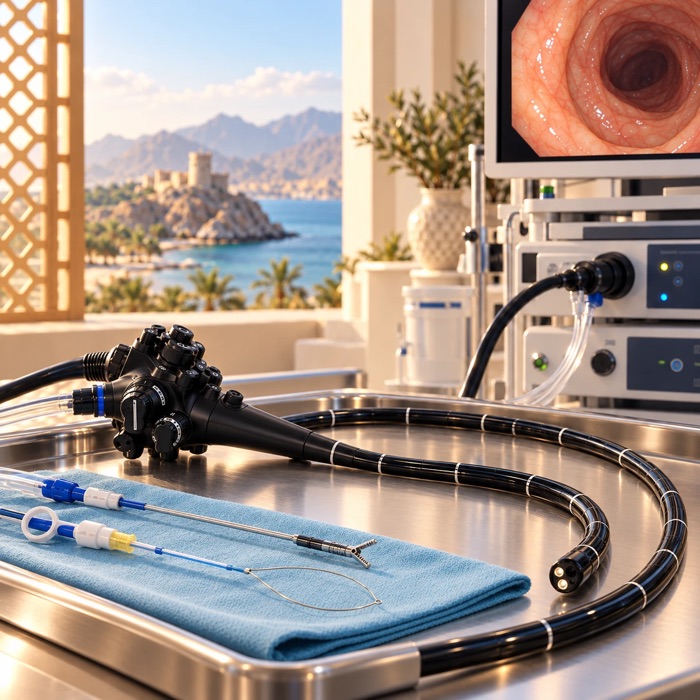
هو فحص للجزء السفلي من الأمعاء الغليظة — المستقيم والقولون السيني وغالباً القولون النازل — باستخدام أنبوب رفيع مرن مزوّد بكاميرا في طرفه يُدخل عبر فتحة الشرج. وهو أقصر وألطف من تنظير القولون الكامل؛ فهو لا يفحص القولون كله، ولا يحتاج إلى تنظيف كامل للأمعاء، ويستغرق عادة من ١٠ إلى ١٥ دقيقة، مع بقائك في الوحدة نحو ساعتين إلى ثلاث ساعات. وتُؤخذ عينات نسيجية صغيرة في معظم الحالات، وهو أمر غير مؤلم.
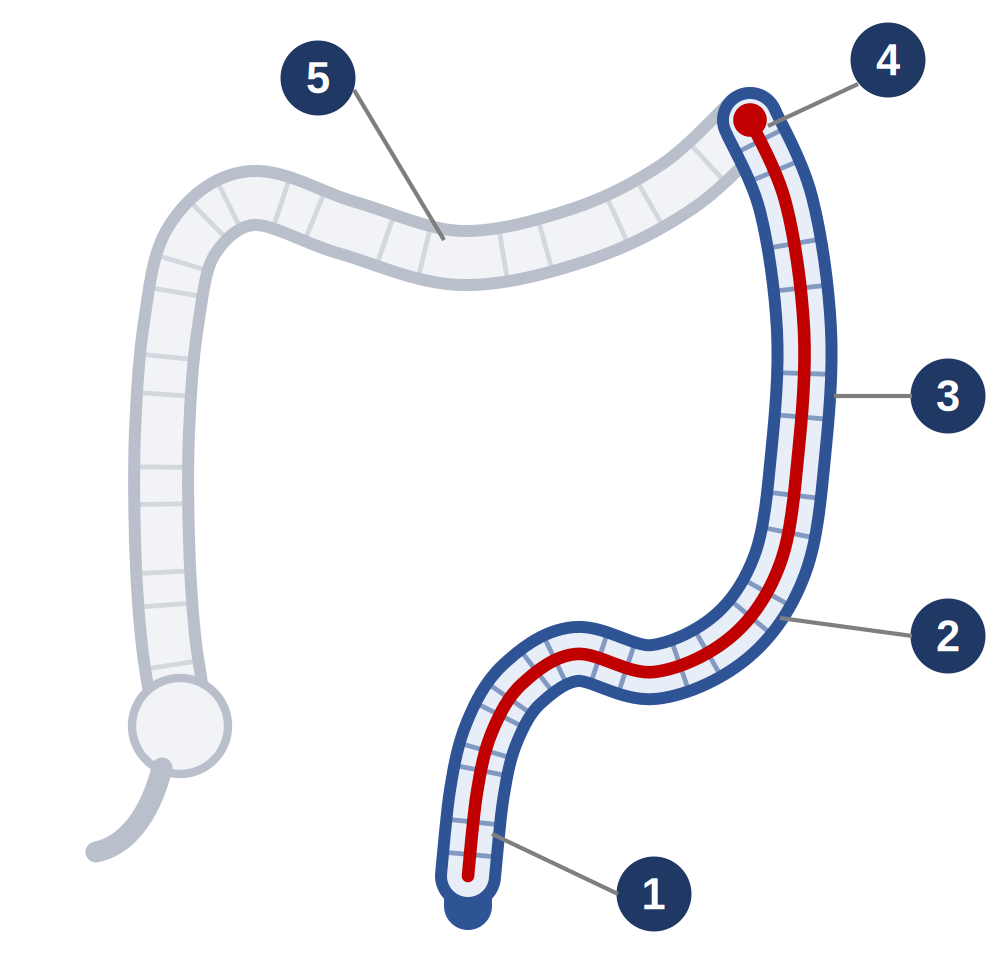
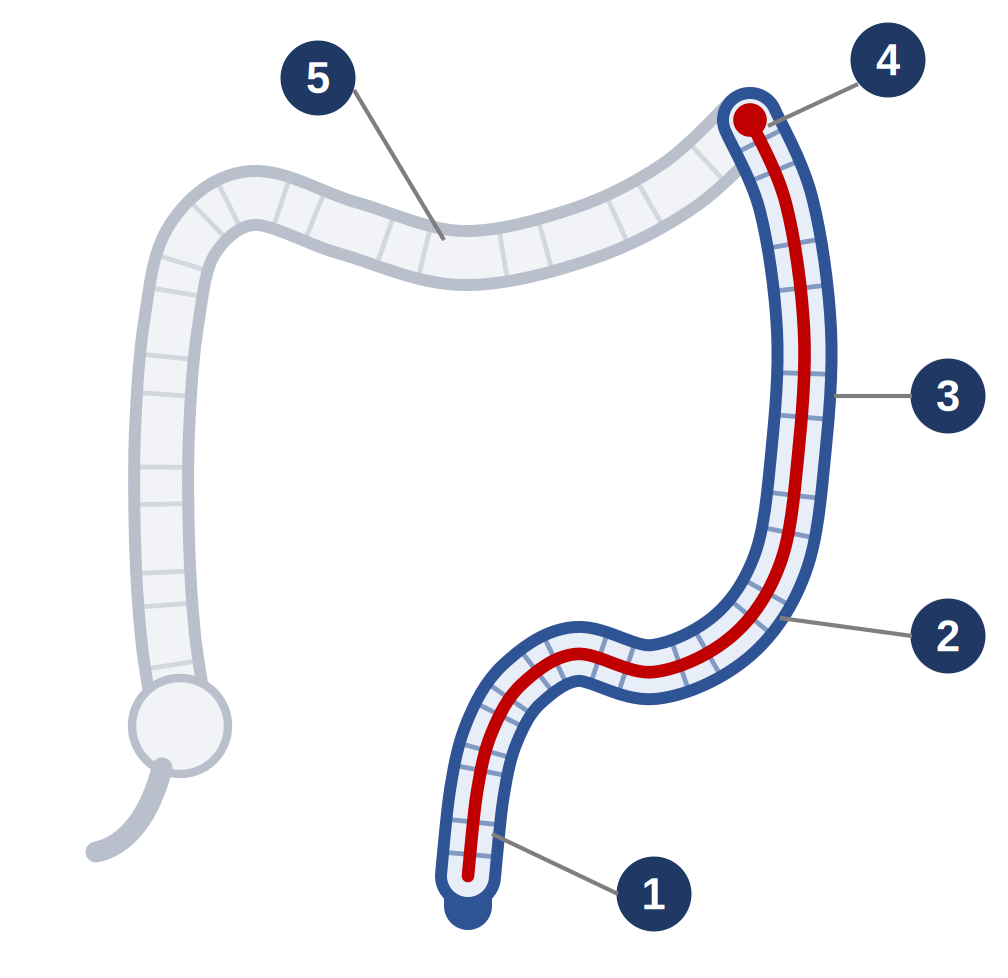
١ المستقيم ٢ القولون السيني ٣ القولون النازل ٤ الانثناء الطحالي — الحد المعتاد لهذا الفحص ٥ بقية القولون، لا يشملها الفحص
لماذا يُستخدم هذا الفحص في التهاب القولون التقرحي؟
يصيب التهاب القولون التقرحي المستقيم في جميع الحالات تقريباً ثم يمتد إلى أعلى، لذا فإن الجزء السفلي من القولون يعكس بدقة مدى نشاط المرض. ويجيب هذا الفحص عن أسئلة لا تكفي الأعراض والتحاليل وحدها للإجابة عنها: ما مدى التهاب البطانة الآن، وهل العلاج الحالي فعّال، وهل شُفيت البطانة، وأثناء النوبة هل توجد عدوى في البطانة مثل الفيروس المضخم للخلايا تزيد الالتهاب سوءاً. كما يُستخدم في البداية لتأكيد التشخيص وأخذ العينات الأولى.
ما فوائده؟
رؤية البطانة مباشرة هي الوسيلة الوحيدة لتقييم الالتهاب تقييماً موضوعياً، والنتيجة تُغيّر عادة الخطوة التالية: الاستمرار على العلاج الحالي، أو تصعيده، أو إيقاف دواء لا يعمل. وشفاء البطانة هو هدف العلاج في التهاب القولون التقرحي وليس مجرد تحسّن الأعراض؛ فالمرضى الذين تبدو بطانتهم طبيعية تماماً ينخفض لديهم خطر النوبة خلال السنة التالية إلى نحو النصف مقارنة بمن تبقى بطانتهم ملتهبة التهاباً خفيفاً. كما تؤكد العينات التشخيص وتستبعد العدوى كسبب للنوبة.
التحضير للفحص
ستُعطى عادة حقنة شرجية واحدة تستخدمها قبل مغادرة المنزل بساعة إلى ساعتين، أو تعطيها لك الممرضة في الوحدة. ولا حاجة إلى الصيام أو إلى تنظيف كامل للأمعاء.
إذا كنت في نوبة نشطة مع إسهال متكرر أو مصحوب بدم، فلا تستخدم الحقنة الشرجية وتواصل مع الوحدة؛ فالفحص في هذه الحالة يُجرى غالباً دون أي تحضير، وتكون الأمعاء فارغة بما يكفي.
وإذا نُوّمت في المستشفى بنوبة شديدة فيُجرى الفحص خلال اليوم الأول أو الثاني دون تحضير، ويقتصر عمداً على الجزء السفلي من الأمعاء.
يمكنك الأكل والشرب بشكل طبيعي قبل الفحص ما لم يُنصح بغير ذلك.
الأدوية — لا توقف علاج التهاب القولون
استمر على جميع أدوية التهاب القولون التقرحي كالمعتاد، بما في ذلك صباح يوم الفحص: الميسالازين، والكورتيزون، والأزاثيوبرين أو المركابتوبيورين، والميثوتريكسيت، وأي علاج بيولوجي أو أقراص مثل إنفليكسيماب أو فيدوليزوماب أو أوستيكينوماب أو أداليموماب أو مثبطات جانوس كيناز. فالغرض من الفحص هو معرفة مدى فعالية علاجك الحالي، وإيقافه قبل الفحص يُفقد النتيجة معناها. وهناك استثناءان وتنبيه واحد:
مضادات الإسهال (لوبيراميد، كودايين): أوقفها قبل ثلاثة أيام، ما لم يطلب منك طبيبك الاستمرار عليها.
أقراص الحديد: أوقفها قبل سبعة أيام، لأنها تصبغ البطانة وتصعّب رؤيتها.
مميّعات الدم: تُستمر عادة في هذا الفحص مع أخذ العينات. تواصل مع الوحدة قبل الموعد بسبعة أيام على الأقل للتأكيد، ولا توقفها من تلقاء نفسك.
هل سأحتاج إلى تخدير؟
لا يحتاج هذا الفحص عادة إلى تخدير. فمعظم المرضى يُجرونه دون مهدئ، أو باستخدام غاز الاستنشاق (الإنتونوكس) الذي يزول مفعوله خلال نحو ثلاثين دقيقة فيمكنك العودة إلى المنزل بمفردك وقيادة السيارة. وإذا اخترت المهدئ الوريدي فستحتاج إلى شخص بالغ مسؤول يرافقك إلى المنزل، وخلال أربع وعشرين ساعة لا تقد السيارة ولا تشغّل الآلات ولا تتناول الكحول ولا توقّع أوراقاً رسمية. وأخبر الفريق إذا كنت قلقاً أو مررت بتجربة فحص صعبة سابقاً؛ فبالإمكان إيقاف الفحص مؤقتاً أو إنهاؤه في أي وقت.
أثناء الفحص
ستُبدّل ملابسك برداء المستشفى وتستلقي على جانبك الأيسر. ويُستخدم قدر قليل من الهواء أو ثاني أكسيد الكربون لتوسيع الأمعاء، لذا قد تشعر بانتفاخ وخروج غازات، وهو أمر طبيعي يزول. وفي حالة النوبة النشطة يُستخدم هواء أقل ويبقى الفحص قصيراً. وقد تشعر برغبة في التبرز دون أن يخرج شيء. وتُؤخذ العينات من البطانة دون ألم.
ما هي المخاطر؟
تنظير القولون السيني المرن من أكثر فحوصات المناظير أماناً، وهو أقل خطراً بكثير من تنظير القولون الكامل لأنه أقصر ويصل إلى مسافة أقل.
المضاعفة
مدى تكرارها
انثقاب جدار الأمعاء
نحو ١ من كل ٥٠٠٠، وأقل من ذلك في الدراسات المنشورة للفحوصات غير المعقدة. وقد تلزم عملية جراحية في حالات نادرة.
النزيف
نحو ١ من كل ١٠٠٠ عند أخذ العينات، ويتوقف عادة من تلقاء نفسه.
ارتفاع الخطر أثناء النوبة الشديدة
عندما يكون الالتهاب شديداً أو تتناول جرعات عالية من الكورتيزون يصبح جدار الأمعاء أكثر هشاشة ويرتفع خطر التمزق عدة أضعاف. ولهذا يقتصر الفحص على الجزء السفلي ويُجرى بلطف وبأقل قدر من الهواء بدلاً من تنظير كامل للقولون.
الانتفاخ والغازات والمغص بعد الفحص
شائع ومتوقع وليس مضاعفة، ويزول خلال ساعات ويخف بالمشي.
نزول قليل من الدم بعد الفحص
شائع بعد أخذ العينات، خاصة إذا كانت البطانة ملتهبة، ويتوقف من تلقاء نفسه.
مضاعفة خطيرة بما فيها الوفاة
نادرة جداً، في حدود ١ من كل ٢٥٠٠٠ فحص.
هل توجد بدائل؟
يمكن لفحص الكالبروتكتين في البراز والتحاليل الدموية والتصوير بالموجات فوق الصوتية أو بالرنين المغناطيسي أن تشير إلى نشاط المرض، وهي مفيدة بين الفحوص، لكن أياً منها لا يُظهر البطانة ولا يقيّم درجة الالتهاب بدقة ولا يسمح بأخذ العينات، ومن ثم لا يمكنها تأكيد الشفاء ولا استبعاد وجود عدوى في البطانة. كما أن عدم إجراء الفحص خيار مطروح، لكن ذلك يعني تغيير العلاج أو إبقاءه دون معلومات كاملة.
هذا الفحص ليس فحص المتابعة للكشف عن السرطان
يُعرض على المصابين بالتهاب القولون التقرحي الممتد إلى ما بعد المستقيم تنظير قولون منفصل للكشف عن التغيرات الخلوية المبكرة، يبدأ بعد ثماني سنوات من بداية الأعراض ثم يُعاد كل سنة أو ثلاث سنوات أو عشر سنوات بحسب مستوى الخطورة لديك. وإذا كان لديك أيضاً التهاب الأقنية الصفراوية المصلّب الأولي فيبدأ من تاريخ التشخيص ويُعاد كل سنة. وذلك الفحص يشمل القولون بأكمله ويحتاج إلى تنظيف كامل للأمعاء، ولا يُغني عنه هذا الفحص.
بعد الفحص والنتائج
إذا لم تتلقَّ مهدئاً فيمكنك الأكل وقيادة السيارة والعودة إلى العمل مباشرة. وتُشرح لك النتائج قبل مغادرتك ويُسلَّم تقرير مكتوب يتضمن عادة درجة تصف مدى نشاط الالتهاب. أما نتائج العينات فتستغرق من أسبوعين إلى أربعة أسابيع وتُناقش في العيادة حيث يُتخذ القرار بشأن أي تعديل في العلاج. وإذا طُلب منك تقديم عينة براز فيُرجى إحضارها، فهي فحص منفصل يُستخدم للتحري عن العدوى أثناء النوبة.
متى تطلب المساعدة العاجلة
توجّه إلى أقرب قسم للطوارئ إذا ظهر عليك خلال يومين من الفحص أي مما يلي:
ألم بطني شديد أو متزايد، أو انتفاخ وتصلّب في البطن
نزيف غزير أو متكرر من فتحة الشرج، أو نزول تجلطات كبيرة
ارتفاع الحرارة إلى ٣٨ درجة مئوية أو أكثر، أو قشعريرة
دوخة أو إغماء
خذ هذه النشرة معك وأخبر الفريق الطبي بأنك خضعت لتنظير القولون السيني.
للتواصل
للمواعيد والاستفسارات، تواصل مع وحدة المناظير عبر الأرقام التي زوّدتك بها. وإذا كانت حالتك شديدة أو كان الوقت خارج أوقات العمل فتوجّه إلى قسم الطوارئ بدلاً من انتظار الرد.
أُعدّت استناداً إلى إرشادات الجمعية الأوروبية والبريطانية بشأن التهاب القولون التقرحي والنوبة الشديدة، وتوصيات الجمعية الأمريكية بشأن التوقيت، وإرشادات مميّعات الدم البريطانية والأوروبية، وإرشادات المتابعة للكشف عن السرطان، وبيانات السلامة المنشورة. وهي تدعم مناقشتك مع طبيبك وإجراءات الموافقة ولا تحل محلها. PE-PROC-04 · الإصدار ١٫٠ · أكتوبر ٢٠٢٦ · المراجعة: أكتوبر ٢٠٢٨
هذه النشرة معلومات عامة ولا تغني عن مشورة طبيبك المعالج.
زاد صحي، PE-PROC-04
Please read this sheet carefully before your appointment and bring it with you on the day. If anything is unclear, contact the Endoscopy Unit or your IBD nurse before your procedure rather than on the day.
What is a flexible sigmoidoscopy?
A flexible sigmoidoscopy is an examination of the lower part of the large bowel — the rectum, the sigmoid colon and usually the descending colon — using a thin, flexible tube with a camera at its tip, passed through the back passage. It is a shorter and gentler test than a colonoscopy: it does not examine the whole colon, it does not need full bowel preparation, and it usually takes 10 to 15 minutes. Expect to be in the department for about 2 to 3 hours. Small tissue samples (biopsies) are almost always taken; this is painless.
1 Rectum 2 Sigmoid colon 3 Descending colon 4 Splenic flexure — the usual limit of this test 5 The rest of the colon, not examined
Why is this test used in ulcerative colitis?
Ulcerative colitis almost always involves the rectum and spreads upwards, so the lower colon reliably shows how active the disease is. The test answers questions that symptoms and blood tests alone cannot: how inflamed the lining is now, whether your current treatment is working, whether the lining has healed, and — during a flare — whether an infection such as cytomegalovirus is present in the lining and making the colitis worse. It is also used at the start, to confirm the diagnosis and take the first biopsies.
What are the benefits?
Seeing the lining directly is the only way to grade inflammation objectively, and the result usually changes what happens next: continuing treatment, stepping it up, or stopping a drug that is not working. Healing of the lining is the treatment target in ulcerative colitis, not just feeling better — patients whose lining looks completely normal have about half the risk of a flare over the following year compared with those whose lining still looks mildly inflamed.
Preparing for the test
You will usually be given one enema to use about 1 to 2 hours before you leave home, or a nurse will give it in the department. You do not need to fast or take full bowel preparation.
If you are having a flare with frequent or bloody diarrhoea, do not use the enema. Contact the unit — the test is often done with no preparation at all in this situation, and your bowel is usually empty enough already.
If you are admitted to hospital with a severe flare the test is done at the bedside or in the unit within the first day or two, without preparation, and is deliberately limited to the lower bowel.
You may eat and drink normally before the test unless you are told otherwise.
Your medicines — do not stop your colitis treatment
Continue all your ulcerative colitis treatment as usual, including on the morning of the test: mesalazine, steroids, azathioprine or mercaptopurine, methotrexate, and any biologic or tablet treatment such as infliximab, vedolizumab, ustekinumab, adalimumab or a JAK inhibitor. The purpose of the test is to see how well your current treatment is working, so stopping it beforehand would make the result meaningless. Two exceptions and one caution:
Anti-diarrhoeal medicines (loperamide, codeine): stop 3 days before, unless your doctor has told you to keep taking them.
Iron tablets: stop 7 days before, as they stain the lining and make it harder to see.
Blood thinners: for this test, with biopsies, these are usually continued. Contact the unit at least 7 days before so we can confirm. Do not stop them on your own.
Will I be sedated?
Sedation is not usually needed. Most patients have the test with no sedation, or with gas and air (Entonox), which wears off within about 30 minutes so you can go home alone and drive. If you choose sedation into a vein you will need a responsible adult to take you home, and for 24 hours you must not drive, operate machinery, drink alcohol or sign legal documents. Tell the team if you are anxious; the test can be paused or stopped at any point.
During the test
You will change into a gown and lie on your left side. A small amount of air or carbon dioxide is used to open the bowel, so you may feel bloating and wind, which passes. In an active flare only a little air is used and the examination is kept short. You may feel an urge to open your bowels; nothing will come out. Biopsies do not hurt.
What are the risks?
Flexible sigmoidoscopy is one of the safest endoscopic examinations — considerably safer than a colonoscopy, because it is shorter and reaches less far.
Complication
How often it happens
Perforation (a tear in the bowel wall)
About 1 in 5,000, and lower in published series of straightforward examinations. Surgery is occasionally needed.
Bleeding
About 1 in 1,000 where biopsies are taken. It usually stops on its own.
Higher risk during a severe flare
When the colitis is severely inflamed, or you are on high-dose steroids, the bowel wall is more fragile and the risk of a tear is several times higher. This is why the test is limited to the lower bowel, done gently and with as little air as possible, rather than as a full colonoscopy.
Bloating, wind and cramping afterwards
Common and expected rather than a complication. It settles within a few hours and walking helps.
A small amount of blood after the test
Common after biopsies, particularly if the lining is inflamed, and settles on its own.
Serious complication including death
Very rare — in the region of 1 in 25,000 examinations.
Are there alternatives?
A stool calprotectin test, blood tests and an ultrasound or MRI scan can suggest whether the colitis is active and are useful between examinations, but none shows the lining, grades the inflammation reliably or allows biopsies, so none can confirm healing or rule out infection in the lining. Choosing not to have the test is also an option; the risk is that treatment is then changed, or left unchanged, on incomplete information.
This is not the same as a surveillance colonoscopy
If your colitis affects more than the rectum you are also offered a separate colonoscopy to look for early cell changes, starting 8 years after your symptoms began and then repeated every 1, 3 or 10 years depending on your individual risk. If you also have primary sclerosing cholangitis it starts at diagnosis and is repeated every year. That test covers the whole colon, needs full bowel preparation, and is not replaced by this one.
After the test and your results
If you had no sedation you can eat, drive and return to work straight away. The findings are explained to you before you leave and a written report is given, usually including a score describing how active the inflammation looks. Biopsy results take 2 to 4 weeks and are discussed in clinic, where any change to your treatment will be decided. If you have been asked to provide a stool sample, please do so — it is a separate test from this examination and is used to check for infection during a flare.
When to get urgent help
Go to the nearest emergency department if, within two days of the test, you develop:
severe or worsening abdominal pain, or a swollen, hard abdomen
heavy or repeated bleeding from the back passage, or passing large clots
fever of 38 °C or above, or shivering
dizziness or fainting
Take this sheet with you and tell the staff that you have had a flexible sigmoidoscopy.
Contact
For appointments and questions, contact the endoscopy unit using the numbers it has given you. If you are seriously unwell, or it is outside working hours, go to the Emergency Department rather than waiting for a reply.
Based on ECCO and BSG guidance on ulcerative colitis and acute severe colitis, ACG timing recommendations, BSG/ESGE antithrombotic guidance, BSG colorectal surveillance guidance and published endoscopic safety data. Supports but does not replace the discussion with your doctor and the consent process. PE-PROC-04 · Version 1.0 · October 2026 · Review due: October 2028
This leaflet is general information and does not replace advice from your own doctor.