

النص المكتوب للشرائحText version of the slides (English and Arabic)
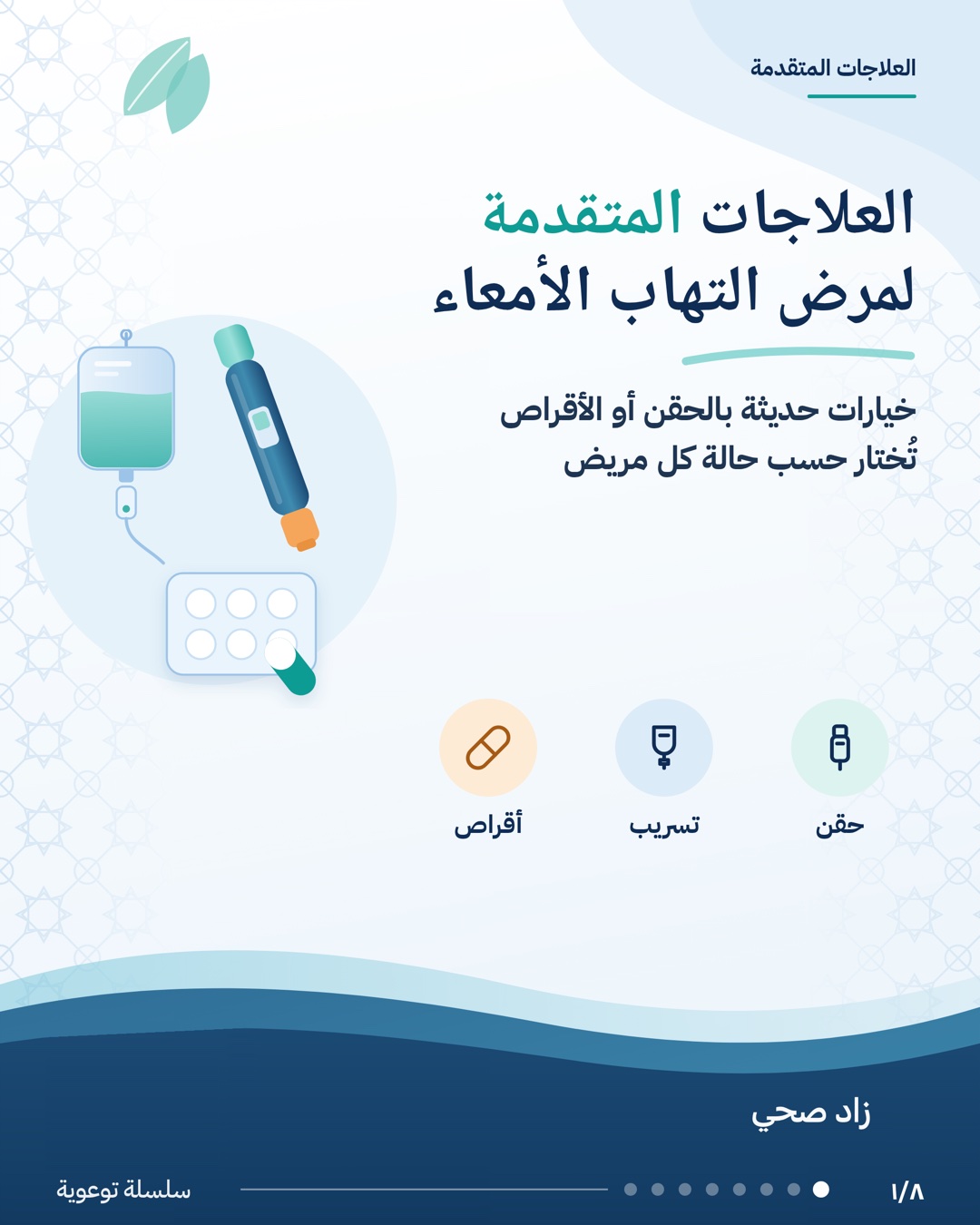
العلاجات المتقدمة لمرض التهاب الأمعاء
خيارات حديثة بالحقن أو الأقراص تُختار حسب حالة كل مريض
- حقن
- تسريب
- أقراص
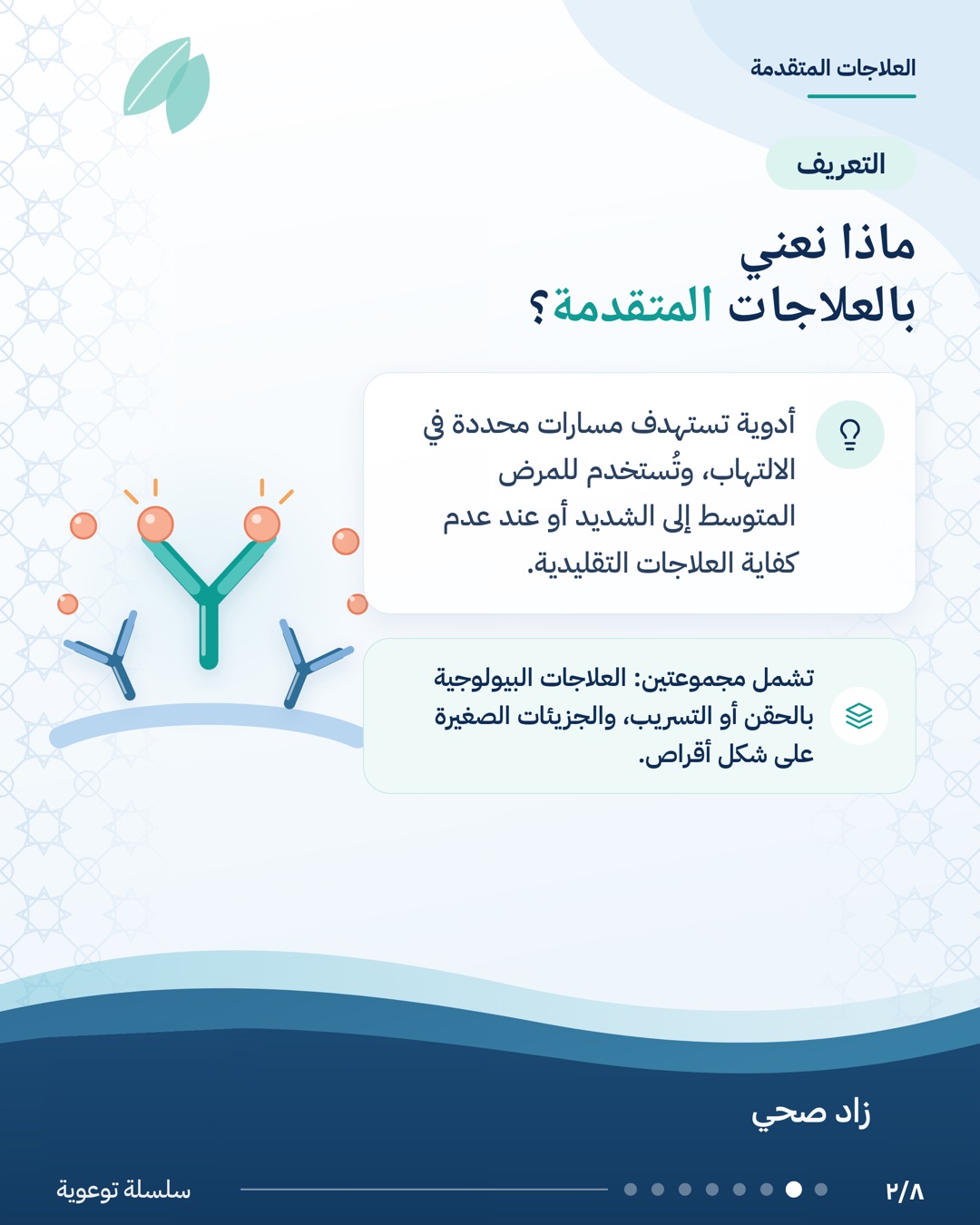
ماذا نعني بالعلاجات المتقدمة؟
التعريف
أدوية تستهدف مسارات محددة في الالتهاب، وتُستخدم للمرض المتوسط إلى الشديد أو عند عدم كفاية العلاجات التقليدية.
تشمل مجموعتين: العلاجات البيولوجية بالحقن أو التسريب، والجزيئات الصغيرة على شكل أقراص.
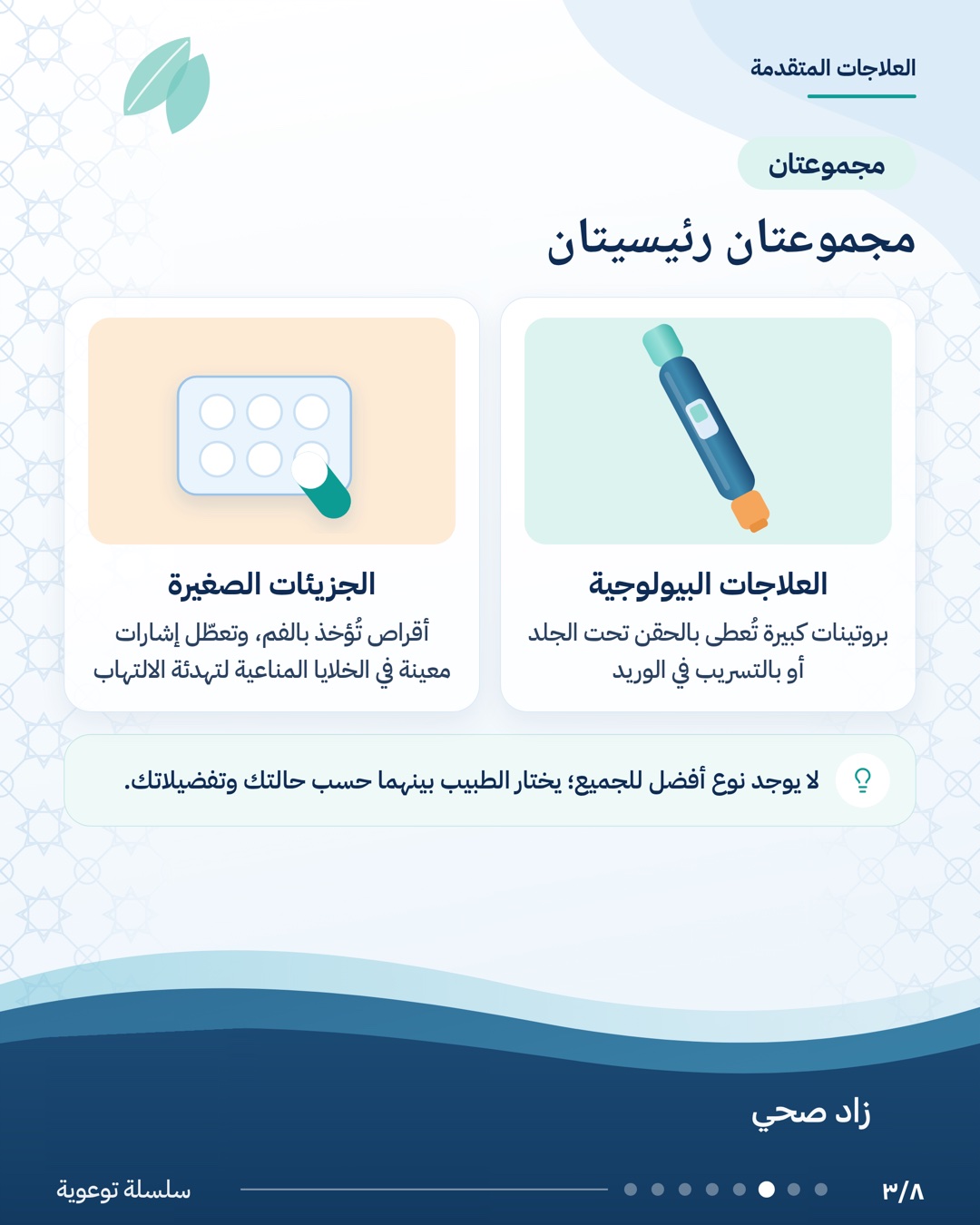
مجموعتان رئيسيتان
مجموعتان
- العلاجات البيولوجية — بروتينات كبيرة تُعطى بالحقن تحت الجلد أو بالتسريب في الوريد
- الجزيئات الصغيرة — أقراص تُؤخذ بالفم، وتعطّل إشارات معينة في الخلايا المناعية لتهدئة الالتهاب
لا يوجد نوع أفضل للجميع؛ يختار الطبيب بينهما حسب حالتك وتفضيلاتك.
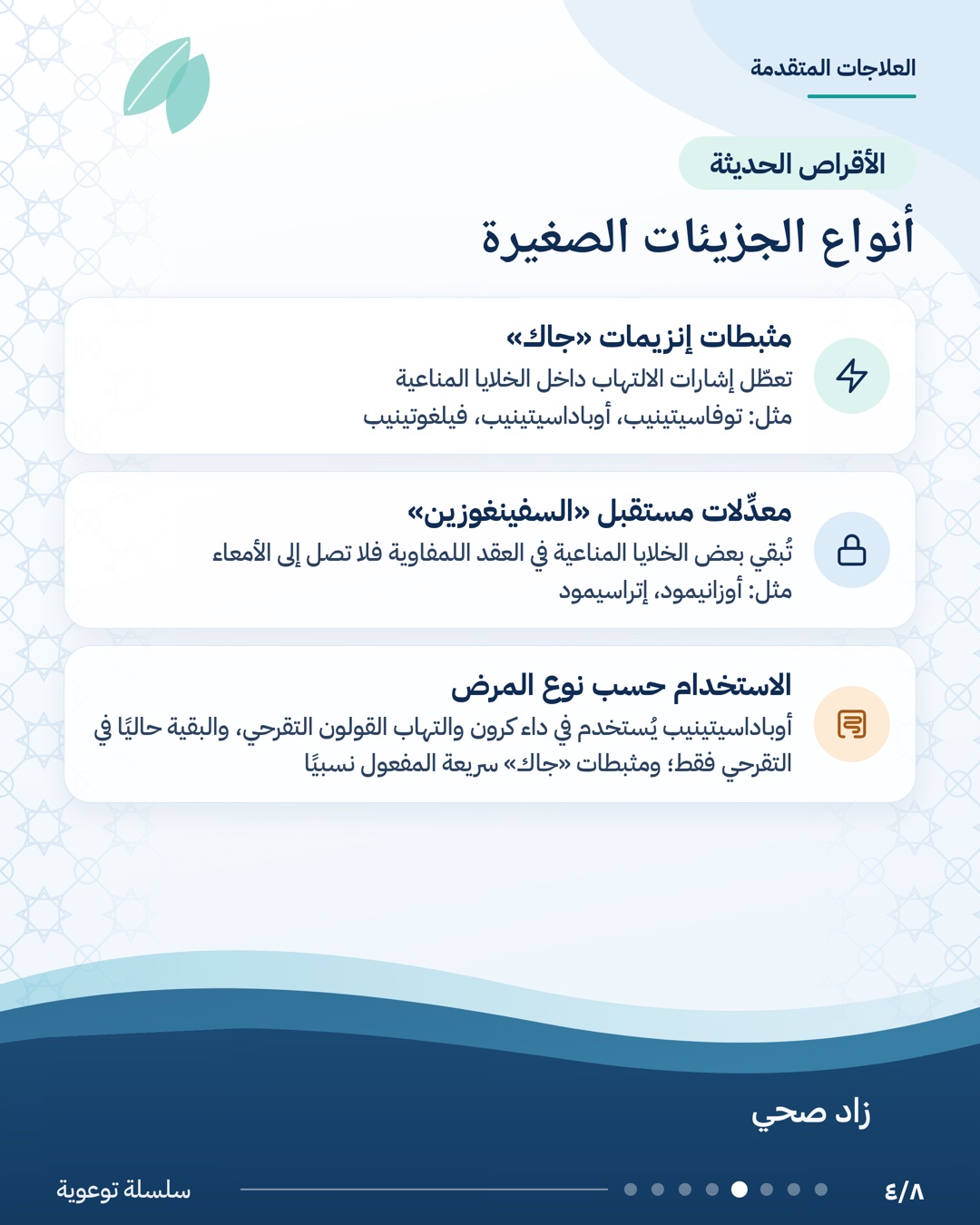
أنواع الجزيئات الصغيرة
الأقراص الحديثة
- مثبطات إنزيمات «جاك» — تعطّل إشارات الالتهاب داخل الخلايا المناعية — مثل: توفاسيتينيب، أوباداسيتينيب، فيلغوتينيب
- معدِّلات مستقبل «السفينغوزين» — تُبقي بعض الخلايا المناعية في العقد اللمفاوية فلا تصل إلى الأمعاء — مثل: أوزانيمود، إتراسيمود
- الاستخدام حسب نوع المرض — أوباداسيتينيب يُستخدم في داء كرون والتهاب القولون التقرحي، والبقية حاليًا في التقرحي فقط؛ ومثبطات «جاك» سريعة المفعول نسبيًا
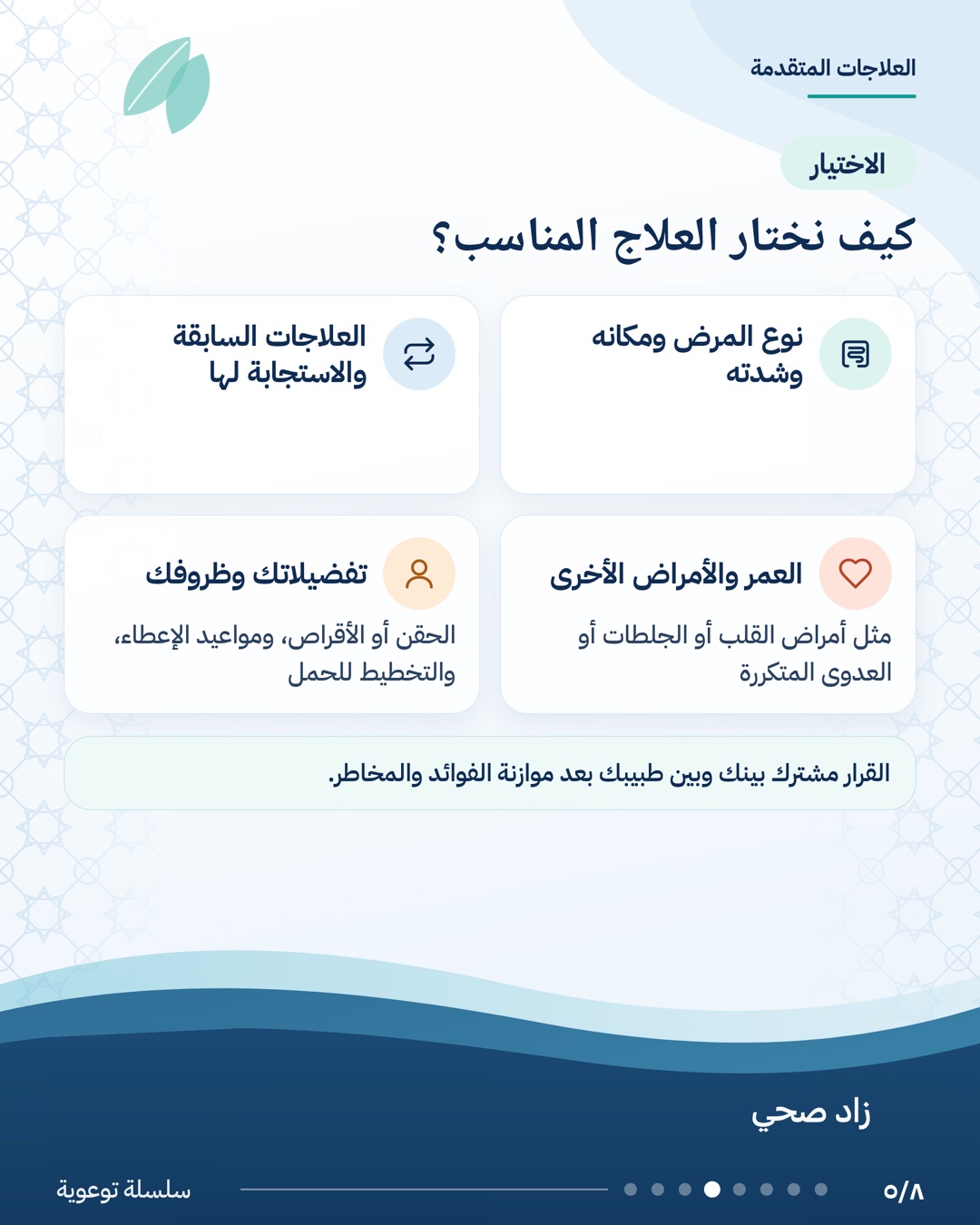
كيف نختار العلاج المناسب؟
الاختيار
- نوع المرض ومكانه وشدته
- العلاجات السابقة والاستجابة لها
- العمر والأمراض الأخرى — مثل أمراض القلب أو الجلطات أو العدوى المتكررة
- تفضيلاتك وظروفك — الحقن أو الأقراص، ومواعيد الإعطاء، والتخطيط للحمل
القرار مشترك بينك وبين طبيبك بعد موازنة الفوائد والمخاطر.
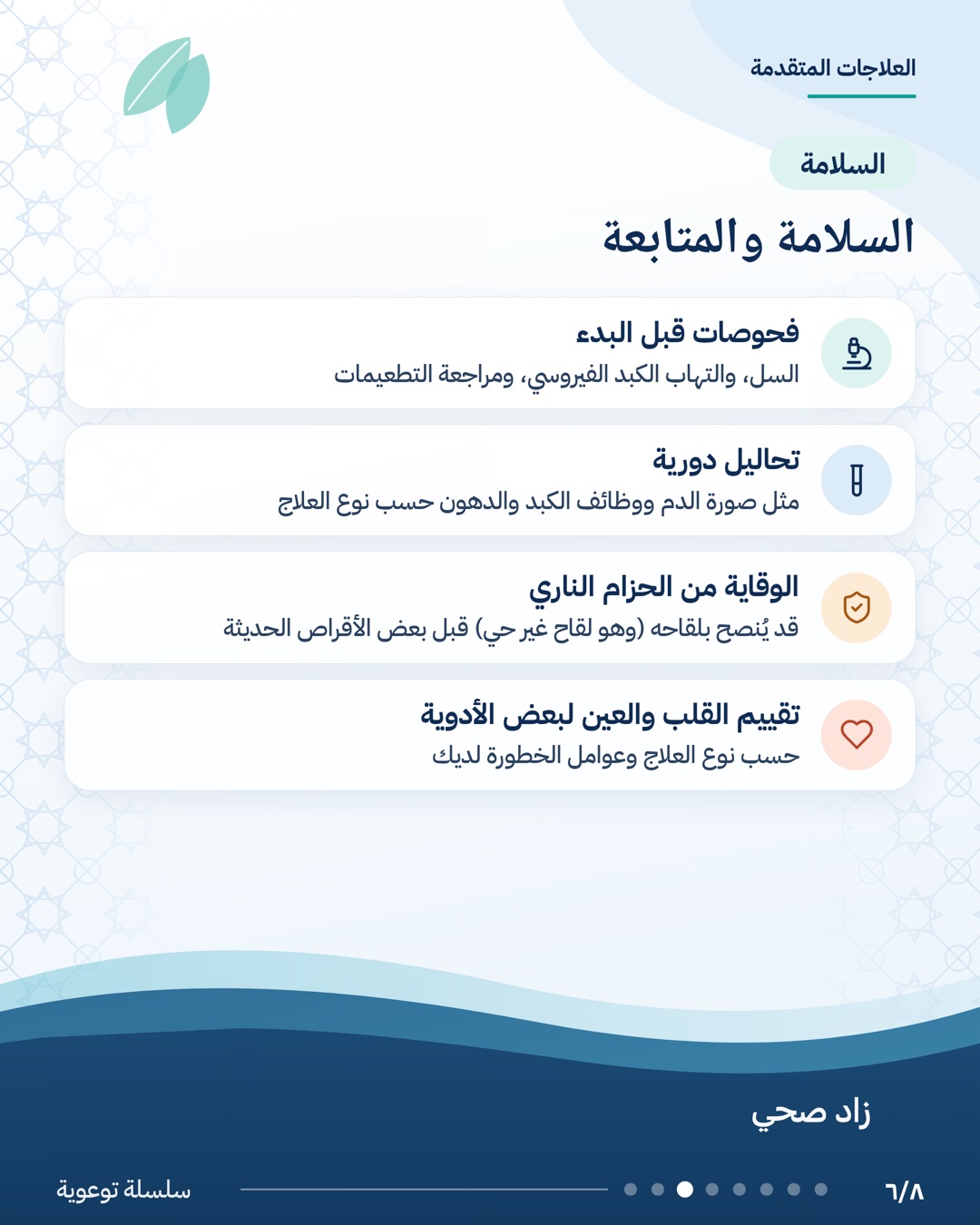
السلامة والمتابعة
السلامة
- فحوصات قبل البدء — السل، والتهاب الكبد الفيروسي، ومراجعة التطعيمات
- تحاليل دورية — مثل صورة الدم ووظائف الكبد والدهون حسب نوع العلاج
- الوقاية من الحزام الناري — قد يُنصح بلقاحه (وهو لقاح غير حي) قبل بعض الأقراص الحديثة
- تقييم القلب والعين لبعض الأدوية — حسب نوع العلاج وعوامل الخطورة لديك
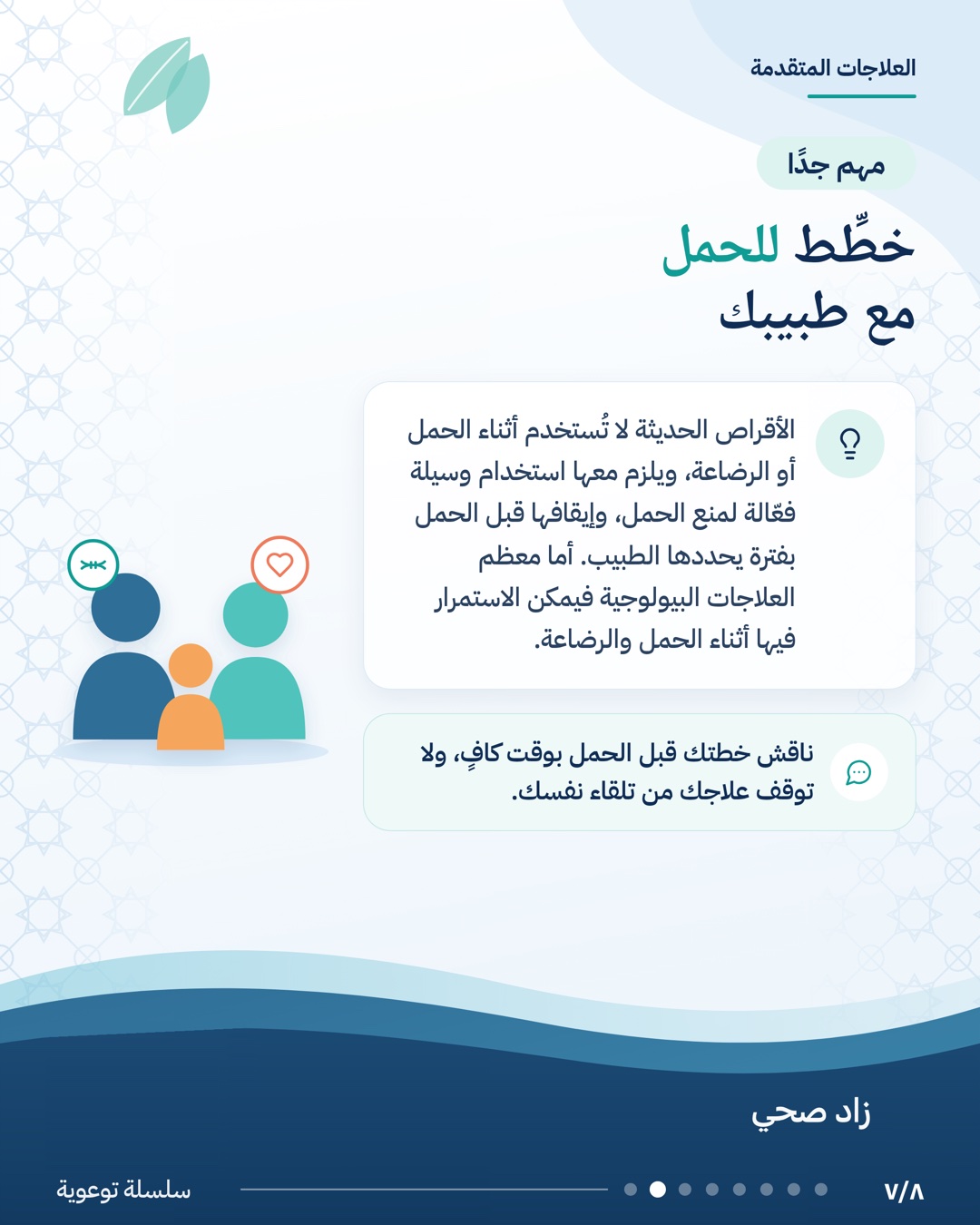
خطِّط للحمل مع طبيبك
مهم جدًا
الأقراص الحديثة لا تُستخدم أثناء الحمل أو الرضاعة، ويلزم معها استخدام وسيلة فعّالة لمنع الحمل، وإيقافها قبل الحمل بفترة يحددها الطبيب. أما معظم العلاجات البيولوجية فيمكن الاستمرار فيها أثناء الحمل والرضاعة.
ناقش خطتك قبل الحمل بوقت كافٍ، ولا توقف علاجك من تلقاء نفسك.
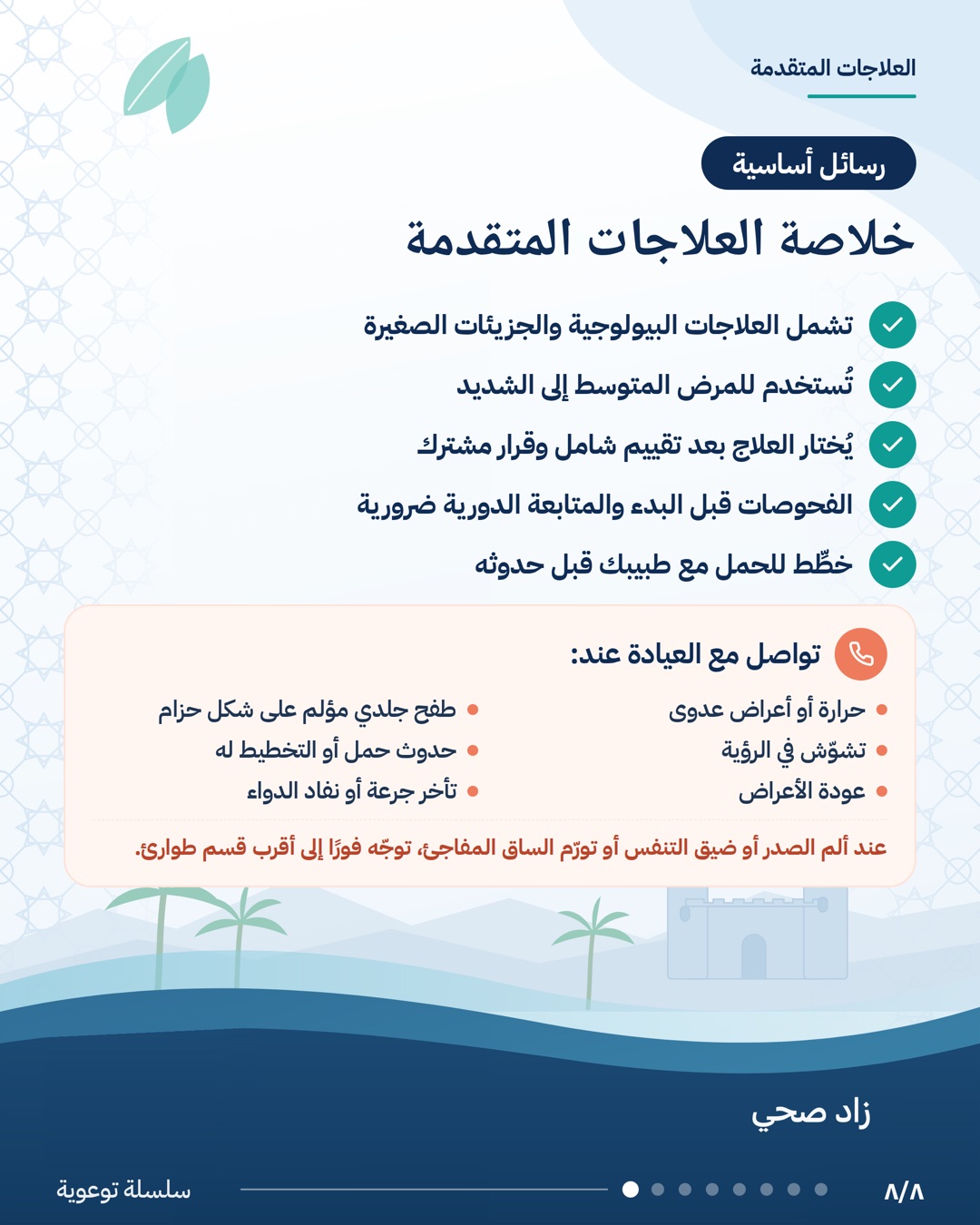
خلاصة العلاجات المتقدمة
رسائل أساسية
- تشمل العلاجات البيولوجية والجزيئات الصغيرة
- تُستخدم للمرض المتوسط إلى الشديد
- يُختار العلاج بعد تقييم شامل وقرار مشترك
- الفحوصات قبل البدء والمتابعة الدورية ضرورية
- خطّط للحمل مع طبيبك قبل حدوثه
تواصل مع العيادة عند:
- حرارة أو أعراض عدوى
- تشوّش في الرؤية
- عودة الأعراض
- طفح جلدي مؤلم على شكل حزام
- حدوث حمل أو التخطيط له
- تأخر جرعة أو نفاد الدواء
عند ألم الصدر أو ضيق التنفس أو تورّم الساق المفاجئ، توجّه فورًا إلى أقرب قسم طوارئ.
Advanced therapies for IBD
Modern options given by injection or as tablets, chosen to suit each patient
- Injections
- Infusions (drips)
- Tablets
What do we mean by advanced therapies?
Definition
Medicines that target specific pathways of inflammation. They are used for moderate to severe disease, or when conventional treatments are not enough.
They include two groups: biologic treatments given by injection or infusion, and small molecules taken as tablets.
Two main groups
Two groups
- Biologic treatments — large proteins given by injection under the skin or by infusion into a vein
- Small molecules — tablets taken by mouth that block certain signals in immune cells to calm the inflammation
No one type is best for everyone; your doctor chooses between them based on your condition and your preferences.
Types of small molecules
Modern tablets
- JAK inhibitors — block inflammation signals inside immune cells — for example: tofacitinib, upadacitinib, filgotinib
- Sphingosine-1-phosphate (S1P) receptor modulators — keep some immune cells in the lymph nodes so they do not reach the bowel — for example: ozanimod, etrasimod
- Use by disease type — upadacitinib is used in Crohn's disease and ulcerative colitis; the others are currently used in ulcerative colitis only. JAK inhibitors work relatively quickly
How do we choose the right treatment?
Choosing
- The type, location and severity of the disease
- Previous treatments and how you responded to them
- Age and other conditions — such as heart disease, blood clots or repeated infections
- Your preferences and circumstances — injections or tablets, dosing schedule, and plans for pregnancy
The decision is shared between you and your doctor after weighing up the benefits and risks.
Safety and follow-up
Safety
- Tests before starting — tuberculosis (TB), viral hepatitis, and a review of vaccinations
- Regular blood tests — such as blood count, liver function and blood fats (lipids), depending on the treatment
- Preventing shingles — the shingles vaccine (a non-live vaccine) may be recommended before some modern tablets
- Heart and eye assessment for some medicines — depending on the treatment and your risk factors
Plan pregnancy with your doctor
Very important
The modern tablets are not used during pregnancy or breastfeeding. Effective contraception is needed while taking them, and they must be stopped a period of time before pregnancy, as set by your doctor. Most biologic treatments, however, can be continued during pregnancy and breastfeeding.
Discuss your plan well before pregnancy, and do not stop your treatment on your own.
Advanced therapies: the summary
Key messages
- They include biologic treatments and small molecules
- They are used for moderate to severe disease
- Treatment is chosen after a full assessment and a shared decision
- Tests before starting and regular follow-up are essential
- Plan pregnancy with your doctor before it happens
Contact the clinic if you have:
- A fever or symptoms of infection
- Blurred vision
- Symptoms coming back
- A painful rash in a band (belt) shape
- A pregnancy, or plans for one
- A delayed dose or run out of medicine
If you have chest pain, difficulty breathing or sudden swelling of the leg, go straight to the nearest emergency department.
