PE-PROC-14الإصدار 1.0 · آخر مراجعة أكتوبر 2026 · المراجعة القادمة أكتوبر 2028Version 1.0 · Last reviewed October 2026 · Next review October 2028
فحص يقيس مقدار ما يرتجع من حمض المعدة إلى المريء على مدى يوم وليلة كاملين، وما إذا كانت الأعراض التي تشعر بها تتزامن فعلاً مع الارتجاع. ويبقى مجس رفيع في موضعه 24 ساعة بينما تمارس يومك المعتاد.
ما هو الإجراء ولماذا تحتاجه
أعراض الارتجاع شائعة، لكن للحرقة وألم الصدر أسباباً كثيرة، وعلاج السبب الخطأ يضيّع سنوات. وهذا الفحص يحسم المسألة، إذ يسجل كل نوبة ارتجاع، ويقيس مجموع الوقت الذي يلامس فيه الحمض بطانة المريء، ويتيح لنا مطابقة أعراضك أنت مع التسجيل، إذ تضغط زراً في كل مرة تشعر فيها بعَرَض.
ويُجرى عند الاشتباه بالارتجاع مع تنظير طبيعي وعدم ثبوت التشخيص، وعند استمرار الأعراض رغم العلاج الصحيح للحموضة، وقبل جراحة مضادة للارتجاع، وحين يُحتمل أن يكون السعال المزمن أو بحّة الصوت أو الإحساس بغصة في الحلق ناتجاً عن الارتجاع. أما المعاوقة فقياس إضافي على الأنبوب نفسه يكشف كذلك الارتجاع غير الحمضي.
مع أقراص الحموضة أو بدونها
يعتمد ذلك على السؤال المطروح، والخطأ فيه يُفشل الفحص. فإذا لم يسبق إثبات الارتجاع فيُجرى الفحص بعد إيقاف أقراص الحموضة، ويبقى ذلك صحيحاً حتى لو كانت أعراضك مستمرة رغم العلاج. ولا يُجرى أثناء تناول الأقراص، بالجرعة والتوقيت الصحيحين، إلا إذا كان الارتجاع قد أُثبت من قبل: بالتهاب شوهد في التنظير، أو بمريء باريت، أو بفحص حموضة سابق غير طبيعي أُجري بعد إيقاف العلاج، وصار السؤال الآن عن سبب استمرار الأعراض. وستحدد رسالة موعدك أيّهما، وإذا لم يكن الأمر واضحاً فاتصل بالمختبر قبل إيقاف أي شيء.
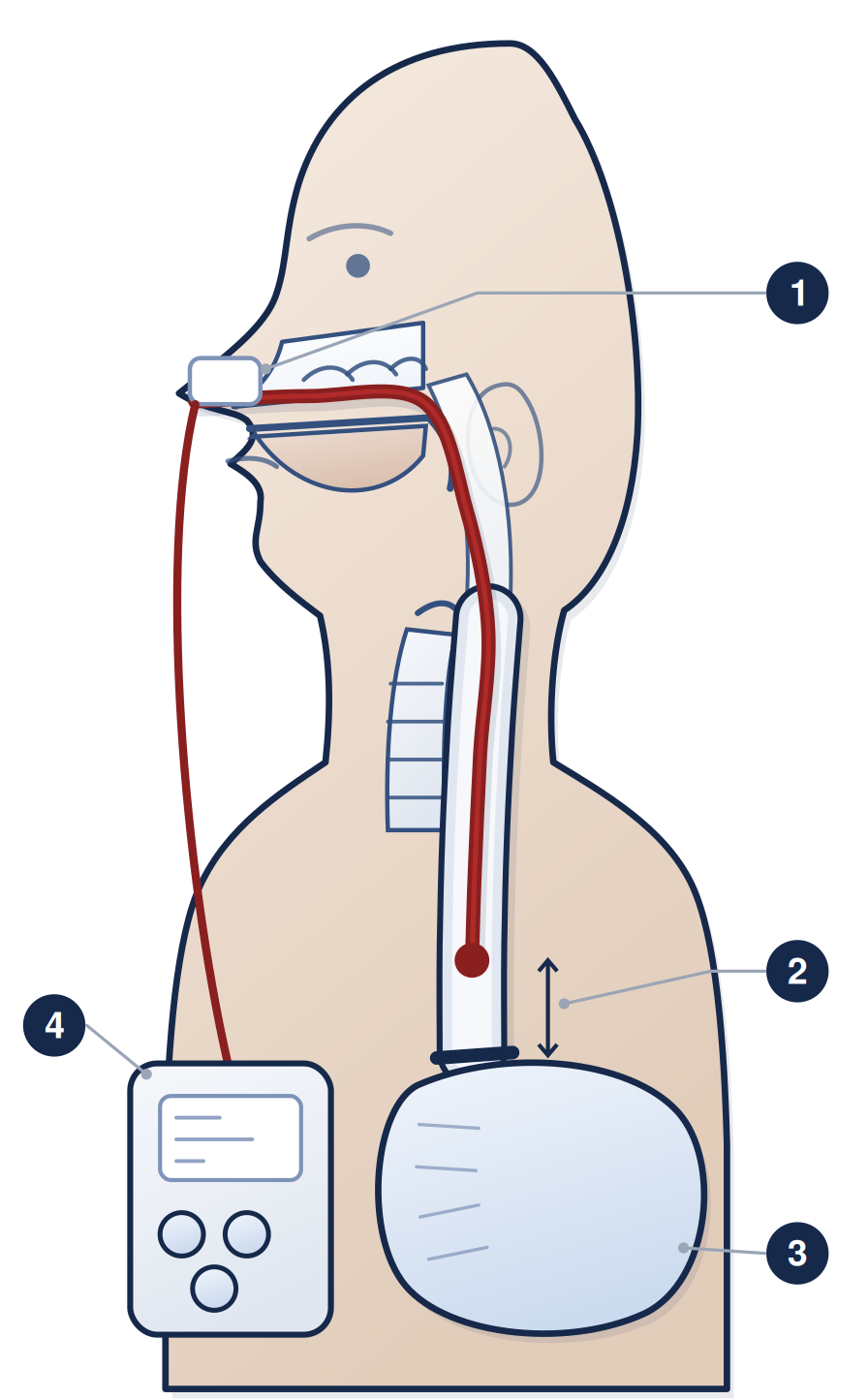
١ الأنبوب مثبَّتاً باللاصق على الخد ٢ المجسّ على مسافة محددة فوق الصمام السفلي للمريء ٣ المعدة ٤ جهاز التسجيل الذي ترتديه وأزراره التي تضغطها عند الشعور بعَرَض
التحضير
الامتناع عن الطعام من منتصف الليلة السابقة، ويمكنك أخذ رشفات صغيرة من الماء حتى ساعتين قبل إدخال الأنبوب
تناول أدويتك المنتظمة الأخرى كالمعتاد. وإن كنت تستعمل الأنسولين أو أقراص السكري فاتصل بوحدة المناظير قبل الموعد ليُعدَّل الدواء حول فترة الصيام
للفحص بعد إيقاف الأدوية: أوقف مثبطات مضخة البروتون، مثل أوميبرازول وإيزوميبرازول ولانسوبرازول وبانتوبرازول ورابيبرازول، لمدة 7 أيام على الأقل، وهذا ما تشترطه الأدلة الإرشادية. وتفضّل هذه الوحدة 14 يوماً إن سمحت الأعراض، وستحدد رسالة موعدك ما ينطبق عليك. وأوقف حاصرات H2 مثل فاموتيدين ونيزاتيدين 3 أيام، ومضادات الحموضة والألجينات مثل الجافيسكون 24 ساعة
والأدوية التي تغيّر حركة المريء، مثل محفزات الحركة ميتوكلوبراميد ودومبيريدون، ينبغي إيقافها كذلك 48 ساعة إن كان إيقافها آمناً لك. اسأل وحدة المناظير إن لم تكن متأكداً
للفحص أثناء تناول الأدوية: استمر عليها تماماً كما وُصفت لك، في أوقاتها الصحيحة، ولا تفوّت جرعة
ويُجرى قياس ضغط المريء عادةً أولاً، في اليوم نفسه أو قبله، ليُوضع المجس في الموضع الصحيح. انظر النشرة PE-PROC-13
يوم الإجراء
لا يُستخدم أي تخدير. يُمرَّر أنبوب مرن رفيع جداً عبر إحدى فتحتي الأنف إلى المريء، وهو المسار نفسه المستخدم في قياس الضغط ويستغرق دقائق. ثم يُثبَّت بلاصق على الأنف والخد ويُوصل بجهاز تسجيل صغير تحمله بحزام على الكتف أو الخصر.
وتعود به إلى المنزل. فالغرض من الفحص تسجيل يوم عادي، فتناول وجباتك المعتادة، ونم كالعادة، ومارس أنشطتك المألوفة. وأبعد الجهاز عن الماء، فلا استحمام ما دام موضوعاً.
وستُعطى استمارة يوميات. وفي كل مرة تشعر فيها بعَرَض اضغط الزر على الجهاز ودوّن الوقت ونوع العَرَض. ودوّن كذلك أوقات الأكل وأوقات الاستلقاء. وهذه اليوميات هي ما يتيح لنا ربط أعراضك بالتسجيل، والفحص أقل نفعاً بكثير بدونها.
وتعود في الوقت المتفق عليه في اليوم التالي لنزع الأنبوب والجهاز، وذلك يستغرق ثوانٍ.
ما هي المخاطر؟
لا توجد مخاطر تُذكر. والأنبوب مزعج عند إدخاله، ويشعر به معظم المرضى في الحلق خلال الساعة أو الساعتين الأوليين ثم ينسونه إلى حد بعيد. وقد يحدث رعاف بسيط أو ألم في الحلق. وقد ينام بعض المرضى نوماً أقل راحة مع وجود الأنبوب.
بعد الإجراء
يمكنك الأكل والشرب والقيادة بصورة طبيعية فور نزع الأنبوب. وعاود تناول أقراص الحموضة فوراً ما لم يُطلب منك غير ذلك.
وتحتاج ساعات التسجيل الأربع والعشرون إلى تحليل مع يومياتك، لذلك لا تتوفر النتيجة في اليوم نفسه، بل تُرسل إلى الطبيب الذي طلب الفحص وتُناقش في موعد العيادة.
اطلب المساعدة العاجلة إذا
استمر رعافك ولم يتوقف بالضغط على الأنف عشر دقائق
أصابك ألم في الصدر أو صعوبة في التنفس أو صعوبة شديدة في البلع والأنبوب موضوع
خرج الأنبوب أو تحرك كثيراً: لا تعده بنفسك واتصل بالمختبر
خلال أوقات العمل اتصل بالمختبر. وخارجها، إن كنت متوعكاً فتوجّه إلى قسم الطوارئ، وإن كان الأنبوب قد خرج فحسب فانزع الجهاز واحتفظ به واتصل بالمختبر في يوم العمل التالي.
PE-PROC-14 · للمواعيد وأي استفسار عن هذا الفحص، تواصل مع المختبر الذي حجز لك الموعد. وإذا كانت حالتك شديدة أو كان الوقت خارج أوقات العمل فتوجّه إلى قسم الطوارئ. تدعم هذه النشرة مناقشتك مع طبيبك ولا تحل محلها. الإصدار 1.0 · تاريخ المراجعة أكتوبر 2028.
هذه النشرة معلومات عامة ولا تغني عن مشورة طبيبك المعالج.
زاد صحي، PE-PROC-14
This test measures how much acid comes up from the stomach into the gullet over a full day and night, and whether the symptoms you notice actually happen at the same time as the reflux. A thin sensor stays in place for 24 hours while you go about your normal day.
What it is, and why you are having it
Reflux symptoms are common, but heartburn and chest pain have many causes, and treating the wrong one wastes years. This test settles the question. It records every reflux episode, measures the total time acid is in contact with the lining of the gullet, and lets us match your own symptoms against the recording — you press a button each time you feel one.
It is done when reflux is suspected but endoscopy is normal and the diagnosis has not been proved, when symptoms persist despite proper acid treatment, before anti-reflux surgery, and when a chronic cough, hoarseness or a lump-in-the-throat sensation may be caused by reflux. Impedance is an extra measurement on the same tube that also detects reflux which is not acidic.
On or off acid tablets
Which one applies to you depends on the question being asked, and getting this wrong wastes the test. If reflux has never been proved, the study is done OFF acid tablets — and that remains true even if your symptoms are continuing despite treatment. It is done ON the tablets, at the proper dose and timing, only when reflux has already been demonstrated: by inflammation seen at endoscopy, by Barrett’s oesophagus, or by an earlier abnormal pH study done off treatment, and the question now is why symptoms persist. Your appointment letter will say which. If it is not clear, telephone the laboratory before you stop anything.
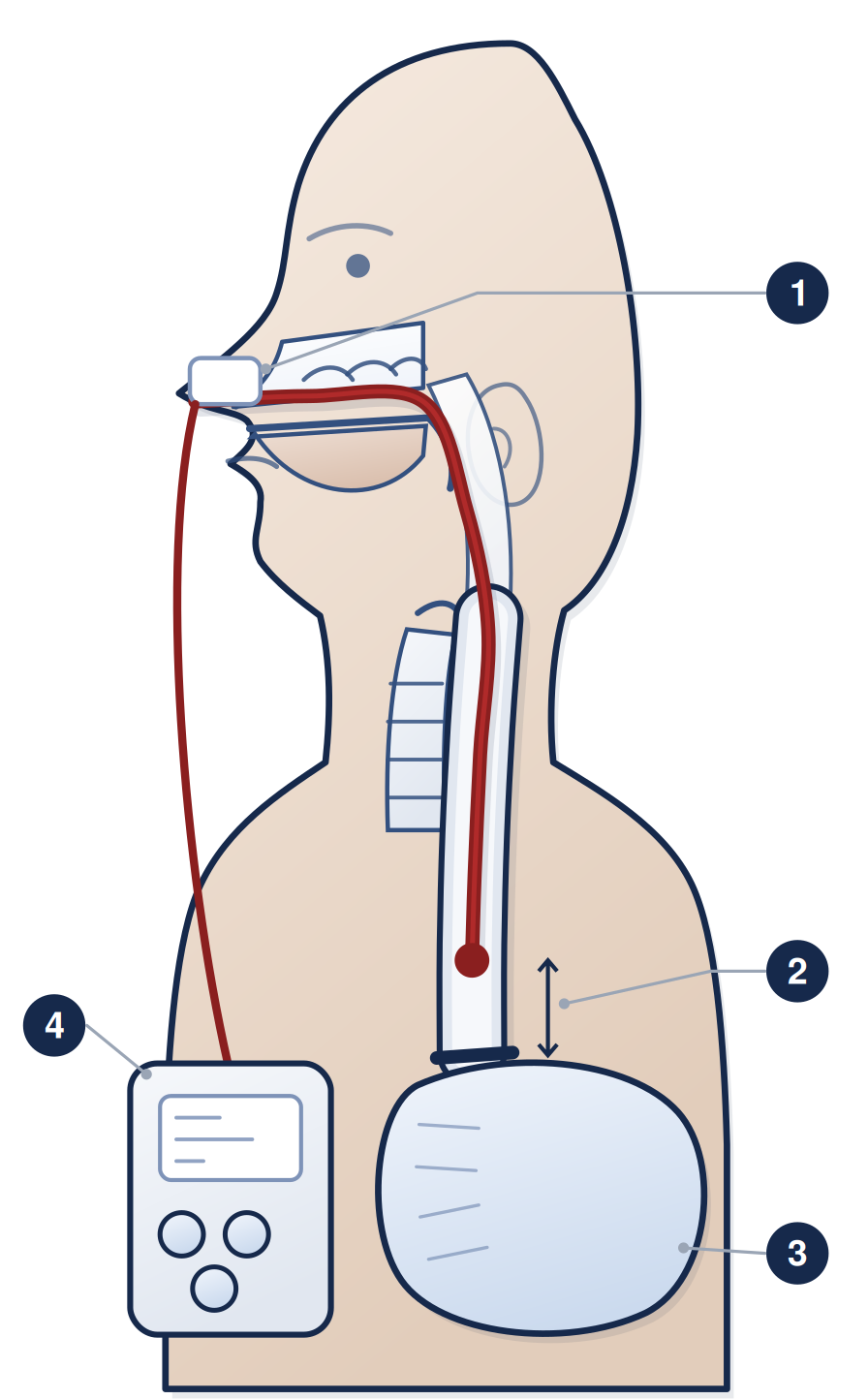
1 the tube taped to the cheek · 2 the sensor, a set distance above the lower valve · 3 stomach · 4 the recorder you wear, with the buttons you press
Getting ready
Have nothing to eat from midnight the night before. You may take small sips of water until two hours before the tube is passed.
Take your other regular medicines as usual. If you take insulin or tablets for diabetes, telephone the endoscopy unit before the appointment so the dose can be adjusted around the fast.
For a study OFF acid tablets: stop proton pump inhibitors — omeprazole, esomeprazole, lansoprazole, pantoprazole, rabeprazole — for at least 7 days, which is what the guidelines require. This unit prefers 14 days where symptoms allow; your appointment letter will say which applies to you. Stop H2 blockers such as famotidine or nizatidine for 3 days, and antacids and alginates such as Gaviscon for 24 hours.
Medicines that change how the gullet moves — prokinetics such as metoclopramide or domperidone — should also be stopped for 48 hours if it is safe for you to stop them. Ask the endoscopy unit if you are not sure.
For a study ON acid tablets: keep taking them exactly as prescribed, at the right times, and do not miss a dose.
A manometry test is normally done first, on the same day or before, so that the sensor is positioned correctly. See sheet PE-PROC-13.
On the day
No sedation is used. A very thin flexible tube is passed through one nostril into the gullet — the same passage as for manometry, taking a few minutes. It is then taped to your nose and cheek and connected to a small recorder that you wear on a shoulder strap or belt.
You go home with it. The point of the test is to record an ordinary day, so eat your usual meals, sleep normally, and do your usual activities. Keep the recorder away from water — no shower or bath while it is on.
You will be given a diary. Every time you feel a symptom, press the button on the recorder and write down the time and what the symptom was. You also record when you eat and when you lie down. This diary is what allows us to link your symptoms to the recording, and the test is much less useful without it.
You return at an agreed time the next day for the tube and recorder to be removed. That takes a few seconds.
What are the risks?
There are essentially no risks. The tube is uncomfortable when it goes in, and most people are aware of it in the throat for the first hour or two and then largely forget it. A little nosebleed or a sore throat is possible. Some people sleep less well with the tube in.
Afterwards
You can eat, drink and drive normally as soon as the tube is out. Restart your acid tablets straight away unless you have been told otherwise.
The 24 hours of recording have to be analysed alongside your diary, so the result is not available on the day. It goes to the doctor who requested it and is discussed at your clinic appointment.
Get urgent help if
You have a persistent nosebleed that does not stop with pinching your nose for ten minutes.
You have chest pain, difficulty breathing, or severe difficulty swallowing while the tube is in.
The tube comes out or moves a long way — do not push it back in; telephone the laboratory.
During working hours telephone the laboratory. Outside working hours, if you are unwell, go to the Emergency Department; if the tube has simply come out, remove the recorder, keep it safe and telephone the laboratory the next working day.
PE-PROC-14 · For appointments and questions about this test, contact the laboratory that booked it. If you are seriously unwell, or it is outside working hours, go to the Emergency Department. This sheet supports the discussion with your doctor; it does not replace it. Version 1.0 · review date October 2028.
This leaflet is general information and does not replace advice from your own doctor.