

النص المكتوب للشرائحText version of the slides (English and Arabic)
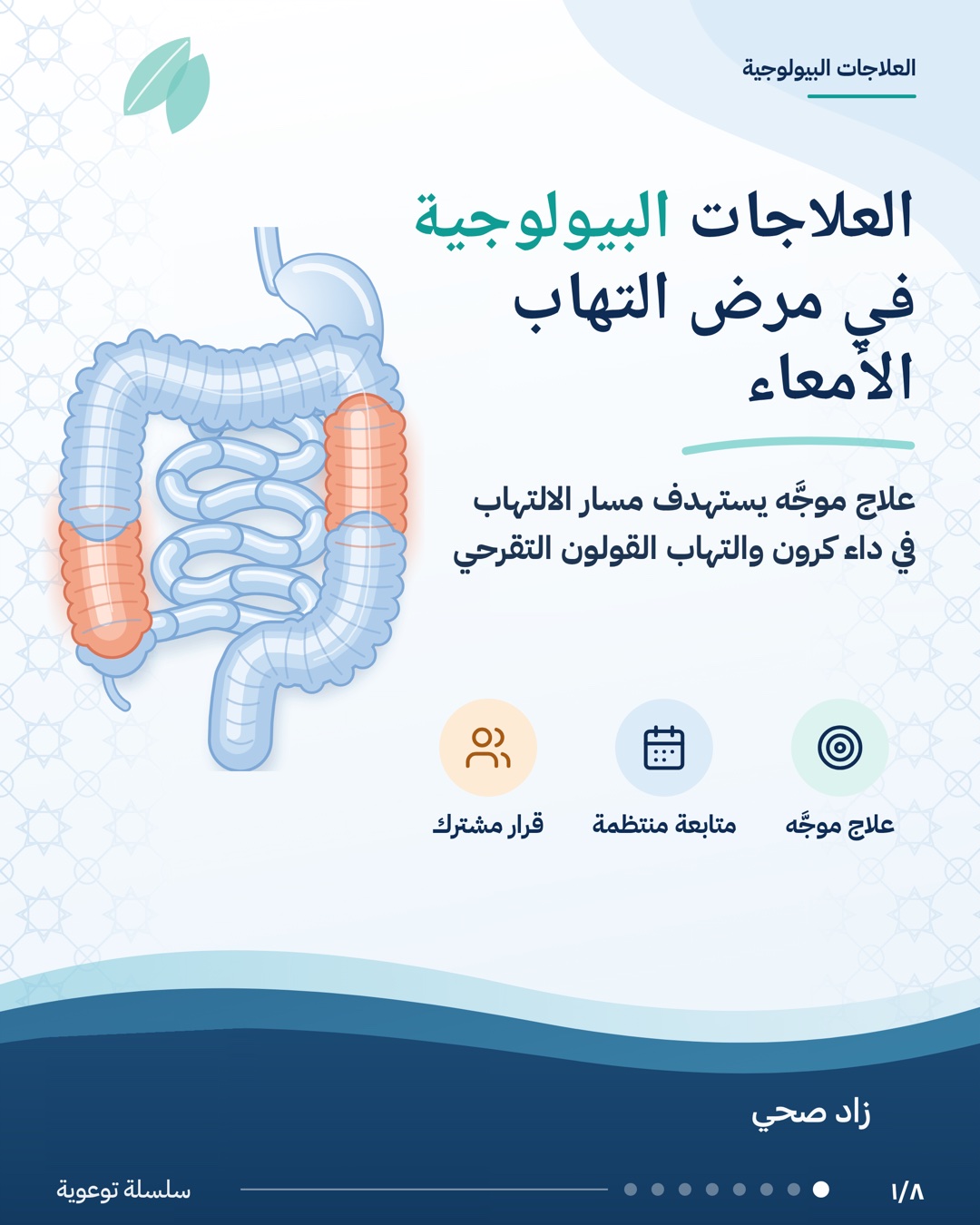
العلاجات البيولوجية في مرض التهاب الأمعاء
علاج موجَّه يستهدف مسار الالتهاب في داء كرون والتهاب القولون التقرحي
- علاج موجَّه
- متابعة منتظمة
- قرار مشترك
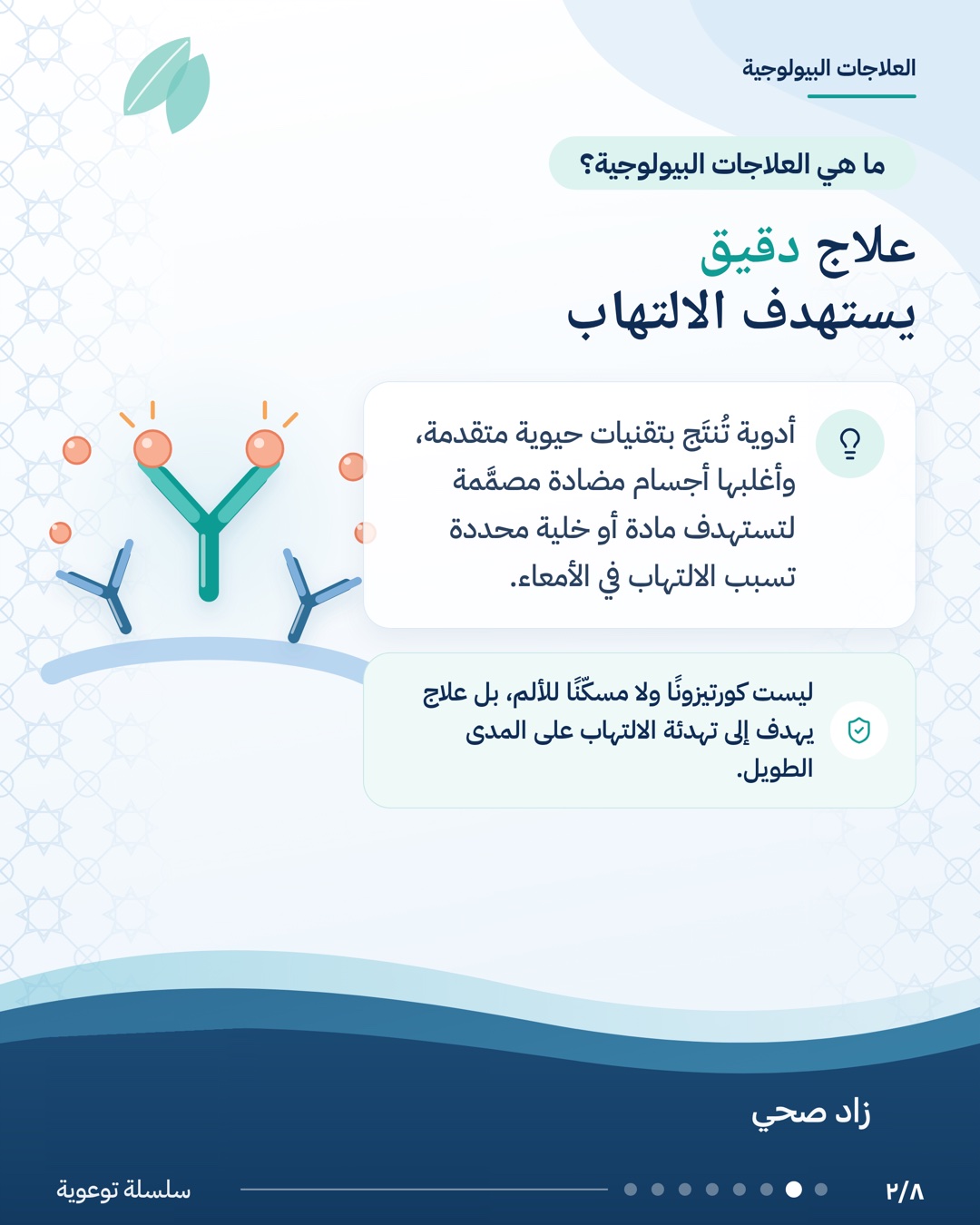
علاج دقيق يستهدف الالتهاب
ما هي العلاجات البيولوجية؟
أدوية تُنتَج بتقنيات حيوية متقدمة، وأغلبها أجسام مضادة مصمَّمة لتستهدف مادة أو خلية محددة تسبب الالتهاب في الأمعاء.
ليست كورتيزونًا ولا مسكّنًا للألم، بل علاج يهدف إلى تهدئة الالتهاب على المدى الطويل.
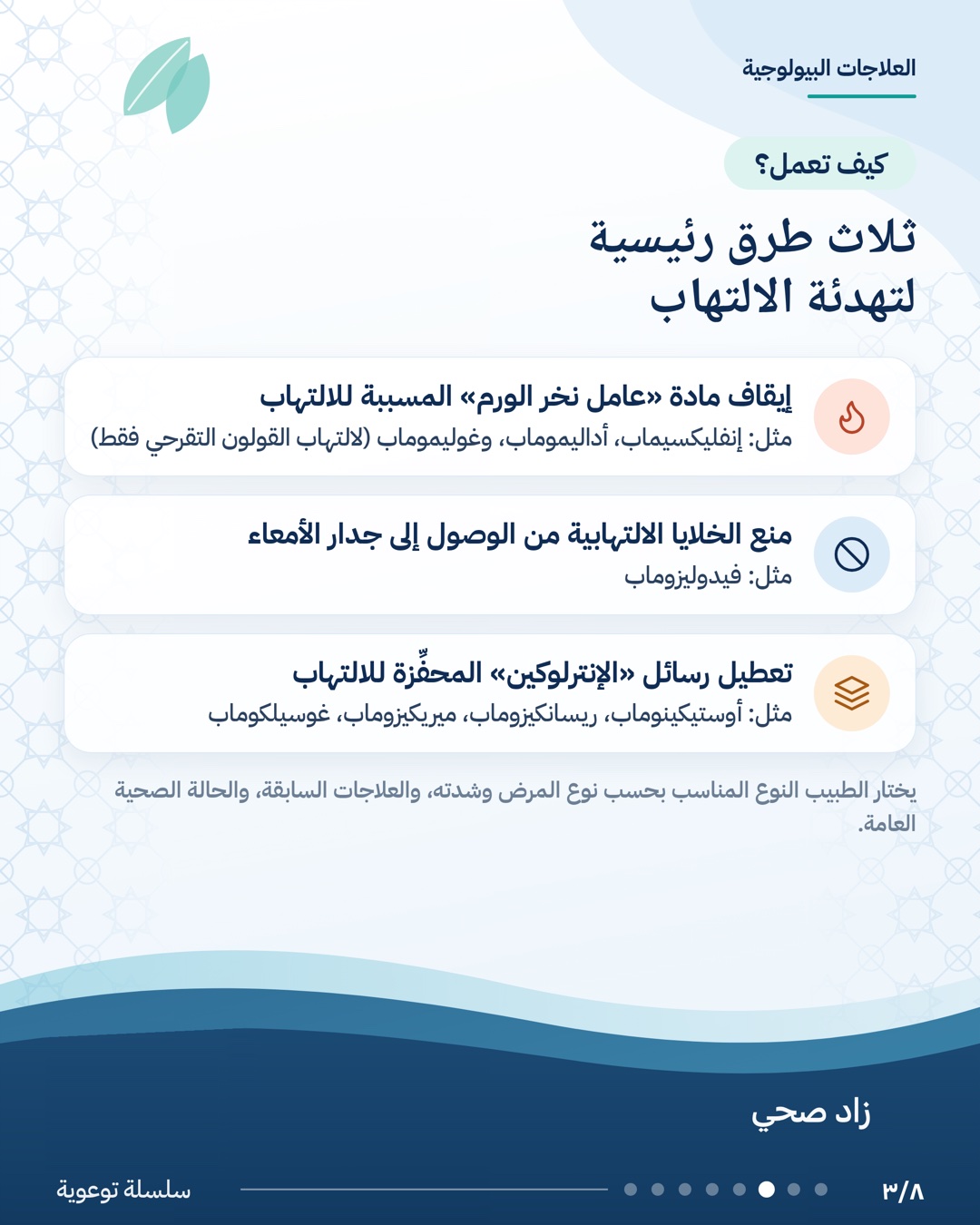
ثلاث طرق رئيسية لتهدئة الالتهاب
كيف تعمل؟
- إيقاف مادة «عامل نخر الورم» المسببة للالتهاب — مثل: إنفليكسيماب، أداليموماب، وغوليموماب (لالتهاب القولون التقرحي فقط)
- منع الخلايا الالتهابية من الوصول إلى جدار الأمعاء — مثل: فيدوليزوماب
- تعطيل رسائل «الإنترلوكين» المحفِّزة للالتهاب — مثل: أوستيكينوماب، ريسانكيزوماب، ميريكيزوماب، غوسيلكوماب
يختار الطبيب النوع المناسب بحسب نوع المرض وشدته، والعلاجات السابقة، والحالة الصحية العامة.
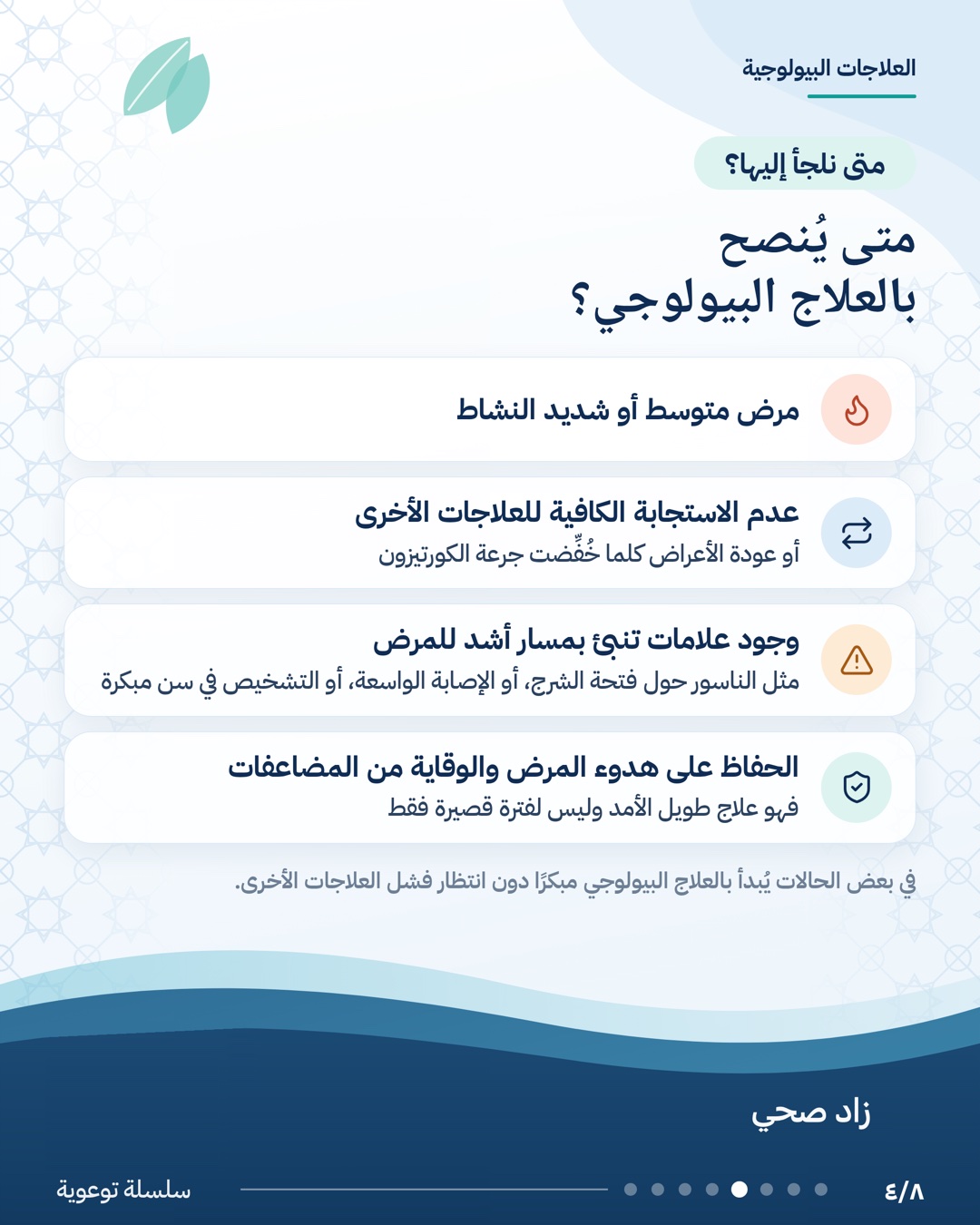
متى يُنصح بالعلاج البيولوجي؟
متى نلجأ إليها؟
- مرض متوسط أو شديد النشاط
- عدم الاستجابة الكافية للعلاجات الأخرى — أو عودة الأعراض كلما خُفِّضت جرعة الكورتيزون
- وجود علامات تنبئ بمسار أشد للمرض — مثل الناسور حول فتحة الشرج، أو الإصابة الواسعة، أو التشخيص في سن مبكرة
- الحفاظ على هدوء المرض والوقاية من المضاعفات — فهو علاج طويل الأمد وليس لفترة قصيرة فقط
في بعض الحالات يُبدأ بالعلاج البيولوجي مبكرًا دون انتظار فشل العلاجات الأخرى.
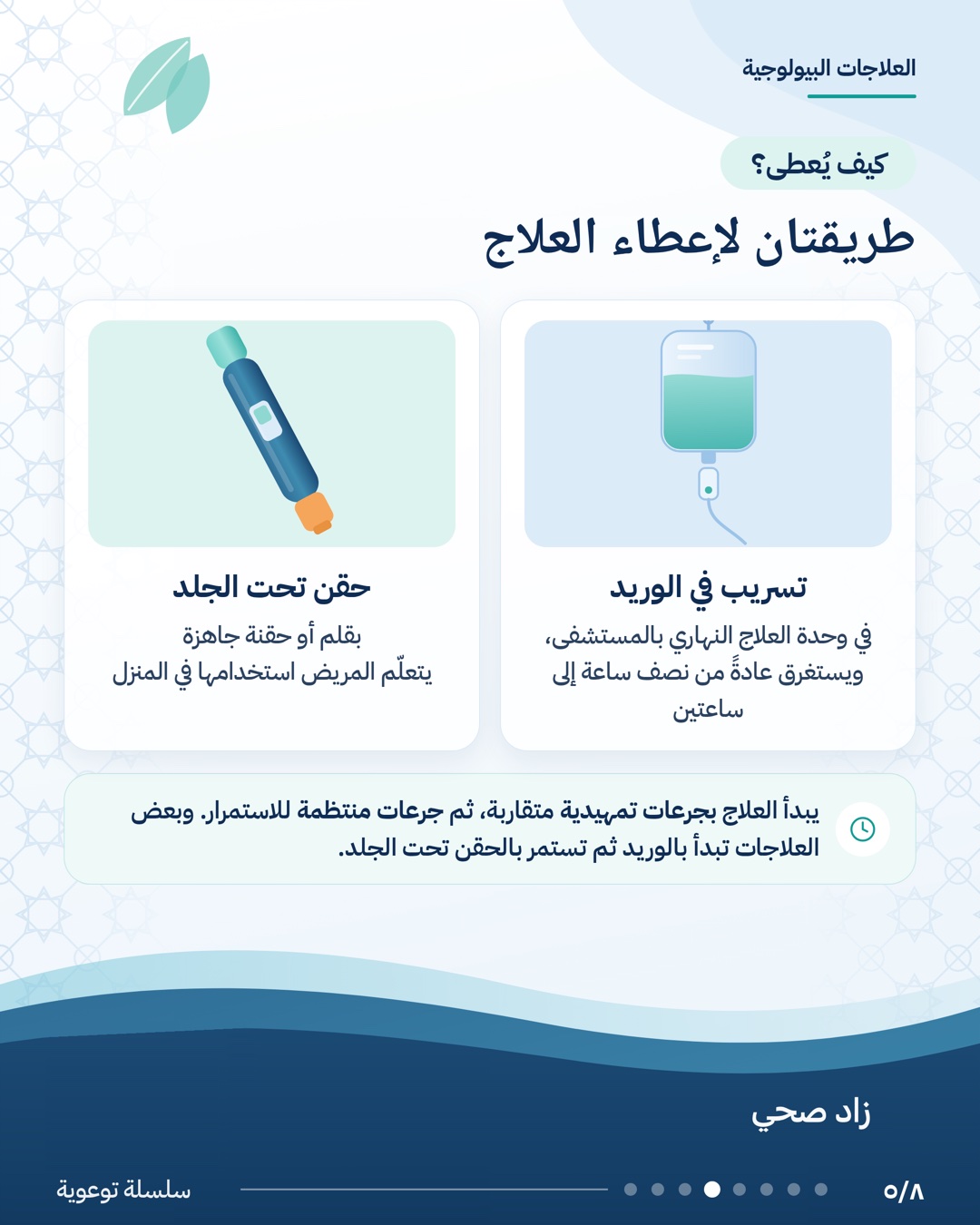
طريقتان لإعطاء العلاج
كيف يُعطى؟
- تسريب في الوريد — في وحدة العلاج النهاري بالمستشفى، ويستغرق عادةً من نصف ساعة إلى ساعتين
- حقن تحت الجلد — بقلم أو حقنة جاهزة يتعلّم المريض استخدامها في المنزل
يبدأ العلاج بجرعات تمهيدية متقاربة، ثم جرعات منتظمة للاستمرار. وبعض العلاجات تبدأ بالوريد ثم تستمر بالحقن تحت الجلد.
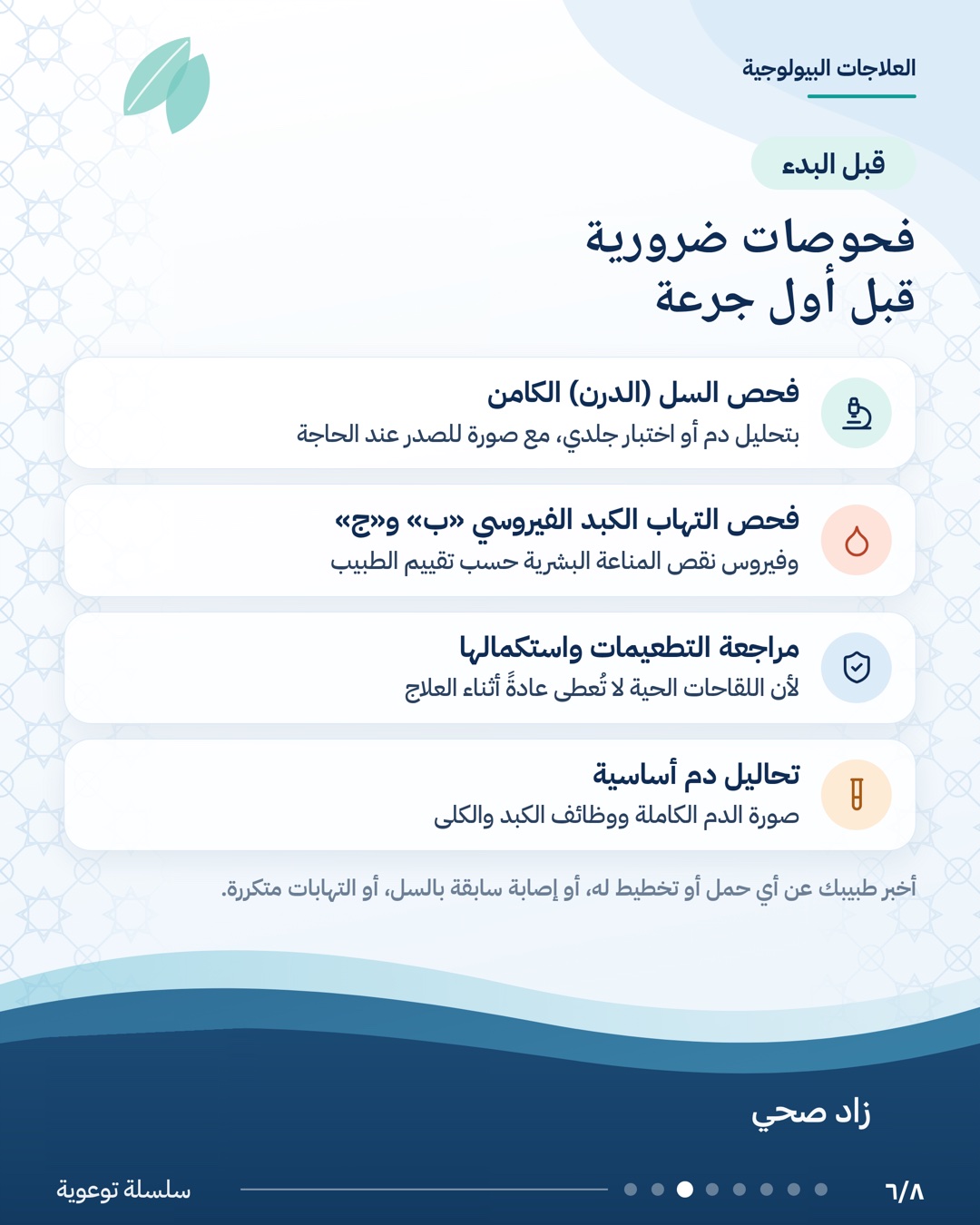
فحوصات ضرورية قبل أول جرعة
قبل البدء
- فحص السل (الدرن) الكامن — بتحليل دم أو اختبار جلدي، مع صورة للصدر عند الحاجة
- فحص التهاب الكبد الفيروسي «ب» و«ج» — وفيروس نقص المناعة البشرية حسب تقييم الطبيب
- مراجعة التطعيمات واستكمالها — لأن اللقاحات الحية لا تُعطى عادةً أثناء العلاج
- تحاليل دم أساسية — صورة الدم الكاملة ووظائف الكبد والكلى
أخبر طبيبك عن أي حمل أو تخطيط له، أو إصابة سابقة بالسل، أو التهابات متكررة.
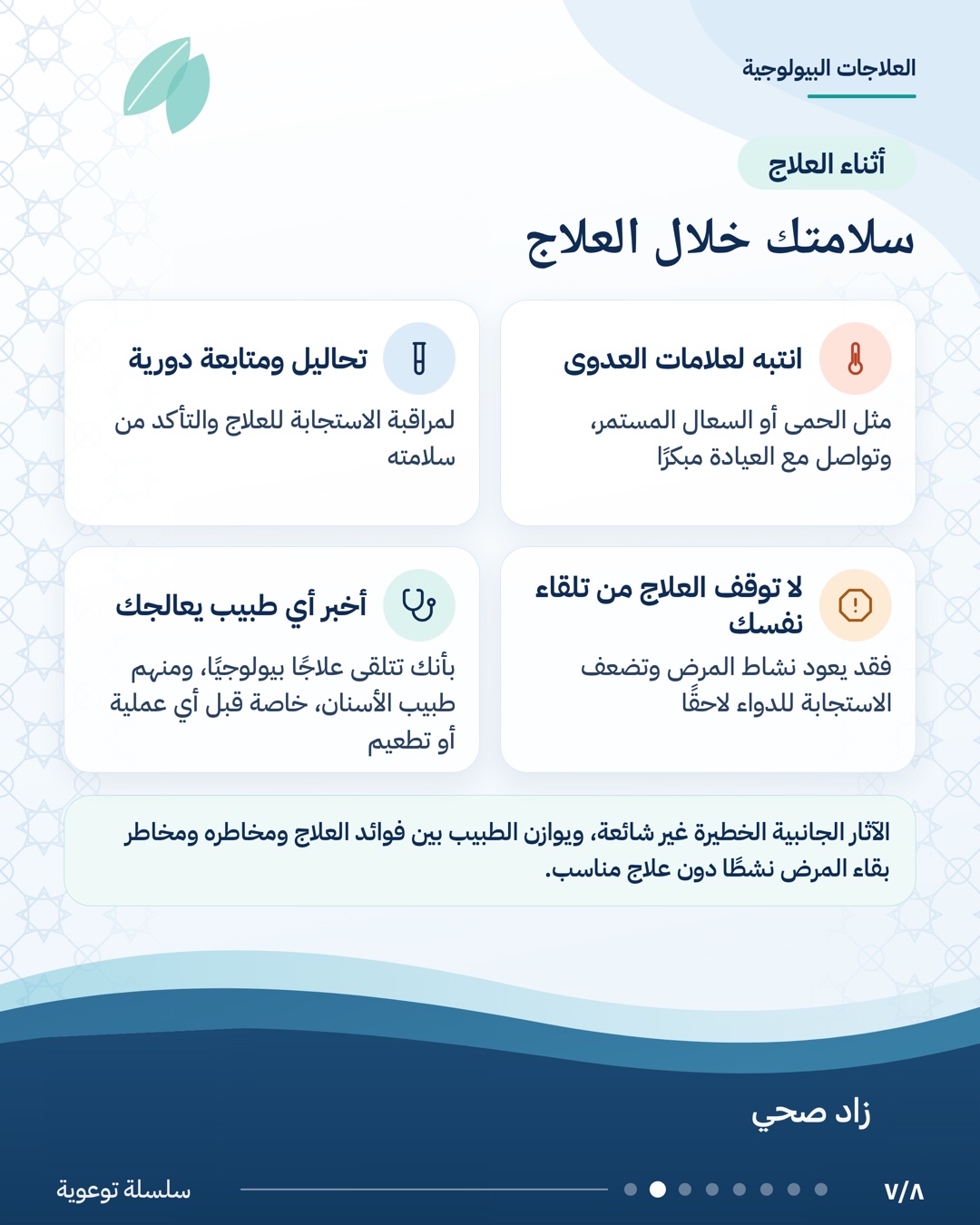
سلامتك خلال العلاج
أثناء العلاج
- انتبه لعلامات العدوى — مثل الحمى أو السعال المستمر، وتواصل مع العيادة مبكرًا
- تحاليل ومتابعة دورية — لمراقبة الاستجابة للعلاج والتأكد من سلامته
- لا توقف العلاج من تلقاء نفسك — فقد يعود نشاط المرض وتضعف الاستجابة للدواء لاحقًا
- أخبر أي طبيب يعالجك — بأنك تتلقى علاجًا بيولوجيًا، ومنهم طبيب الأسنان، خاصة قبل أي عملية أو تطعيم
الآثار الجانبية الخطيرة غير شائعة، ويوازن الطبيب بين فوائد العلاج ومخاطره ومخاطر بقاء المرض نشطًا دون علاج مناسب.
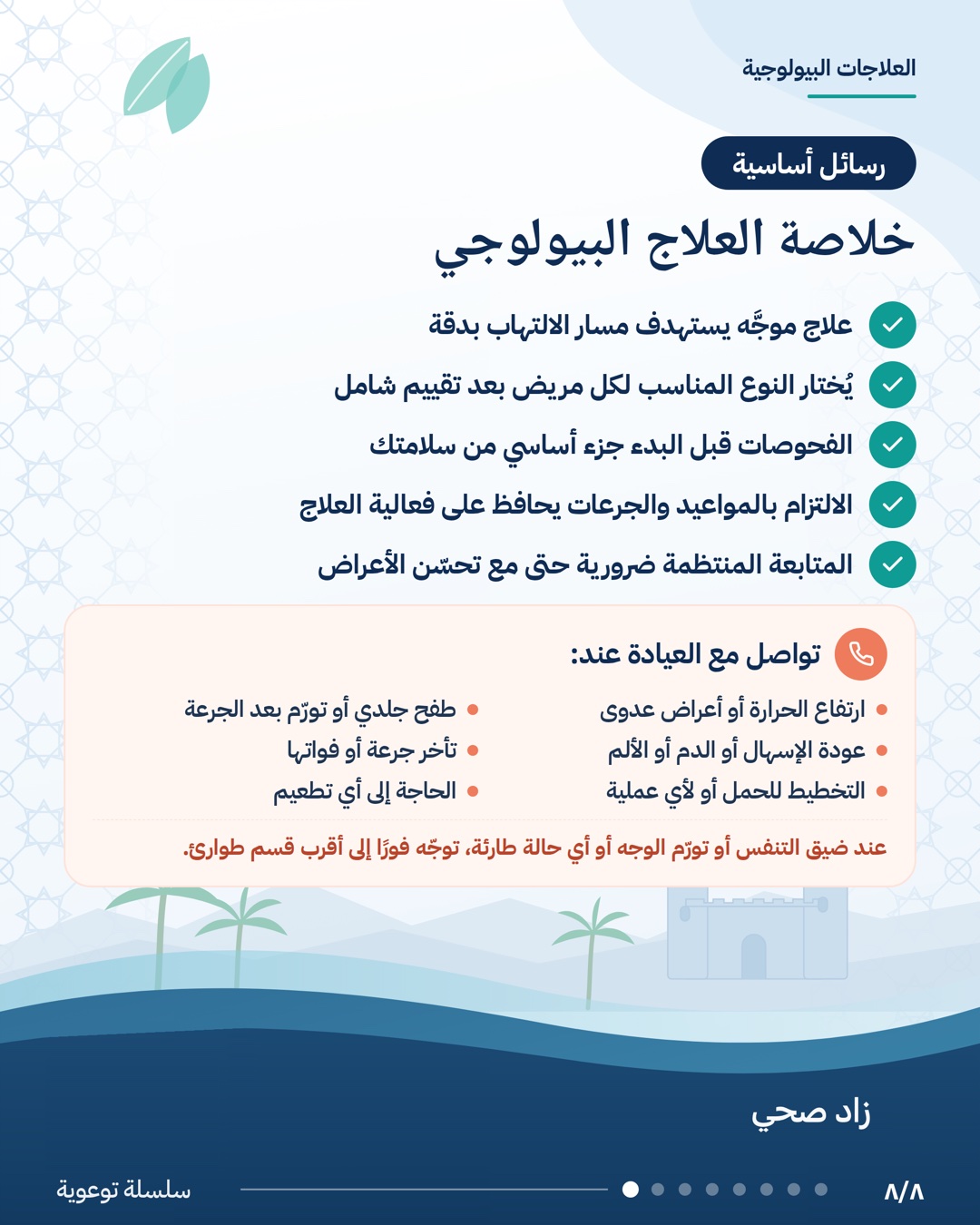
خلاصة العلاج البيولوجي
رسائل أساسية
- علاج موجَّه يستهدف مسار الالتهاب بدقة
- يُختار النوع المناسب لكل مريض بعد تقييم شامل
- الفحوصات قبل البدء جزء أساسي من سلامتك
- الالتزام بالمواعيد والجرعات يحافظ على فعالية العلاج
- المتابعة المنتظمة ضرورية حتى مع تحسّن الأعراض
تواصل مع العيادة عند:
- ارتفاع الحرارة أو أعراض عدوى
- عودة الإسهال أو الدم أو الألم
- التخطيط للحمل أو لأي عملية
- طفح جلدي أو تورّم بعد الجرعة
- تأخر جرعة أو فواتها
- الحاجة إلى أي تطعيم
عند ضيق التنفس أو تورّم الوجه أو أي حالة طارئة، توجّه فورًا إلى أقرب قسم طوارئ.
Biologic treatments in IBD
A targeted treatment that acts on the inflammation pathway in Crohn's disease and ulcerative colitis
- Targeted treatment
- Regular follow-up
- Shared decision
A precise treatment that targets inflammation
What are biologic treatments?
Medicines made using advanced biotechnology. Most are antibodies designed to target a specific substance or cell that causes inflammation in the bowel.
They are not steroids or painkillers; they are a treatment that aims to calm inflammation over the long term.
Three main ways to calm inflammation
How do they work?
- Blocking the inflammatory substance 'tumour necrosis factor' (TNF) — for example: infliximab, adalimumab, and golimumab (for ulcerative colitis only)
- Stopping inflammatory cells from reaching the bowel wall — for example: vedolizumab
- Blocking the 'interleukin' signals that drive inflammation — for example: ustekinumab, risankizumab, mirikizumab, guselkumab
Your doctor chooses the right type based on the type and severity of your disease, your previous treatments, and your general health.
When is biologic treatment recommended?
When do we use them?
- Moderately or severely active disease
- Not responding well enough to other treatments — or symptoms returning whenever the steroid dose is reduced
- Signs that predict a more severe course of disease — such as a fistula around the back passage (anus), extensive disease, or diagnosis at a young age
- Keeping the disease calm and preventing complications — it is a long-term treatment, not just for a short period
In some cases, biologic treatment is started early, without waiting for other treatments to fail.
Two ways to give the treatment
How is it given?
- Infusion into a vein (drip) — in the hospital day-treatment unit; it usually takes from half an hour to two hours
- Injection under the skin — with a ready-to-use pen or syringe that the patient learns to use at home
Treatment starts with starter (induction) doses given close together, followed by regular maintenance doses. Some treatments start in a vein and then continue as injections under the skin.
Essential tests before the first dose
Before starting
- Test for latent (hidden) tuberculosis (TB) — with a blood test or skin test, plus a chest X-ray if needed
- Test for viral hepatitis B and C — and HIV, depending on your doctor's assessment
- Review and complete your vaccinations — because live vaccines are not usually given during treatment
- Baseline blood tests — full blood count and liver and kidney function
Tell your doctor about any pregnancy or plans for pregnancy, any previous TB infection, or repeated infections.
Your safety during treatment
During treatment
- Watch for signs of infection — such as fever or a persistent cough, and contact the clinic early
- Regular blood tests and follow-up — to monitor your response to treatment and make sure it is safe
- Do not stop treatment on your own — the disease may become active again and the medicine may work less well later
- Tell any doctor who treats you — that you are on a biologic treatment, including your dentist, especially before any operation or vaccination
Serious side effects are uncommon. Your doctor weighs the benefits and risks of treatment against the risks of the disease staying active without proper treatment.
Biologic treatment: the summary
Key messages
- A targeted treatment that precisely acts on the inflammation pathway
- The right type is chosen for each patient after a full assessment
- Tests before starting are an essential part of your safety
- Keeping to appointments and doses keeps the treatment effective
- Regular follow-up is necessary even when symptoms improve
Contact the clinic if you have:
- A high temperature or symptoms of infection
- Diarrhoea, blood or pain coming back
- Plans for pregnancy or for any operation
- A skin rash or swelling after a dose
- A delayed or missed dose
- A need for any vaccination
If you have difficulty breathing, swelling of the face or any emergency, go straight to the nearest emergency department.
نشرات ذات صلة
Related leaflets
 إنفليكسيمابInfliximabأمراض الأمعاء الالتهابية وأدويتهاIBD and its medicines
- أداليمومابAdalimumabأمراض الأمعاء الالتهابية وأدويتهاIBD and its medicines
- فيدوليزومابVedolizumabأمراض الأمعاء الالتهابية وأدويتهاIBD and its medicines
- أوستيكينومابUstekinumabأمراض الأمعاء الالتهابية وأدويتهاIBD and its medicines